

cdkitchen > cooking experts > victoria wesseler

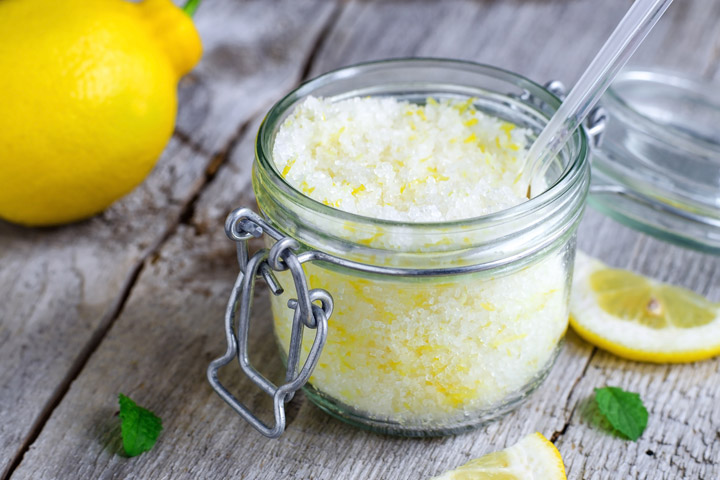
Salt has had a long and fascinating history in world civilization. Prized for its food seasoning and preservation properties, it was also used for metal working, tanning animal hides, and in making soaps, glass, and pottery glazes. Salt cod was a dietary staple on the ships that sailed forth to discover the “new world.” Some historians say had it not been for the ability to preserve cod for the long sea voyages that the European sailors may have never ventured beyond their local ports and never discovered those distant shores.
Salt, essential for sustaining human life, is made up of sodium (40%) and chloride (60%). Our bodies need the sodium to, among other functions, transport nutrients and contract muscles, including our heart muscle. But it takes very little sodium, 1/8 of a teaspoon or 250 mg, to maintain our daily body functions. Various studies indicate that the average American consumes anywhere between 1-4 teaspoons of sodium per day. For some, the excess sodium can cause health related problems including high blood pressure which, if left untreated, can lead to heart attacks and strokes.
Some sources say that nearly 75 percent of our sodium intake is from processed foods. Given the number of processed foods that many of us consume on a daily basis, it’s easy to see how we can consume more sodium than we may actually need in our diets. By making a few simple changes in how we prepare and purchase food items and by using salt judiciously in our cooking and seasoning, we can lower our sodium intake. Here are a few suggestions for accomplishing that goal:
• Incorporate whole foods into your diet by replacing fresh items for commercially prepared ones. Tiny amounts of sodium may be found in whole, fresh foods, but the amount pales in comparison to packaged foods or most restaurant/commercially prepared food items. For example, a cup of fresh boiled potatoes has a mere 3 mgs of sodium (assuming you didn’t use salt in the water when you boiled them). A cup of canned boiled potatoes has a whopping 230 mgs of sodium.
• Reduce the amount of salt you use to season the food you prepare yourself. If a recipe calls for salt, taste it first before adding any salt at all and see how it tastes to you. You may be surprised to find that certain foods, especially highly spiced items, may not need salt at all. If you decide to add salt to the dish, add ¼ of the amount called for, taste it again and then slowly increase the amount of salt until it is seasoned to your taste. But, don’t omit or reduce the salt in recipes for baked goods such as cookies, cakes, or breads. Its absence will compromise the texture and taste of the final product.
• Beware of “unconscious” seasoning once the food is at the table. Always taste your meal before you add salt and, if possible, don’t place salt and pepper shakers on the table to tempt you.
• Read the labels on processed foods and check the websites of restaurants who list nutrition information for their menu items. Whenever possible, find healthier substitutions for the higher salt items. There are a variety of “low” and “no” sodium canned goods on supermarket shelves. But some of them don’t offer much reprieve from their higher sodium counterparts. Check the labels very carefully, especially on broths, stocks, and sauces. In some cases, you may want to make your own broths, stocks, and sauces rather than use the lower sodium versions. Given the amount of sodium in most canned broths, even the ones labeled “low sodium,” I find it worth my time to spend an hour or two every couple of months making my own chicken broth and freezing it so I have it on hand. And the same goes for tomato sauce.
But, as we all know, there are those times when there is no substitute for the spark that only salt can give. In those cases, let good judgment and moderation be your guide.
©2026 CDKitchen, Inc. No reproduction or distribution of any portion of this article is allowed without express permission from CDKitchen, Inc.
To share this article with others, you may link to this page:
https://www.cdkitchen.com/cooking-experts/victoria-wesseler/446-salt-seasoning/
Pass the Salt, Please
Salt has had a long and fascinating history in world civilization. Prized for its food seasoning and preservation properties, it was also used for metal working, tanning animal hides, and in making soaps, glass, and pottery glazes. Salt cod was a dietary staple on the ships that sailed forth to discover the “new world.” Some historians say had it not been for the ability to preserve cod for the long sea voyages that the European sailors may have never ventured beyond their local ports and never discovered those distant shores.
Salt, essential for sustaining human life, is made up of sodium (40%) and chloride (60%). Our bodies need the sodium to, among other functions, transport nutrients and contract muscles, including our heart muscle. But it takes very little sodium, 1/8 of a teaspoon or 250 mg, to maintain our daily body functions. Various studies indicate that the average American consumes anywhere between 1-4 teaspoons of sodium per day. For some, the excess sodium can cause health related problems including high blood pressure which, if left untreated, can lead to heart attacks and strokes.
Some sources say that nearly 75 percent of our sodium intake is from processed foods. Given the number of processed foods that many of us consume on a daily basis, it’s easy to see how we can consume more sodium than we may actually need in our diets. By making a few simple changes in how we prepare and purchase food items and by using salt judiciously in our cooking and seasoning, we can lower our sodium intake. Here are a few suggestions for accomplishing that goal:
• Incorporate whole foods into your diet by replacing fresh items for commercially prepared ones. Tiny amounts of sodium may be found in whole, fresh foods, but the amount pales in comparison to packaged foods or most restaurant/commercially prepared food items. For example, a cup of fresh boiled potatoes has a mere 3 mgs of sodium (assuming you didn’t use salt in the water when you boiled them). A cup of canned boiled potatoes has a whopping 230 mgs of sodium.
• Reduce the amount of salt you use to season the food you prepare yourself. If a recipe calls for salt, taste it first before adding any salt at all and see how it tastes to you. You may be surprised to find that certain foods, especially highly spiced items, may not need salt at all. If you decide to add salt to the dish, add ¼ of the amount called for, taste it again and then slowly increase the amount of salt until it is seasoned to your taste. But, don’t omit or reduce the salt in recipes for baked goods such as cookies, cakes, or breads. Its absence will compromise the texture and taste of the final product.
• Beware of “unconscious” seasoning once the food is at the table. Always taste your meal before you add salt and, if possible, don’t place salt and pepper shakers on the table to tempt you.
• Read the labels on processed foods and check the websites of restaurants who list nutrition information for their menu items. Whenever possible, find healthier substitutions for the higher salt items. There are a variety of “low” and “no” sodium canned goods on supermarket shelves. But some of them don’t offer much reprieve from their higher sodium counterparts. Check the labels very carefully, especially on broths, stocks, and sauces. In some cases, you may want to make your own broths, stocks, and sauces rather than use the lower sodium versions. Given the amount of sodium in most canned broths, even the ones labeled “low sodium,” I find it worth my time to spend an hour or two every couple of months making my own chicken broth and freezing it so I have it on hand. And the same goes for tomato sauce.
But, as we all know, there are those times when there is no substitute for the spark that only salt can give. In those cases, let good judgment and moderation be your guide.
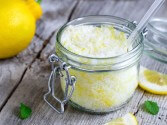

Serves/Makes: 0.5 cup
- 1/2 cup kosher salt
- 3 tablespoons finely grated lemon zest
- 1 tablespoon freshly squeezed lemon juice
Line a baking sheet with parchment paper.
Combine the kosher salt, lemon zest, and lemon juice in a bowl and mix well. Spread the mixture evenly on the lined baking sheet. Place the baking sheet in a draft-free location and let the lemon salt dry for 1-2 hours.
Transfer the lemon salt to a non-reactive airtight container and use within 2-3 days.
share this article:


related articles





Write a comment:
©2026 CDKitchen, Inc. No reproduction or distribution of any portion of this article is allowed without express permission from CDKitchen, Inc.
To share this article with others, you may link to this page:
https://www.cdkitchen.com/cooking-experts/victoria-wesseler/446-salt-seasoning/