

cdkitchen > cooking experts > pamela chester

There are just a few weeks left in the Lenten season and if you are following a religious dietary prohibition against meat, you may be looking for some fresh new fish recipes. You also may be a bit confused over which fish are the best ones to eat. Health experts recommend eating at least two servings of fish per week for their beneficial omega 3 fatty acids and lean protein.
On the other hand, environmental programs have shed light on the fact that a lot of commonly available seafood is unsustainable, fished or farmed under practices that harm our health and the environment. Seafood can contain heavy metals or contaminants such as PCBs. With seemingly murky origins, how are we to know if the fish we are consuming is safe?
One of the most disputed fishes is farm-raised salmon. This widely available fish has caught a lot of flack for being guilty of crimes such as being densely penned in too small areas, stressing the environment, feeding on genetically modified or PCB tainted meal, and being treated with antibiotics, pesticides, and growth hormones. Recommendations suggest choosing wild salmon, freshwater coho salmon, or arctic char over any farmed salmon except those that were produced under a sustainably managed aquaculture system.
Seafood watch lists are in a constant state of flux. I was surprised to hear you are able to purchase some of the formerly forbidden Chilean sea bass (AKA Patagonian toothfish) at a retailer reputed for only stocking sustainable seafood. This easy to cook fish was so popular in the 1990's that it almost became endangered, spurring the petition "Take a Pass On Chilean Sea Bass."
Turns out now it’s okay to eat some Chilean sea bass. If you find it with the Marine Stewardship Council (MSC) label, you can be assured it's been caught in a sustainable fashion that doesn't harm any other wildlife or damage the ecosystem.
On top of all that, women in their childbearing years and small children are given extra precautions to avoid eating fish such as shark, mackerel, swordfish, tilefish, and some types of tuna. These contain high levels of mercury, which can damage the developing brain and nervous system.
Lots of pregnant women avoid fish entirely, which is a shame because it can contain high levels of omega 3s including DHA, a fatty acid which is important to brain development. Over time, the recommended restrictions have fluctuated quite a bit, becoming looser and stricter depending on lots of factors. The advice on tuna is still all over the map, with the most conservative advice being to avoid certain types of it entirely, to a more moderate recommendation of limiting consumption to three 6 ounce servings per month.
So when I go to the fish counter, I want to make a choice that doesn't poison my family or harm the environment. Along with the MSC labeling system, a good fishmonger should be well aware of these issues and able to guide you in the right direction. You can also find printable pocket and mobile guides online.
The good thing is that most fish is fairly adaptable in that you can interchange the different types in your favorite recipes. So the next time you are thinking of cooking your favorite salmon recipe, try making it with Alaskan salmon or Arctic Char.
©2026 CDKitchen, Inc. No reproduction or distribution of any portion of this article is allowed without express permission from CDKitchen, Inc.
To share this article with others, you may link to this page:
https://www.cdkitchen.com/cooking-experts/pamela-chester/1344-safe-fish/
A Sustainable Approach to Fish

There are just a few weeks left in the Lenten season and if you are following a religious dietary prohibition against meat, you may be looking for some fresh new fish recipes. You also may be a bit confused over which fish are the best ones to eat. Health experts recommend eating at least two servings of fish per week for their beneficial omega 3 fatty acids and lean protein.
On the other hand, environmental programs have shed light on the fact that a lot of commonly available seafood is unsustainable, fished or farmed under practices that harm our health and the environment. Seafood can contain heavy metals or contaminants such as PCBs. With seemingly murky origins, how are we to know if the fish we are consuming is safe?
One of the most disputed fishes is farm-raised salmon. This widely available fish has caught a lot of flack for being guilty of crimes such as being densely penned in too small areas, stressing the environment, feeding on genetically modified or PCB tainted meal, and being treated with antibiotics, pesticides, and growth hormones. Recommendations suggest choosing wild salmon, freshwater coho salmon, or arctic char over any farmed salmon except those that were produced under a sustainably managed aquaculture system.
Seafood watch lists are in a constant state of flux. I was surprised to hear you are able to purchase some of the formerly forbidden Chilean sea bass (AKA Patagonian toothfish) at a retailer reputed for only stocking sustainable seafood. This easy to cook fish was so popular in the 1990's that it almost became endangered, spurring the petition "Take a Pass On Chilean Sea Bass."
Turns out now it’s okay to eat some Chilean sea bass. If you find it with the Marine Stewardship Council (MSC) label, you can be assured it's been caught in a sustainable fashion that doesn't harm any other wildlife or damage the ecosystem.
On top of all that, women in their childbearing years and small children are given extra precautions to avoid eating fish such as shark, mackerel, swordfish, tilefish, and some types of tuna. These contain high levels of mercury, which can damage the developing brain and nervous system.
Lots of pregnant women avoid fish entirely, which is a shame because it can contain high levels of omega 3s including DHA, a fatty acid which is important to brain development. Over time, the recommended restrictions have fluctuated quite a bit, becoming looser and stricter depending on lots of factors. The advice on tuna is still all over the map, with the most conservative advice being to avoid certain types of it entirely, to a more moderate recommendation of limiting consumption to three 6 ounce servings per month.
So when I go to the fish counter, I want to make a choice that doesn't poison my family or harm the environment. Along with the MSC labeling system, a good fishmonger should be well aware of these issues and able to guide you in the right direction. You can also find printable pocket and mobile guides online.
The good thing is that most fish is fairly adaptable in that you can interchange the different types in your favorite recipes. So the next time you are thinking of cooking your favorite salmon recipe, try making it with Alaskan salmon or Arctic Char.
Provencal Arctic Char Salad

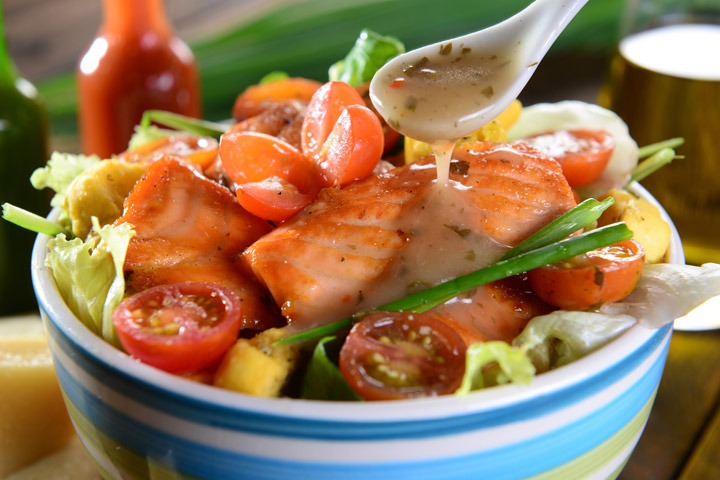
Made with vinaigrette salad dressing, Arctic Char filets, Kosher salt and freshly ground pepper, Herbs de Provence, olive oil, butter lettuce, fresh chives, cherry or grape tomatoes, Persian cucumbers
Made with vinaigrette salad dressing, Arctic Char filets, Kosher salt and freshly ground pepper, Herbs de Provence, olive oil, butter lettuce, fresh chives, cherry or grape tomatoes, Persian cucumbers
Serves/Makes: 2
- 2 Arctic Char filets (4 to 6 ounce size)
- Kosher salt and freshly ground pepper, to taste
- 2 tablespoons Herbs de Provence
- 1 tablespoon olive oil
***Salad***
- 1/2 head butter lettuce, torn into bite sized pieces
- 1/4 cup thinly sliced fresh chives
- 1 pint cherry or grape tomatoes, halved if large
- 2 Persian cucumbers, halved lengthwise and thinly sliced
- 1/2 cup vinaigrette salad dressing
Season Arctic Char filets to taste with salt and pepper and sprinkle one side with Herbs de Provence.
Heat olive oil in medium skillet over medium high heat. Add filets to pan, herb side down and cook 3-4 minutes until browned. Flip and cook 2-3 minutes more until fish is cooked through. Keep warm.
Arrange half of lettuce leaves on each plate and top with chives, tomatoes, and cucumbers. Top with fish, drizzle with vinaigrette, and serve.
share this article:


related articles



Write a comment:
©2026 CDKitchen, Inc. No reproduction or distribution of any portion of this article is allowed without express permission from CDKitchen, Inc.
To share this article with others, you may link to this page:
https://www.cdkitchen.com/cooking-experts/pamela-chester/1344-safe-fish/