

Living La Vida Local

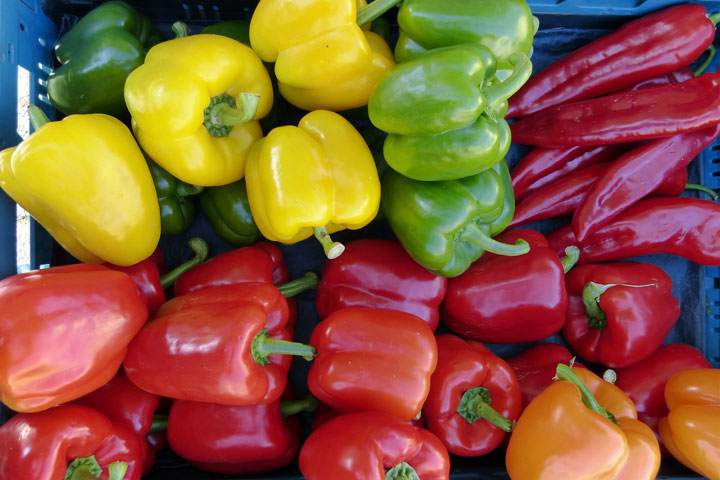
They call themselves locavores or lacalvores and commit to eat foods grown or raised within 100 miles of their homes. Some are strict and forsake even salt and pepper while others are more flexible and stock their pantries with non-local basics such as coffee, teas, oils, vinegars, and spices. Why do they do it? Do you think you could? And, perhaps most importantly, why should you care?
The trend toward eating local foods is the number one culinary trend in the United States today. In March 2007, TIME magazine ran a cover story on the subject which concluded with the intriguing statement “…you are where you eat.” It seems that nearly every culinary magazine I’ve read during the past year has touched on this topic in some way.
Some approach it by promoting the pure pleasure of eating freshly harvested food. Others have an economic view reminding us that some experts point out over 200 farms per day in our country are closed or incorporated into larger enterprises. And there are those who voice concern for our environment and the use of fossil fuels in food transportation, quoting the Leopold Center for Sustainable Agriculture’s statement that the average tomato travels 1,569 miles from the field to the grocery store. Whatever the route, the conclusion is still the same. Eating local food is good for us, good for our local economies, and good for the environment.
We have grown so distant from our food. We generally know very little about the food we buy or consume. What an act of faith it is each day to put into our bodies and those of our loved ones foods that which we know so little about. Where did it come from? How was it grown? How was it handled? How was it processed? How was it shipped? Is it safe to eat? More and more of us want answers to those questions. Like Dorothy in The Wizard of Oz, we’ve found that the answer has always been right in our own backyards. The answer is local food.
My husband and I grow about half of the food that we eat. In the summer months we preserve much of our harvest for the colder season. I shop at farmers’ and farm markets and buy local eggs, dairy products, honey, and meats. But, I would not consider myself a true locavore. I use spices from all over the globe, drink coffee, and buy food items at the local supermarket. I would say that I am “going local.” Whenever possible I seek out and purchase local foods. I consider it an adventure to see what’s available and try new things. In the process I think that our meals are definitely more creative, delicious, and healthier than ever.
When I buy local foods, I feel good about supporting our local agricultural community. I live in a farm community, my husband owns a farm that has been in his family for many generations in southern Indiana, and I know how important it is to keep that economy vital for the overall economic health of our country. The collective economic impact of each individual shopper who makes a choice to buy local food is astounding. If half of the over 2 million families in Indiana alone would spend $25.00 a month on local foods, the annual impact to our local farm economy would be $300 million dollars. Imagine if everyone in this country did the same.
When you buy local food, you are making a conscious choice to better the economy and your families’ eating habits. How do you start? It doesn’t take a tremendous effort--small changes can make a big difference.
• If you can, grow something. Even if it’s a pot of herbs on a kitchen window sill. You will appreciate the beauty of seeing the cycle of a plant’s life, experience the highs and lows of the growing process, and begin to appreciate the individuals who make a living doing that for us.
• Do some of your weekly shopping at local farmers’ markets and farm markets.
• Visit an orchard or U-Pick and harvest your own produce.
• Ask your local market if they sell locally grown food. Find restaurants that do the same. Support these establishments.
• Participate in a CSA.
• Research special foods that may be local to your area and seek them out.
• Encourage others to join you in this effort. Host a pitch-in or covered dish party and ask everyone to bring something made with local ingredients. Spend the evening talking about the food’s origins and learning about what’s available in your area.
Eating local foods has many rewards. In the process we improve not only our lives but the life of our rural communities. We not only build stronger and healthier bodies, we build a stronger and healthier economy. When sustain and nurture ourselves with local foods, we sustain and nurture the world around us. It’s a commitment worth making and a journey worth taking.
Note: For more information about local eating visit my new site www.goinglocal-info.com/

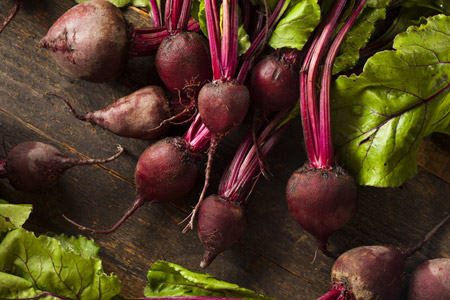
Made with blue cheese, red beets, walnut oil, sherry vinegar, kosher salt, walnuts, black pepper
Serves/Makes: 2
- 10 small red beets (1 to 1 1/2 inches in diameter)
- 2 tablespoons walnut oil
- 1 tablespoon sherry vinegar
- 1/4 teaspoon kosher salt
- 1/4 teaspoon freshly ground black pepper
- 1/4 cup toasted walnuts
- 1/4 cup blue cheese, crumbled
Preheat oven to 375 degrees F. Line a rimmed baking sheet with foil.
Cut the tops off the beets, leaving about 1 inch of the stems intact. Scrub the beets clean under running cool water (Do not dry or peel them).
Arrange the damp beets in a single layer on a double sheet of heavy duty aluminum foil and fold the edges together to make a tightly sealed packet.
Place the packet, seam side up, on the foil lined baking tray and place it in the oven. Bake for 30-40 minutes or until they are fork-tender.
Take the packet out of the oven and allow them to cool for about 10 minutes. Remove them from the packet and place them in a large bowl.
Wearing a pair of powder less, non latex gloves, gently rub the skins off the beets (The skins should slip right off).
Trim the stem and root ends as needed and slice the beets in quarters. Arrange them on a serving plate.
Whisk the walnut oil, vinegar, salt and pepper together and drizzle over the beets. Sprinkle the walnuts and cheese evenly over the beets and serve.
* If you can find golden beets at a local farmers' market, they would be beautiful in this salad. Or you can make the salad with red and yellow beets. If you do that, roast the different colored beets in separate packets so the colors don't bleed into each other.


related articles



Write a comment:
©2026 CDKitchen, Inc. No reproduction or distribution of any portion of this article is allowed without express permission from CDKitchen, Inc.
To share this article with others, you may link to this page:
https://www.cdkitchen.com/cooking-experts/victoria-wesseler/569-local-foods/