

cdkitchen > cooking experts > pamela chester

If I were stranded on a desert island, and could only take one food with me, it would probably be my favorite Italian cheese—Parmigiano Reggiano. The complex flavor and crumbly, crystalline texture define this singular cheese.
Parmigiano Reggiano is so special to Italian cuisine that its name is legally protected with a label, the DOP (Protected Designation of Origin). This label is used in Italy for local products or traditional processed products from a specific region. Other examples of foods with this designation include Balsamic Vinegar of Modena, San Marzano Tomatoes from Campania. and Prosciutto di Parma (the pigs which are cured to make Prosciutto feed on whey leftover from Parmigiano production in symbiosis, Italian style).
Parmigiano Reggiano cheese is still made according to traditional methods that are strictly enforced. The raw milk must come from free-range cows who have only fed on grass or hay in a limited region bordering the Italian cities of Parma and Reggio. No antibiotics, artificial growth hormones, or genetic engineering allowed. The cheese is made from fresh milk, never more than a day old. Just like in the winery concept of terroir, the grass on which the Parma cows feed is said to gives the milk its own flavor, derived from unique soil and climate characteristics.
Parmigiano reaches its final maturity in storerooms, which are maintained by the community, and otherwise known as “cathedrals of cheese.” After at least twelve months of aging and turning, each cheese must undergo rigorous testing, and if passed, will be branded with the seal of quality.
High in calcium and other vitamins, Italians feed Parmigiano Reggiano to babies as their first table food. This cheese was often brought to space by United States and Russian astronauts. It contains more umami elements than any other food. With stellar credentials like these, it's no wonder that it's known across the world as the “King of Cheeses.”
Local Parmigiano Reggiano producers and their consortia are intent on maintaining the purity of their traditions and the high quality associated with the names and origins of their products, hence the label. When you find cheese that has been branded as Parmigiano Reggiano, DOP, you can be assured you are getting the highest quality.
And when you bring that cheese home, you will immediately see the difference between that and its far off cousins, Parmesan, Parmigiana, or Parmesano; cheeses that are made in the same style, but not subject to the same quality standards, and usually nowhere close in flavor.
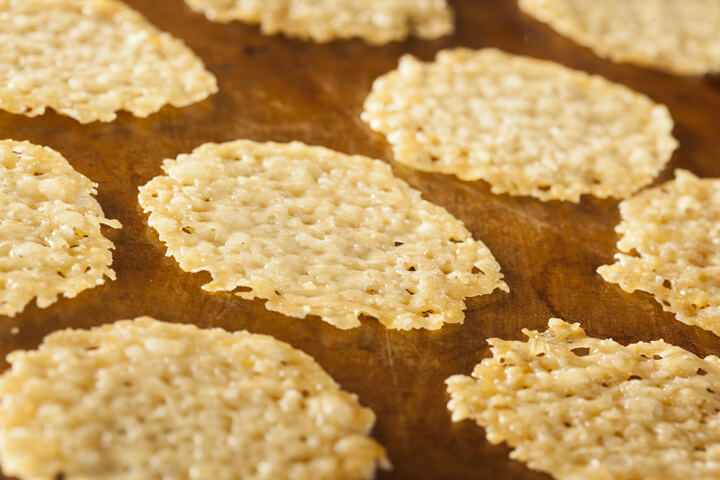
For a simple, yet addictive appetizer, try chunks of Parmigiano drizzled with aged balsamic vinegar. For something more elegant, try Parmigiano Frico, which are lacy cheese crisps, which can be served with dried fruits or nuts or can top soups, salads, or pasta.
My kids are such aficionados of Parmigiano that they will eat a whole block of it in one sitting, which is fine for an occasional special treat; but it’s not a habit we can indulge all the time at twenty dollars a pound.
I do buy some other varieties or blends of cheese occasionally for sprinkling over pizza or pasta, just because the kids like to use so darn much of it. But I have to say it sort of makes me proud that my five year old can immediately tell the difference between the true Parmigiano Reggiano and it’s “imposters.”
It’s amazing how good some of the simplest foods can be! What is your desert island food?
1 comments
©2026 CDKitchen, Inc. No reproduction or distribution of any portion of this article is allowed without express permission from CDKitchen, Inc.
To share this article with others, you may link to this page:
https://www.cdkitchen.com/cooking-experts/pamela-chester/1357-parmigiano-reggiano/
Pass the Parmigiano Reggiano Cheese, Please

If I were stranded on a desert island, and could only take one food with me, it would probably be my favorite Italian cheese—Parmigiano Reggiano. The complex flavor and crumbly, crystalline texture define this singular cheese.
Parmigiano Reggiano is so special to Italian cuisine that its name is legally protected with a label, the DOP (Protected Designation of Origin). This label is used in Italy for local products or traditional processed products from a specific region. Other examples of foods with this designation include Balsamic Vinegar of Modena, San Marzano Tomatoes from Campania. and Prosciutto di Parma (the pigs which are cured to make Prosciutto feed on whey leftover from Parmigiano production in symbiosis, Italian style).
Parmigiano Reggiano cheese is still made according to traditional methods that are strictly enforced. The raw milk must come from free-range cows who have only fed on grass or hay in a limited region bordering the Italian cities of Parma and Reggio. No antibiotics, artificial growth hormones, or genetic engineering allowed. The cheese is made from fresh milk, never more than a day old. Just like in the winery concept of terroir, the grass on which the Parma cows feed is said to gives the milk its own flavor, derived from unique soil and climate characteristics.
Parmigiano reaches its final maturity in storerooms, which are maintained by the community, and otherwise known as “cathedrals of cheese.” After at least twelve months of aging and turning, each cheese must undergo rigorous testing, and if passed, will be branded with the seal of quality.
High in calcium and other vitamins, Italians feed Parmigiano Reggiano to babies as their first table food. This cheese was often brought to space by United States and Russian astronauts. It contains more umami elements than any other food. With stellar credentials like these, it's no wonder that it's known across the world as the “King of Cheeses.”
Local Parmigiano Reggiano producers and their consortia are intent on maintaining the purity of their traditions and the high quality associated with the names and origins of their products, hence the label. When you find cheese that has been branded as Parmigiano Reggiano, DOP, you can be assured you are getting the highest quality.
And when you bring that cheese home, you will immediately see the difference between that and its far off cousins, Parmesan, Parmigiana, or Parmesano; cheeses that are made in the same style, but not subject to the same quality standards, and usually nowhere close in flavor.
For a simple, yet addictive appetizer, try chunks of Parmigiano drizzled with aged balsamic vinegar. For something more elegant, try Parmigiano Frico, which are lacy cheese crisps, which can be served with dried fruits or nuts or can top soups, salads, or pasta.
My kids are such aficionados of Parmigiano that they will eat a whole block of it in one sitting, which is fine for an occasional special treat; but it’s not a habit we can indulge all the time at twenty dollars a pound.
I do buy some other varieties or blends of cheese occasionally for sprinkling over pizza or pasta, just because the kids like to use so darn much of it. But I have to say it sort of makes me proud that my five year old can immediately tell the difference between the true Parmigiano Reggiano and it’s “imposters.”
It’s amazing how good some of the simplest foods can be! What is your desert island food?

Serves/Makes: 4
- 1/2 cup grated Parmigiano Reggiano Cheese
Heat a large nonstick skillet over medium heat. Sprinkle cheese evenly to cover bottom part of pan. Cook about 3 minutes, until cheese is melted and light brown. Use thin spatula to flip and cook until firm, about 30 seconds more.
Loosen edges and transfer to plate. Let cool completely, break into large pieces and serve over salad or with aged Balsamic Vinegar and sliced Prosciutto di Parma.
share this article:


related articles



1 comments
I love a good Parm!!!
My desert island food? I have a sweet tooth - big time, so if I was stranded I'd need chocolate! And it'd go with the local food selection like bananas, coconuts, etc. Well, maybe not so much on fish or seafood, but if there were some animals to make into a mole...mmmm!Comment posted by April
Write a comment:
©2026 CDKitchen, Inc. No reproduction or distribution of any portion of this article is allowed without express permission from CDKitchen, Inc.
To share this article with others, you may link to this page:
https://www.cdkitchen.com/cooking-experts/pamela-chester/1357-parmigiano-reggiano/