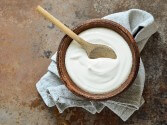
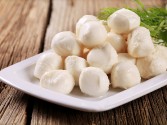

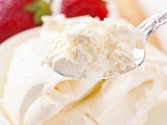


What's the secret ingredient in these cakes? Pudding mix. It not only adds flavor but it gives the cake a richer, creamier texture. No one will know your secret ingredient!
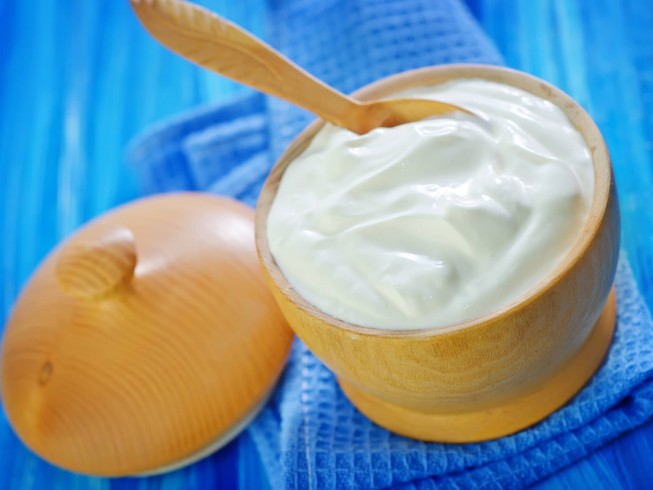


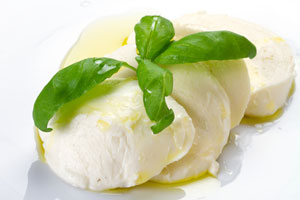
Mascarpone is similar to the cream cheese we buy at the store but it has a more velvety texture and a rich, sweet flavor. It's used in desserts like tiramisu but can also be used in savory dishes.
4 cups heavy cream
1/4 teaspoon tartaric acid
Line a mesh strainer with a double layer of cloth (such as a dishcloth). Place the strainer over a bowl with enough room so that the bottom of the strainer is not touching the bowl.
Heat the cream to 180 degrees F in the top of a double boiler over simmering, not boiling, water. When the cream is at temperature, add the tartaric acid and stir constantly for 30 seconds.
Carefully remove the top of the double boiler and place on a trivet or heat-proof surface. Stir the cream mixture for 2 minutes.
Pour the cream mixture into the lined strainer and place the strainer and bowl in the refrigerator. When the cream is chilled, cover it with plastic wrap and let it sit, in the strainer, for 18 hours or until it is very thick.
Transfer the mascarpone to a covered container. It will keep for up to 7 days.
Make sure to stir constantly when adding the acid to the heated cream so it mixes evenly.
Allowing the mascarpone to strain in the refrigerator for a longer period can result in a thicker consistency.
Try different flavorings to vary the mascarpone.
Use a high-quality heavy cream for the best results in making mascarpone.
You can use the homemade mascarpone as a substitute for cream cheese in most recipes for a richer flavor.
Mascarpone is a creamy and rich Italian cheese similar to cream cheese but with a more velvety texture and slightly sweeter flavor.
You can substitute lemon juice or white vinegar for tartaric acid, but the flavor may be slightly different.
Mascarpone is commonly used in desserts like tiramisu, but it can also be used in savory dishes like pasta sauces or as a spread on toast or bagels.
Heavy cream is necessary for the high fat content required to make mascarpone. Using milk will not yield the same results.
Heating the cream to 180 degrees F helps to activate the acid and thicken the mixture. It's an essential step in making mascarpone.
You can use a nut milk bag or a clean pillowcase as an alternative to a cloth-lined strainer for straining the mascarpone.
The mascarpone is ready when it is very thick and has a spreadable consistency. It should hold its shape when spooned.
You can flavor mascarpone with vanilla extract, lemon zest, or honey for a different flavor.
Store the mascarpone in a covered container in the fridge. It will keep for up to 7 days.
It's not recommended to freeze mascarpone as it will change the texture and consistency of the cheese.
Mesh Strainer and Cloth (dishcloth or cheesecloth): Used to line the mesh strainer in order to strain the liquid from the mascarpone mixture.
Double Boiler: For heating the cream gently and evenly without scorching or burning.
Bowl: Placed underneath the mesh strainer to catch the liquid strained from the mascarpone mixture.
Stirring Spoon or Whisk: Used for stirring the cream mixture in the double boiler and after removing it from the heat.
Trivet or Heat-Proof Surface: To safely place the hot double boiler on after removing it from the heat source.
Plastic Wrap: To cover the mascarpone while it chills in the refrigerator.
Covered Container: For storing the homemade mascarpone after it has finished chilling.


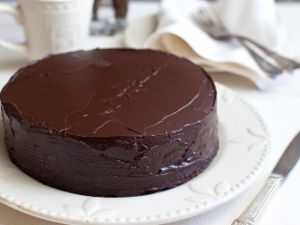
What's the secret ingredient in these cakes? Pudding mix. It not only adds flavor but it gives the cake a richer, creamier texture. No one will know your secret ingredient!

It may look like a sad little package shoved in the back of your freezer, but frozen spinach actually has a lot of culinary uses (and some may surprise you).
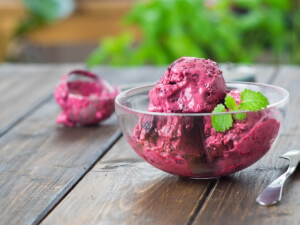
This Italian cheese is so versatile that it can be used in both sweet and savory recipes from cheesecakes to lasagnas.
reviews & comments