

A Pinch of Pepper


The culinary world is full of food pairings. Wine and cheese, coffee and cream, soup and sandwich, pizza and beer… one without the other seems lacking. They just belong together. But perhaps the most famous and enduring pairing is salt and pepper. Salt, necessary for human life because it regulates the body’s fluid balance, has grown in stature from the ordinary “When It Rains, It Pours” iodized variety to a multitude of designer salts from Himalayan pink to black lava. Patiently waiting in the wings while salt occupied the center culinary stage, pepper now deserves its turn in the spotlight.
Pepper may not be necessary to sustain human life like its companion salt, but our food would be pretty boring without it. In their book Salt & Pepper: The Cookbook, Sandra Cook, Sara Slavin and Deborah Jones note that “Pepper complements salt because it is in so many ways salt’s opposite, in color, in origin, and in what it adds to food: a smoky heat and a pungent burst of fragrance. The sensation of spicy heat on the tongue has always been sought, although it is not a human need, it is a human want.” As the American palate continues to crave bolder flavors, we want more of this spice that was at one time in world history more valuable than gold and sometimes used as currency and in sacred offerings to the gods.
Pepper is the world’s most popular spice. It is a berry that grows on the pepper plant (Piper Nigrum)--a woody vine which is native to India and Indonesia. Once the plant flowers, it takes 3-4 years for the berry to form. The berry is harvested and processed to produce green, white, and black peppercorns.
Green peppercorns are picked when the berries are unripe. The berries are preserved in brine or water and sold in jars or cans. White peppercorns are fully ripened berries that are picked and have their skins removed before drying. White pepper, which is a bit less pungent than the black, is often favored by chefs who want the spice of pepper without the black flecks floating around in light-colored sauces. The common black peppercorns are berries that are picked when the berries are half ripe and about to turn red. Once completely dry, they turn black. Pink peppercorns are not a true pepper at all. They are the berries of a different plant species altogether. The pink peppercorn, spicy and a bit sweet, is cultivated in Madagascar and then imported through France for marketing around the world which, in part, explains their high cost.
For the best flavor, buy whole peppercorns and grind them just before you add them to your recipe. Whole black or white peppercorns should be kept in a sealed jar in a cool, dark place and will remain fresh for about a year. Ground black or white pepper will keep it pungency for about 4 months. Green and pink peppercorns packed in brine, once opened, will keep in the refrigerator for about a month and the ones packed in water will keep in the refrigerator for about a week. Pink peppercorns are also sometimes freeze dried and these can be stored in a cool dark place for about 6 months.
If there is one dish where pepper has the staring role, it’s Steak Au Poivre. Nineteenth century chefs developed the dish to be heavy on the pepper because they believed that the spice had potent aphrodisiac properties. It was a popular featured item in the bistros of Normandy at that time and is often seen on Valentine’s Day restaurant menus today.
Much debate surrounds this classic. One camp says the sauce should be made only by deglazing the pan with red wine and adding butter to finish it. The other side, which includes Jacques Pepin and Julia Child, favors the sauce made with cognac. I decided to call my French born friend Rene Defourneaux to get the straight answer. Rene is an avid vegetable gardener, wonderful cook, and a true gourmet who at 86, after perfecting his baguette and challah, is now working on creating a perfect flatbread. He was close personal friends with Paul and Julia Child and enjoyed more than a few meals prepared by Julia herself. So who better to call for my answer?
Rene e-mailed a request for the recipe to his long time friend, Serge Blandin who is a native and resident of Lyon, France. A speedy reply in the form of the recipe below settled the debate. Cognac. Unlike most Steak Au Poivre recipes, Mr. Blandin does not pat the peppercorns on the steak before he sears it, preferring to incorporate the pepper into the sauce itself. And, in a departure from tradition, he adds a bit of ham to the sauce for a salty contrast to the spicy heat of the pepper. He suggests serving the steaks with steamed green beans, boiled new potatoes, and a full-bodied Burgundy wine; and wishes you all Bon Appetite!
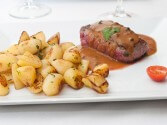

Made with salt, cognac, boiled ham, butter, shallots, white peppercorns, white wine, beef stock, strip steaks
Serves/Makes: 4
- 2 medium shallots, finely diced
- 1 tablespoon white peppercorns, coarsely ground
- 1 cup dry white wine
- 1/2 cup strong dark beef stock
- 4 (1 1/2 inch thick) strip steaks, each about 8 ounces
- 2 tablespoons butter
- 8 ounces lean boiled ham, finely chopped
- 2 tablespoons cognac
- salt
Put the diced shallots and ground peppercorns in a small saucepan with a heavy bottom. Add the white wine and gently simmer on low heat until the liquid is reduced to a third of its original volume.
Add the stock and bring mixture to a boil.
Remove the wine mixture from the heat and set aside.
Melt one tablespoon of the butter in a heavy saute pan and fry the steaks for about 4 minutes on each side or until they are well-seared on both sides.
Remove the steaks from the pan and place them on a warm platter.
Add the ham and saute for a few minutes until it gets a bit crispy.
Pour out any grease that may have accumulated in the pan.
Pour the cognac into the pan. Tip the pan away from you toward the burner flame and ignite the cognac.
Once the flame subsides, add the reserved white wine sauce to the pan.
Bring the mixture to a boil once again and add the remaining tablespoon of butter as you swirl the pan to blend it into the sauce.
Remove the pan from the heat and add salt to taste.
Pour the sauce over the steaks and serve very hot.


related articles


Write a comment:
©2026 CDKitchen, Inc. No reproduction or distribution of any portion of this article is allowed without express permission from CDKitchen, Inc.
To share this article with others, you may link to this page:
https://www.cdkitchen.com/cooking-experts/victoria-wesseler/549-black-pepper/