

The Secret Is In The Sauce


Winter calls for hearty foods: braised lamb shanks, beef stew, cassoulet. Those are well and good dishes for a long Saturday of cooking or when prepared by someone else in a restaurant. On a weeknight, however, eating hearty meats in short cooking time can be a daunting task. Braising meats, roasting long cooking vegetables, neither of these activities are conducive to a quick weeknight meal made by the average working professional.
The challenge is to take those hearty wintery meats and prepare them in a way that cuts down on the time without cutting the feeling of digging into a comforting cold weather meal. Braised meats are always going to be a challenge for the weeknight cook. But more basic cuts like chops and steaks can still form the base for a lovely warming dinner but with a lot less time in the kitchen. The key here to distinguish the winter steak from the summer cook-out is the sauce.
A good pan sauce is the sort of trick restaurants employ all the time to dress up a simple cut of meat. Something as basic as melting butter on a hot plate before placing a cooked steak on top gives the meat a richness that sets it apart from the typical grille rib eye. Taking it up a level, a basic sauce can be made in the same pan the meat cooked in during the time it takes for the meat to rest.
Pan sauces are fantastic for a number of reasons, not the least of which is that you aren’t dirtying up another pan. Cooked down in the same pan as the meat, the addition of liquids helps lift up any bits of meat that stayed stuck to the pan, reincorporating all that delicious meat flavor back into the sauce.
Pan sauces usually involve a few basic elements: fat, liquid, seasoning, and sometimes a starch to act as a thickening agent. A steak au poivre recipe would call for adding alcohol such as brandy to the cooking pan to get up the bits of meat. The meat has already been seasoned with a healthy dose of black pepper so flavoring the sauce can be as simple as adding cream to the reduced brandy, a pinch of salt, and a handful of herbs such as chopped parsley or tarragon.
Continuing on the steak theme (though this sauce would work for pork and lamb just as well), a green peppercorn sauce is another French bistro-type way to dress up an everyday New York strip steak or fillet. In this case the seasoning is almost all in the sauce itself. Melted butter gets the bits of steak up off the pan. Shallots are softened in the butter and then cognac or brandy added for flavor. A bit of cream, some broth, and brined green peppercorns finish the sauce. Reduction of the liquids helps to thicken things up a bit giving the sauce a rich mouth feel and an elegant presentation.
Chicken and pork pan sauces are not naturally as rich, so a broth-based sauce with some flour added to the melted butter will give the sauce some weight without the fat. Just add a tablespoon of flour to the melted butter and proceed with whisking in liquids such as wine and chicken broth. Herbs such as thyme and sage can punch up the sauce without upping the calorie count.
My winter French-bistro-at-home-style steak will be a hybrid steak au poivre and steak with green peppercorn sauce. Crushed dry green and black peppercorns will coat the meat along with salt before cooking in a very hot pan with a bit of oil. The excess fat will be poured off after cooking and to the pan butter will be added to lift up the meat flavors from the pan. Shallots will be sautéed and brandy will be reduced. Broth and cream will give the sauce some substance and some reserved crushed green peppercorns will punch up the flavor.
It may not be beef bourginon or braised short ribs, but a good sauce on an everyday steak will give all the same rich taste and deep satisfaction of a longer cooked piece of meat. Richer than standard summer fare, a good pan sauce can turn a rather ordinary meal into a dish worthy of the winter season. And a sauce this good can keep the mouth happy, belly full, and body warm.
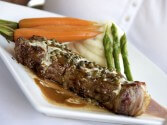

Made with heavy cream, New York strip steaks, black peppercorns, green peppercorns, salt, olive oil, butter, shallot, brandy, beef broth
Serves/Makes: 2
- 2 New York strip steaks at room temperature
- 1 tablespoon ground black peppercorns
- 3 tablespoons green peppercorns, crushed (divided)
- salt
- 2 tablespoons olive oil
- 2 tablespoons butter
- 1 large shallot
- 1/2 cup brandy
- 1/2 cup beef broth
- 2 tablespoons heavy cream
- 2 large slices country bread, toasted
Mix black peppercorns and 2 Tablespoons of the crushed green peppercorns on a large plate. Season the steaks on both sides with salt and then press meat into the peppercorns on both sides to coat.
Heat oil in a heavy saute pan over a medium high heat. Place steaks in pan and sear over the high heat for about 3-4 minutes per side for medium rare.
While meat cooks, mince shallot. Move meat to a cutting board to rest and cover with a foil tent.
Meanwhile, pour off fat in the pan and return in to the stove over a medium flame. Melt butter in the pan and scrape up the meat stuck to the pan as the butter melts.
Add shallots and saute for 2-3 minutes until softened. Add brandy and cook down until only 3-4 tablespoons remain. Add broth, cream, and reserved 1 Tablespoon green peppercorns.
Cook for a few minutes until slightly thickened. Taste and add salt as necessary.
To serve, plate steak with toasted country bread and spoon sauce over both the meat and the bread.


related articles


Write a comment:
©2026 CDKitchen, Inc. No reproduction or distribution of any portion of this article is allowed without express permission from CDKitchen, Inc.
To share this article with others, you may link to this page:
https://www.cdkitchen.com/cooking-experts/amy-powell/1125-pan-sauces/