

Hotplate and a Microwave: Cooking in Small Spaces


As much as those spacious kitchens on the Food Network make preparing a meal seem simple and carefree, most of us don’t have the luxury of an immense cooking space. In my years of cooking, my kitchens have ranged in size from the industrial enclaves of the French Culinary Institute to the hot plate and a microwave that made up the “kitchen” in my London flat. Regardless of how small your kitchen is, good food does not take a TV kitchen to make happen.
My first apartment in college required six girls not only to share 1.5 bathrooms, but a kitchen that featured about two feet of counter space. It was college, so cooking for oneself--except for mac-n-cheese--was not terribly common. But there were certainly times when a little more space would have been nice.
Somehow, we made it work, like the time when we hosted an early Thanksgiving dinner. With our one oven occupied with turkey, we borrowed ovens from the neighbors to bake pies and roast sweet potatoes. By the time the day was over we were using kitchen space in multiple apartments in the building, inviting the neighbors to come partake in the final product. By borrowing space from other people, not only did the dinner work out, but somehow we managed to feed over 30 people with what started as only two feet of counter space.
London is notorious for living spaces being outrageously expensive and shockingly tiny at the same time. Indeed, my flat was so small I could fry an egg while sitting on my bed. The extent of my “kitchen” was a minibar-sized refrigerator, two cupboards, a sink, a hotplate (flat electric stove top), and a microwave. It was not enough equipment or space to feed a crowd by any means, but I made due cooking for one or two people.
The main problem was air circulation; the room had none. Therefore when cooking dinner, fish especially, the task when choosing the recipe was finding non-smelly ingredients so as not to stink up the flat. Curries were out, as were fishy smelling fish. And because space was small, anything that required more than two burners at a time was also out of the question.
If I stuck to quickly seared items such as ahi tuna or medium rare steak, the short cooking time meant less chance for food particles to get trapped in the air. I also made extensive use of the microwave for the first time in my life, steaming vegetables, or heating par-cooked rice in packets, so as to multi-task while the one hotplate was occupied. It was not fine dining, but it sure beat Cup O' Noodles.
I have moved several times in the past few years, trading up to better spaces and better locations. Right now I am lucky enough to live at the beach in Los Angeles. But my old house with an ocean view comes with a kitchen not much bigger than those of my cramped NYC past.
But somehow, again, I make it work. On a recent night entertaining a group of 24 friends, the whole house was transformed into a makeshift kitchen brigade. The washer and dryer became the prep station. The top of the microwave held my mis en place. The normal counter space became the bar. Friends took turns as waiters or dishwashers while I manned the stove. And when I looked out the kitchen window to my balcony I saw my friend making use of our patio furniture to slice peaches for white sangria.
If you have ever had the opportunity to visit the kitchens in New York of say, Aureole or David Burke and Donatella, you would see that even big-time chefs are sometimes short on space. In those hallways, cases of Pellegrino water form the base for a cutting board and a prep station is instantly created. At the actual counters, cutting boards run flush with each other and line cooks keep their elbows in check as they work so closely beside each other than a single flail of an arm could send a knife awry and send a cook to the emergency room.
Dream kitchens are just that, a dream, one which we should all be so lucky to have come true one day. However, just because that dream is not yet a reality does not mean that anything should come in the way of using your kitchen to make great things happen. Turn a stack of boxes into a prep station, borrow an oven from a neighbor, even use the microwave to do some of the cooking, if you must. You might find that it is not from the kitchen, but the cook, that good food is born.
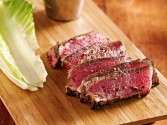

Made with sriracha, white wine vinegar, shallot, fresh ginger, carrot, sesame seeds, ahi tuna steak, black pepper, vegetable oil
Serves/Makes: 4
- 1/2 cup jasmine rice
- salt
- 1/4 pound shiitake mushrooms
- 3 cups pea shoots, bok choy, or other tender greens
- 1/4 cup vegetable oil
- black pepper
- 1 pound ahi tuna steak
- 1/4 cup sesame seeds
- 1 large carrot
- 1 piece (1-inch size) fresh ginger
- 1 shallot
- 2 tablespoons white wine vinegar
- 6 tablespoons vegetable oil
- 1 tablespoon sriracha or other Asian hot sauce
Cook the rice according to package directions with a pinch of salt.
Meanwhile wash mushrooms and greens. Slice shiitakes to 1/2-inch thick slices. Cut greens into 2 inch long pieces, trimming and discarding any tough ends.
Season tuna steak with salt on both sides. Spread sesame seeds on a small plate. Press tuna steak into sesame seeds to coat on both sides.
Peel carrot and grate, add to blender. Peel and mince ginger and shallot and add to blender with grated carrot. Add vinegar, oil, sriracha, and a couple pinches of salt to the blender. Blend all ingredients until smooth. Taste and adjust seasoning with more salt if necessary.
When rice is done cooking, remove from heat and let sit for 5 minutes before fluffing.
Preheat a wok or large skillet over medium high with 1/4 cup oil. Add mushrooms and greens with a pinch of salt and a few crack of black pepper. Saute for 5-6 minutes until mushrooms are lightly browned and greens are softened.
When the greens are done or at the same time heat another saute pan over medium high heat. When the pan is very hot place the tuna steak in the pan. Cook for about 1 to 1.5 minutes per side until steak is just seared and sesame seeds are toasted. Remove steak to cutting board, and slicing against the grain, make 1/2-inch thick slices.
Divide rice and veggies between individual plates. Layer half of ahi slices up against veggie pile on each plate. Spoon several tablespoons of the carrot sauce along the edge of the plate (save the remainder of the sauce for salad dressing) and serve.


related articles




Write a comment:
©2026 CDKitchen, Inc. No reproduction or distribution of any portion of this article is allowed without express permission from CDKitchen, Inc.
To share this article with others, you may link to this page:
https://www.cdkitchen.com/cooking-experts/amy-powell/680-hotplates-and-microwaves/