

cdkitchen > cooking experts > victoria wesseler

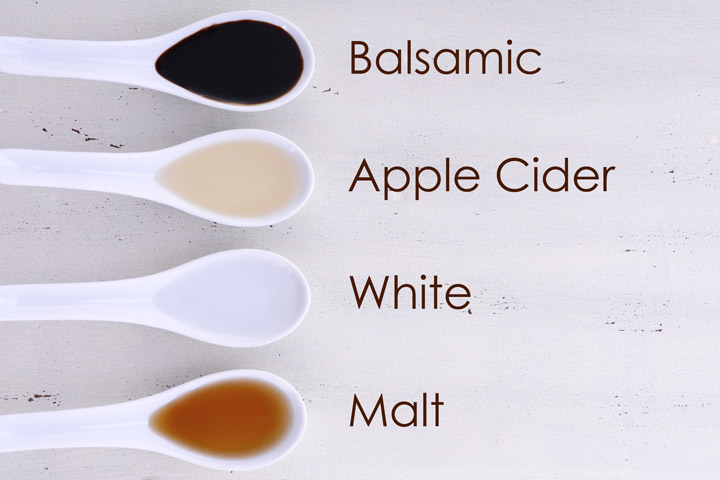
When I was growing up, vinegar came in one flavor. Red. My Italian mother always kept a bottle of red wine vinegar on the kitchen counter. That was all she ever needed. Today, she would be overwhelmed at the number and types of vinegars in my kitchen cabinet. The vinegars I regularly keep on hand range from the standard, gallon size, plastic jugs of white distilled (I use several gallons during canning season) to the more delicately flavored fruit flavored vinegars. In addition to vinegar, I also have bottles of vincotto and verjus (which we’ll talk about in the coming weeks) in my pantry.
The word vinegar is derived form the French word for sour wine. Vinegar is made by bacterial activity that changes fermented liquids such as wine, beer, or cider into a weak solution of acetic acid (from the Food Lover’s Companion, 2001). Food folklore claims that vinegar was first discovered when someone happened upon a keg of wine that was stored for too long and had turned into a sour liquid. Apparently not being ones to waste anything, they brought the liquid back to their kitchen, got creative with it, liked it, and figured out how to make it on their own.
Since its discovery, people have been using vinegar as a flavoring, preservative, and medicine. The Greeks used vinegar to cleanse wounds and mixed it with honey for a drink which they believed would help cure the ill. Roman soldiers drank it straight to give them strength. It was also used during the Civil War to treat scurvy. Today there are many conflicting reports about the health benefits of vinegar, especially apple cider vinegar, and some believe that a teaspoon or two a day will keep all sorts of ailments away. Others say it will help with weight loss and may even prevent osteoporosis by allowing your body to better absorb calcium from the foods that you eat. Unfortunately, these claims are not supported with much scientific data.
Although many still debate, deny, and praise the medicinal use of vinegar, there is one thing that we do know for certain -- it is indispensable in the kitchen. Valued for their tartness, vinegars vary in their acidity levels. The United States Food and Drug Administration (FDA) requires that any product labeled as “vinegar” in the United States must contain 4% acidity. The acidity of vinegar is especially important if you are a home canner. Most canning recipes require a vinegar with an acidity level of at least 5% in order to assure proper food preservation and consumer safety. In these instances, it is essential to use commercially prepared vinegar which has been tested for its acidity level. Homemade vinegars or those which have not been commercially tested should never be used to preserve foods.
Vinegars are a healthy addition to your cooking because they can often be substituted for higher fat ingredients in your recipes. For example:
• Use vinegar based dressing rather than a mayonnaise one for coleslaw.
• Sprinkle fish with vinegar in place of tartar sauce.
• Drizzle balsamic vinegar over steamed veggies in place of butter or oil.
• Instead of salt, add a teaspoon or two of vinegar to finish off soups or stews.
• Use vinegar rather than wine or stock for deglazing.
• Add a teaspoon or two of sherry vinegar to your gravies and sautéed greens instead of butter or oil.
In colonial times, a vinegar based drink called “shrub” was very popular. It was made with fruit, vinegar, sugar or honey, and sometimes a splash or two of rum. Refreshingly sweet and tart, the drink was a perfect beverage for cooling off after a long, hot day in the fields. This old favorite is becoming popular again. Vinegar bars are now springing up in Japan, where consumers eagerly down such concoctions as soy and vinegar shakes and fruit flavored vinegars over ice. I haven’t seen any vinegar drinks on bar menus here yet. But, you can easily make your own. For a cool refreshing drink, try a tablespoon or two of homemade strawberry vinegar in a glass filled with ice topped off with club soda.
©2026 CDKitchen, Inc. No reproduction or distribution of any portion of this article is allowed without express permission from CDKitchen, Inc.
To share this article with others, you may link to this page:
https://www.cdkitchen.com/cooking-experts/victoria-wesseler/488-various-vinegar-uses/
Vinegar, Vincotto, and Verjus: Part One, Vinegar
When I was growing up, vinegar came in one flavor. Red. My Italian mother always kept a bottle of red wine vinegar on the kitchen counter. That was all she ever needed. Today, she would be overwhelmed at the number and types of vinegars in my kitchen cabinet. The vinegars I regularly keep on hand range from the standard, gallon size, plastic jugs of white distilled (I use several gallons during canning season) to the more delicately flavored fruit flavored vinegars. In addition to vinegar, I also have bottles of vincotto and verjus (which we’ll talk about in the coming weeks) in my pantry.
The word vinegar is derived form the French word for sour wine. Vinegar is made by bacterial activity that changes fermented liquids such as wine, beer, or cider into a weak solution of acetic acid (from the Food Lover’s Companion, 2001). Food folklore claims that vinegar was first discovered when someone happened upon a keg of wine that was stored for too long and had turned into a sour liquid. Apparently not being ones to waste anything, they brought the liquid back to their kitchen, got creative with it, liked it, and figured out how to make it on their own.
Since its discovery, people have been using vinegar as a flavoring, preservative, and medicine. The Greeks used vinegar to cleanse wounds and mixed it with honey for a drink which they believed would help cure the ill. Roman soldiers drank it straight to give them strength. It was also used during the Civil War to treat scurvy. Today there are many conflicting reports about the health benefits of vinegar, especially apple cider vinegar, and some believe that a teaspoon or two a day will keep all sorts of ailments away. Others say it will help with weight loss and may even prevent osteoporosis by allowing your body to better absorb calcium from the foods that you eat. Unfortunately, these claims are not supported with much scientific data.
Although many still debate, deny, and praise the medicinal use of vinegar, there is one thing that we do know for certain -- it is indispensable in the kitchen. Valued for their tartness, vinegars vary in their acidity levels. The United States Food and Drug Administration (FDA) requires that any product labeled as “vinegar” in the United States must contain 4% acidity. The acidity of vinegar is especially important if you are a home canner. Most canning recipes require a vinegar with an acidity level of at least 5% in order to assure proper food preservation and consumer safety. In these instances, it is essential to use commercially prepared vinegar which has been tested for its acidity level. Homemade vinegars or those which have not been commercially tested should never be used to preserve foods.
Vinegars are a healthy addition to your cooking because they can often be substituted for higher fat ingredients in your recipes. For example:
• Use vinegar based dressing rather than a mayonnaise one for coleslaw.
• Sprinkle fish with vinegar in place of tartar sauce.
• Drizzle balsamic vinegar over steamed veggies in place of butter or oil.
• Instead of salt, add a teaspoon or two of vinegar to finish off soups or stews.
• Use vinegar rather than wine or stock for deglazing.
• Add a teaspoon or two of sherry vinegar to your gravies and sautéed greens instead of butter or oil.
In colonial times, a vinegar based drink called “shrub” was very popular. It was made with fruit, vinegar, sugar or honey, and sometimes a splash or two of rum. Refreshingly sweet and tart, the drink was a perfect beverage for cooling off after a long, hot day in the fields. This old favorite is becoming popular again. Vinegar bars are now springing up in Japan, where consumers eagerly down such concoctions as soy and vinegar shakes and fruit flavored vinegars over ice. I haven’t seen any vinegar drinks on bar menus here yet. But, you can easily make your own. For a cool refreshing drink, try a tablespoon or two of homemade strawberry vinegar in a glass filled with ice topped off with club soda.

Serves/Makes: 4 cups
- 2 pints fresh strawberries, rinsed and dried
- 1 quart cider vinegar
- 1 cup sugar
Hull the strawberries and cut each in half. Set about 1/4 cup of the strawberries aside.
Place the remaining strawberries in a large bowl. Add the vinegar. Stir to mix it gently then cover the bowl and let it sit at room temperature for 1 hour.
Transfer the vinegar and strawberries to a non-reactive saucepan. Add the sugar, mix well, and bring it to a boil over medium-high heat. Reduce the heat to a simmer and let cook, covered, for 10 minutes.
Strain the vinegar through a fine mesh sieve lined with cheesecloth. Press out as much liquid as possible from the strawberries. Transfer the mixture to a 1 1/2 quart jar. Add the reserved sliced strawberries. Cover the jar tightly and store in the refrigerator.
share this article:


related articles


Write a comment:
©2026 CDKitchen, Inc. No reproduction or distribution of any portion of this article is allowed without express permission from CDKitchen, Inc.
To share this article with others, you may link to this page:
https://www.cdkitchen.com/cooking-experts/victoria-wesseler/488-various-vinegar-uses/