

How To Make the Perfect Vinaigrette


The salad dressing is just as important to the flavor of a salad as are the other ingredients. The right salad dressing can make basic greens and tomatoes taste seasoned and refreshing. Whether creamy and thick, or juicy and thin, salad dressing should be used somewhat sparingly – just enough to lightly coat each component of the salad. Salad dressing should never weigh down a salad, nor should they turn a fresh salad “wet.” They are not sauces, but more like wet seasonings for your greens. The most classic and basic is, of course, vinaigrette.
What is Vinaigrette?
Derived from the French word vinaigre, meaning “sour wine” or vinegar, vinaigrette is a sauce made of vinegar and oil. The ratio of vinegar to oil is usually 1 to 3, but there are some instances of a 1 to 2 or 1 to 4 ratio. Salt and pepper are almost always added for seasoning. Sometimes another ingredient is added to act as both a flavor element and emulsifier, such a mustard.
Emulsion is the suspended mixture of one liquid with another that normally would not mix together smoothly (“like oil and vinegar” being the classic example). This is a desired state for a vinaigrette because it yields a smooth and satiny result. Have you ever had a really thick, almost creamy vinaigrette that looks as though mayonnaise were added? Most likely no mayo was added at all (a classic emulsion itself of egg and oil); rather, the oil was added very slowly, perhaps drop by drop, to the vinegar to make this emulsion.
Ingredients Count
No salad made with wilted, tired lettuce could be good. The same holds true for the ingredients of the vinaigrette. The vinaigrette can only be as good as what goes into it. High quality vinegar and oil absolutely will make a difference. If ever a vinaigrette tastes bitter or harsh, there usually only two reasons: either there is too much vinegar in proportion to the oil, or the vinegar used is of a poor quality.
There are so many vinegars available today, ranging from wine vinegars to fruit vinegars to herb vinegars (red wine, white wine, rice wine, balsamic, cider, raspberry, tarragon, etc.). Oils are just as diverse – seed oils, vegetable oils, nut oils, etc. Each vinegar and oil offers a distinct flavor, and should be used with purpose. It is not always appropriate to use olive oil and balsamic vinegar. Olive oil is most definitely a “taste oil” unlike canola or corn oil, which have little distinct flavors of their namesakes. Balsamic vinegar is a unique flavor as opposed to a red wine vinegar whose characteristics are less readily apparent.
Quality is not always reflected by price, though often it is. For some vinegars, quality is particularly relevant. Balsamic vinegar can range from $5 bottle to more than $100. I must admit, there is in fact a discernable difference between the two. However, I do not necessarily endorse spending $100 for a bottle of balsamic vinegar. A $14 bottle will most likely be up to snuff for an excellent balsamic vinaigrette. Cider vinegar, on the other hand, seems to more or less cost the same everywhere and be of similar quality. In the Asian markets, there is a range with rice wine vinegar quality, much like there is with balsamic. So, try different vinegars and figure out what tastes best to you.
If you are ever stuck with a less-than-desirable quality vinegar, simply add a little honey or sugar to the mix. The sugar will remove the intense acidity of the vinegar, smoothing out the flavor.
Technique Is Key
To make a stellar vinaigrette, we have already established the following: 1) you need a proper ratio of vinegar to oil; 2) you need to use quality ingredients; 3) the combination of these two liquids is a delicate and careful process called emulsion.
Always start with the vinegar and additional flavor elements first, such a mustard, herbs, and spices. In some instanced you may first want to flavor your vinegar with a smashed garlic clove for an hour, which then is discarded before beginning the emulsion process. Combine the vinegar and additional ingredients in a large bowl. Then add the oil very slowly to the vinegar misture, a bit at a time, as you whisk, vigorously. It is that simple, but that critical.
Voila! Vinaigrette!
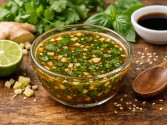

Made with fresh cilantro, garlic, lime juice, olive oil, sesame oil, soy sauce, brown sugar, fresh ginger
Serves/Makes: 1.5 cups
- 4 tablespoons fresh lime juice
- 3 tablespoons olive oil
- 2 tablespoons toasted sesame oil
- 1 tablespoon soy sauce
- 1 tablespoon brown sugar
- 1 tablespoon fresh ginger, peeled and finely chopped
- 1/2 clove garlic, finely sliced
- 1 handful fresh cilantro and basil chopped
Combine all ingredients and let it sit for at least one hour before serving. It may be strained before serving on a salad with additional fresh herbs (cilantro, mint, basil).
Recipe Source: recipe adapted from Jamie Oliver

Made with olive oil, salt and freshly ground black pepper, balsamic vinegar, Dijon mustard, fresh thyme, fresh rosemary
Serves/Makes: 0.75 cup
- 1/2 cup olive oil
- 1/4 cup balsamic vinegar
- 2 teaspoons fine Dijon mustard
- 1 teaspoon finely chopped fresh thyme leaves
- 1 teaspoon finely chopped fresh rosemary leaves
- salt and freshly ground black pepper, to taste
Combine vinegar, mustard and herbs. Slowly add oil and vigorously whisk until the mixture emulsifies. Add salt and pepper to taste. A pinch of brown sugar or honey may be added if the vinegar is too sharp.
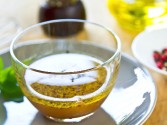
Made with salt and pepper, red wine vinegar, garlic, corn or vegetable oil, Dijon mustard
Serves/Makes: 2 cups
- 1/2 cup red wine vinegar
- 1 clove garlic, peeled and smashed
- 1 1/2 cup corn or vegetable oil
- 1 teaspoon Dijon mustard
- salt and pepper, to taste
Combine the vinegar and garlic in a bowl. Let sit for 20 minutes for the flavors to infuse.
Remove the garlic from the vinegar. Whisk in the oil and mustard until emulsified. Season to taste with salt and pepper.
Serve immediately or store in a covered container in the refrigerator for up to 4 days. Whisk well before serving.


related articles


2 comments
As usual, your article was a truly wonderful education for me. I always learn something new. As a regular reader of your column, I was disappointed that it was switched from Monday to Saturday, as it was a joy to start my week off with your fantastic articles. I, and I'm sure many others, hope you get switched back to Monday!
Comment posted by Limi
Sounds delicious. It's a must try.
Comment posted by Carol Black
Write a comment:
©2026 CDKitchen, Inc. No reproduction or distribution of any portion of this article is allowed without express permission from CDKitchen, Inc.
To share this article with others, you may link to this page:
https://www.cdkitchen.com/cooking-experts/lauren-braun-costello/302-perfect-vinaigrette/