

cdkitchen > cooking experts > rebecca michaels

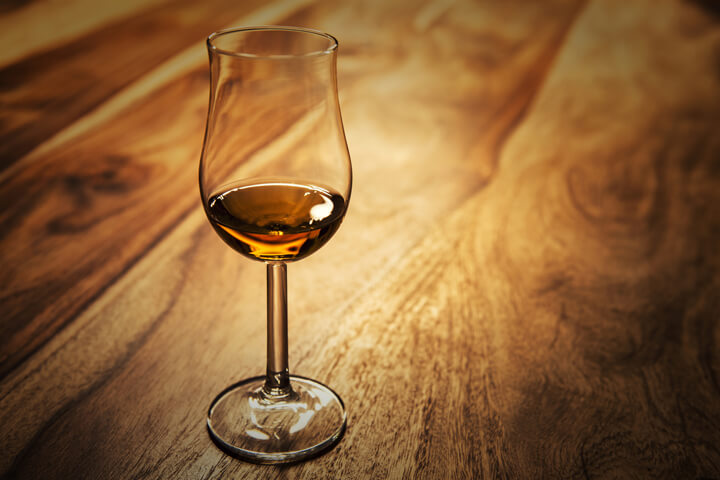
I am a bit of an amateur Scotch enthusiast. I developed a taste for it while I was concocting the recipe for my brownies. I generally enjoy my Scotch at home, as going to whisky bars is a rather expensive habit. But when I do, I undoubtedly get the 'Ohhhh!!!!' from the gaggle of men standing at the end of the bar when I order my Islays single malt neat. I guess it's rather unusual for a woman to enjoy Scotch, but what can I say? I know a good thing when I taste it.
By definition, Scotch is whisky made from malted barley and housed in oak casks for no less than three years in Scotland. "Whisky" without the "e" refers to Scottish and Canadian hooch, and "whiskey" refers to the Irish and American varieties.
There are several areas of Scotland where Scotch is made. Each area has its own general tasting notes, but that aside, every distillery has a different bent. To paint with broad strokes, however, one can generally say that the Speysides, from northeast Scotland, make the sweetest, most delicate Scotch and the Islays (pronounced 'Eye-lah') produce sea-weedy, peaty Scotches that are not for the faint of heart. That being said, there are always exceptions to those rules.
My personal favorite Scotches are the Islays, particularly Ardbeg 10 (years). I didn't enjoy them when I was but a wee one, Scotch-wise, but I gradually began to appreciate the 'iodine' and 'rotten fish' qualities once I got used to them. They are, in my opinion, the most complex of Scotches, but they are not for everyone.
Having said that, I am currently having a love affair with Bruichladdich 10 (pronounced 'Brook-laddie'), an Islay, but with a very very different character from its brethren. It's sweet, light and, dare I say, fruity?
Scotch tasting is an art form all its own. Much like wine tasting, it has its own vocabulary and requires years of palette honing (Having said that, I'd be more than happy to oblige any Scotch distilleries who might require my services for tastings! I'll use your Scotch in my brownies!)
Here is how to properly taste a Scotch:
1. Use a brandy snifter, or if you’re lucky enough to have one, a Scotch snifter, to taste to make sure you release all of the aroma into your nose.
2. Note the appearance and color.
3. Aroma: What does it smell like to you?
4. Swirl it. How does it adhere to the glass? Taste it. What are you tasting? Peat? Cereal? Flowers? Biscuits? Rotten fish (I'm not kidding!)?
5. Add a couple of drops to 50% water. This will release many aromas. Now what are you smelling and tasting? Plastic? Eggs? Cereal? Tobacco? Leather? Sulphur?
6. Finish. Does it linger or fade? How does the flavor change as it leaves your palette?
So, that's Scotch in a very very small nutshell. When I take my distillery tour sometime in the next year, I'll report back with more detailed information. But for now, I think I've given you enough to go out and try that Laphroaig (an Islay) or Glenlivet (a Highlands). Come on, give it a go! Let me know what you think!
Let's end with a Scottish toast:
Here's to me and here's to you,
And if in the world
There was just us two
And I could promise that nobody knew
Would you?
©2026 CDKitchen, Inc. No reproduction or distribution of any portion of this article is allowed without express permission from CDKitchen, Inc.
To share this article with others, you may link to this page:
https://www.cdkitchen.com/cooking-experts/rebecca-michaels/251-scotch-101/
Haud Up Yer Heid Like a Thistle: A Scotch Primer
I am a bit of an amateur Scotch enthusiast. I developed a taste for it while I was concocting the recipe for my brownies. I generally enjoy my Scotch at home, as going to whisky bars is a rather expensive habit. But when I do, I undoubtedly get the 'Ohhhh!!!!' from the gaggle of men standing at the end of the bar when I order my Islays single malt neat. I guess it's rather unusual for a woman to enjoy Scotch, but what can I say? I know a good thing when I taste it.
By definition, Scotch is whisky made from malted barley and housed in oak casks for no less than three years in Scotland. "Whisky" without the "e" refers to Scottish and Canadian hooch, and "whiskey" refers to the Irish and American varieties.
There are several areas of Scotland where Scotch is made. Each area has its own general tasting notes, but that aside, every distillery has a different bent. To paint with broad strokes, however, one can generally say that the Speysides, from northeast Scotland, make the sweetest, most delicate Scotch and the Islays (pronounced 'Eye-lah') produce sea-weedy, peaty Scotches that are not for the faint of heart. That being said, there are always exceptions to those rules.
My personal favorite Scotches are the Islays, particularly Ardbeg 10 (years). I didn't enjoy them when I was but a wee one, Scotch-wise, but I gradually began to appreciate the 'iodine' and 'rotten fish' qualities once I got used to them. They are, in my opinion, the most complex of Scotches, but they are not for everyone.
Having said that, I am currently having a love affair with Bruichladdich 10 (pronounced 'Brook-laddie'), an Islay, but with a very very different character from its brethren. It's sweet, light and, dare I say, fruity?
Scotch tasting is an art form all its own. Much like wine tasting, it has its own vocabulary and requires years of palette honing (Having said that, I'd be more than happy to oblige any Scotch distilleries who might require my services for tastings! I'll use your Scotch in my brownies!)
Here is how to properly taste a Scotch:
1. Use a brandy snifter, or if you’re lucky enough to have one, a Scotch snifter, to taste to make sure you release all of the aroma into your nose.
2. Note the appearance and color.
3. Aroma: What does it smell like to you?
4. Swirl it. How does it adhere to the glass? Taste it. What are you tasting? Peat? Cereal? Flowers? Biscuits? Rotten fish (I'm not kidding!)?
5. Add a couple of drops to 50% water. This will release many aromas. Now what are you smelling and tasting? Plastic? Eggs? Cereal? Tobacco? Leather? Sulphur?
6. Finish. Does it linger or fade? How does the flavor change as it leaves your palette?
So, that's Scotch in a very very small nutshell. When I take my distillery tour sometime in the next year, I'll report back with more detailed information. But for now, I think I've given you enough to go out and try that Laphroaig (an Islay) or Glenlivet (a Highlands). Come on, give it a go! Let me know what you think!
Let's end with a Scottish toast:
Here's to me and here's to you,
And if in the world
There was just us two
And I could promise that nobody knew
Would you?
share this article:


related articles


Write a comment:
©2026 CDKitchen, Inc. No reproduction or distribution of any portion of this article is allowed without express permission from CDKitchen, Inc.
To share this article with others, you may link to this page:
https://www.cdkitchen.com/cooking-experts/rebecca-michaels/251-scotch-101/