

cdkitchen > cooking experts > rebecca michaels

I thought I'd put on my teacher-chef's toque and give you a little lesson on the basics of chocolate. I know it's a favorite topic for so so many of you out there. So listen up! Take notes and feel free to ply me with questions. Read my article on cocoa to get a brief history of chocolate.
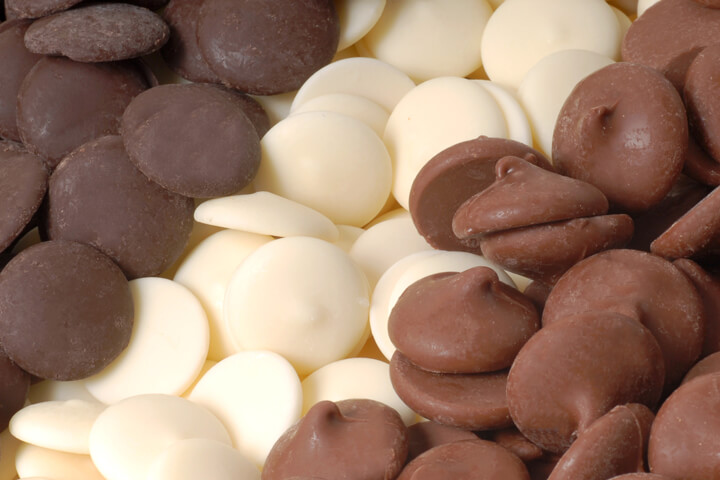
The ingredient that makes chocolate 'chocolate' is called chocolate liquor. Chocolate liquor, contrary to what you might think, does not contain any alcohol, but is actually skinned and roasted cocoa nibs, which are the beans of the chocolate tree, or Theobroma cacao. Chocolate also contains various amounts of sugar, cocoa butter (the fat that is separated from the nib), an emulsifier (generally lecithin), and vanilla. To vastly oversimply, there are four main types of chocolate: unsweetened, dark, milk and white.
Unsweetened chocolate contains 100% chocolate liquor and no sugar. This type is pretty much used exclusively for baking.
Dark chocolate contains a high amount of chocolate liquor, but also sugar and vanilla. It is generally known as bittersweet or semisweet, which has slightly less chocolate liquor than the former. In professional settings, most chocolate is identified by its percentage of liquor relative to the other ingredients. I have seen dark chocolate that has as high as 74% chocolate liquor. That's some dark chocolate! Dark chocolate is used for baking, eating and confectionary making (But I figure you already knew that!).
Milk chocolate contains, as you might suspect, milk in addition to liquor, cocoa butter, sugar, lecithin and vanilla, giving it a lighter, creamier quality. Some European milk chocolates tend to have a maltier quality than their American cousins. Unfortunately, the milk chocolates that are most popular don't do justice to the vast differences in flavor and depth. Go out and try a piece or two of artisan milk chocolate and you'll see what I mean. Milk chocolate is more difficult to work with in confection making, and has characteristics closer to its most unstable cousin, white chocolate.
White chocolate is actually not real chocolate at all because it contains no chocolate liquor. Real white chocolate should be made with cocoa butter, not vegetable fat. Personally, I think white chocolate has gotten a bad rap, but I think it's because here in the U.S. we're used to poor quality white chocolate, or worse yet, white chocolate coating, which is just flavored vegetable fat. It is relatively popular considering its poor taste because it doesn't require tempering and does not burn as easily as pure white chocolate. If you see "candy melts" in the store, understand that the flavor and texture will be inferior to the real stuff.
Tempering? What do you mean by that, Rebecca? Without getting too chemically technical, tempering is the process of heating and cooling chocolate so that its fat structure will reform quickly to impart that shiny, snappy quality that one knows in chocolate candy. So, the reason why your chocolate chips in your chocolate chip cookies aren't as firm as they were when you added them to the dough is because the chocolate wasn't tempered: it was heated way beyond the correct temperature range. But in that case, you want soft chips in your cookies. If you just melted chocolate and then tried to make molded chocolates or bon bons, you'd have a mushy mess that would only harden after a very long period of time or if you stuck it in the fridge. You can tell when chocolate has "fallen out of temper" when you touch it and it immediately melts in your hand.
Tempering is an article in itself, so we'll tackle that one another time!
©2026 CDKitchen, Inc. No reproduction or distribution of any portion of this article is allowed without express permission from CDKitchen, Inc.
To share this article with others, you may link to this page:
https://www.cdkitchen.com/cooking-experts/rebecca-michaels/213-chocolate-basics/
Chocolate Primer 101
I thought I'd put on my teacher-chef's toque and give you a little lesson on the basics of chocolate. I know it's a favorite topic for so so many of you out there. So listen up! Take notes and feel free to ply me with questions. Read my article on cocoa to get a brief history of chocolate.
The ingredient that makes chocolate 'chocolate' is called chocolate liquor. Chocolate liquor, contrary to what you might think, does not contain any alcohol, but is actually skinned and roasted cocoa nibs, which are the beans of the chocolate tree, or Theobroma cacao. Chocolate also contains various amounts of sugar, cocoa butter (the fat that is separated from the nib), an emulsifier (generally lecithin), and vanilla. To vastly oversimply, there are four main types of chocolate: unsweetened, dark, milk and white.
Unsweetened chocolate contains 100% chocolate liquor and no sugar. This type is pretty much used exclusively for baking.
Dark chocolate contains a high amount of chocolate liquor, but also sugar and vanilla. It is generally known as bittersweet or semisweet, which has slightly less chocolate liquor than the former. In professional settings, most chocolate is identified by its percentage of liquor relative to the other ingredients. I have seen dark chocolate that has as high as 74% chocolate liquor. That's some dark chocolate! Dark chocolate is used for baking, eating and confectionary making (But I figure you already knew that!).
Milk chocolate contains, as you might suspect, milk in addition to liquor, cocoa butter, sugar, lecithin and vanilla, giving it a lighter, creamier quality. Some European milk chocolates tend to have a maltier quality than their American cousins. Unfortunately, the milk chocolates that are most popular don't do justice to the vast differences in flavor and depth. Go out and try a piece or two of artisan milk chocolate and you'll see what I mean. Milk chocolate is more difficult to work with in confection making, and has characteristics closer to its most unstable cousin, white chocolate.
White chocolate is actually not real chocolate at all because it contains no chocolate liquor. Real white chocolate should be made with cocoa butter, not vegetable fat. Personally, I think white chocolate has gotten a bad rap, but I think it's because here in the U.S. we're used to poor quality white chocolate, or worse yet, white chocolate coating, which is just flavored vegetable fat. It is relatively popular considering its poor taste because it doesn't require tempering and does not burn as easily as pure white chocolate. If you see "candy melts" in the store, understand that the flavor and texture will be inferior to the real stuff.
Tempering? What do you mean by that, Rebecca? Without getting too chemically technical, tempering is the process of heating and cooling chocolate so that its fat structure will reform quickly to impart that shiny, snappy quality that one knows in chocolate candy. So, the reason why your chocolate chips in your chocolate chip cookies aren't as firm as they were when you added them to the dough is because the chocolate wasn't tempered: it was heated way beyond the correct temperature range. But in that case, you want soft chips in your cookies. If you just melted chocolate and then tried to make molded chocolates or bon bons, you'd have a mushy mess that would only harden after a very long period of time or if you stuck it in the fridge. You can tell when chocolate has "fallen out of temper" when you touch it and it immediately melts in your hand.
Tempering is an article in itself, so we'll tackle that one another time!
share this article:


related articles




Write a comment:
©2026 CDKitchen, Inc. No reproduction or distribution of any portion of this article is allowed without express permission from CDKitchen, Inc.
To share this article with others, you may link to this page:
https://www.cdkitchen.com/cooking-experts/rebecca-michaels/213-chocolate-basics/