

An "Irish" Tradition

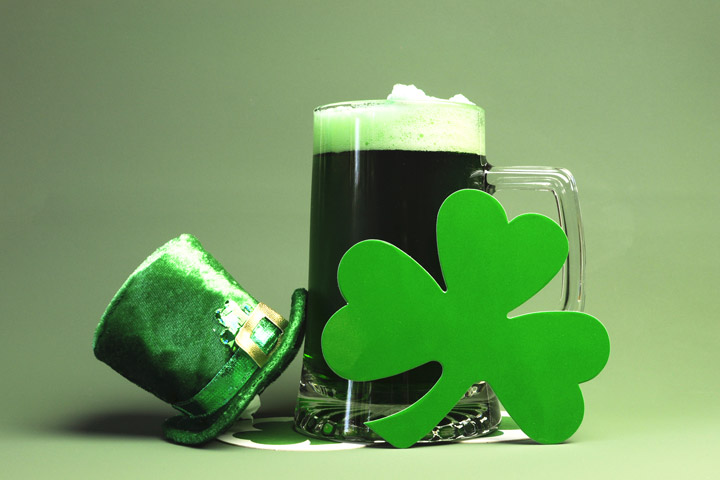
There is an annual St. Patrick’s Day tradition of making corned beef and cabbage and washing it down with a pint of green beer. But did you ever wonder, where did these traditions come from? Well, the green beer is easily explained—green being the official color of the St Patrick’s Day holiday and the Emerald Isle – along with the marketing of green brew by all the major American beer brands and local Irish pubs at this time of the year.
The corned beef and cabbage is another story. Well, I am loathe to tell you, but what many of us consider as the national dish of Ireland is little more than a myth, since beef was never a major part of the Irish diet. Pork and lamb have always been more popular. In traditional Irish agriculture, cattle were kept for their milk, not the meat. What little meat was consumed was cooked fresh.
A little further research proves that this traditional favorite St Paddy's Day meal is based upon a dish that only began to appear in Irish American households when the Irish emigrated to the United States and Canada, where beef and salt were more affordable. They began to cook beef the same way they would have cooked the “bacon joint,” a cut of pork. That is, by salting or corning it, soaking it, and braising it with cabbage and spices.
A poem written by Frances Shilliday tells us the tale. Here's how it begins:
I just want to put something straight
About what should be on your plate,
If it's corned beef you're makin'
You're sadly mistaken,
That isn't what Irishmen ate.
In modern Ireland, corned beef is considered too plain and modest to serve on the holiday table, although a version of salted pork cooked with cabbage can commonly be found. So you may ask, what other kind of food might one find in Ireland to celebrate St Patrick’s Day? After years of deprivation in the culinary arena (following the potato famine that occurred in the mid 1800s and the mass starvation and exodus of the citizens of Ireland), Irish chefs have developed a cuisine they are proud to show off to the rest of the world.
Recently, several dynamic forces, one of which is Ireland’s economic growth, have come together to renew interest in local food products and to create a new Irish cuisine based on simple ingredients and native specialties such as root vegetables, lamb, venison, and unmatched dairy products. I’ve got a chef friend who married an Irish girl and has emigrated to Ireland; he is now cooking in one of these innovative modern Irish restaurants. He gave me a cookbook from their hometown of Kinsale that features a delicious recipe for Irish lamb stew that I have adapted to the slow cooker below.
However I will always hold a soft spot for good old corned beef, and plan to serve some variation of it each year around St Paddy's Day. The slow cooker is the ideal place to cook corned beef because the slow steady heat will prevent it from drying out and getting tough. You can even brine the brisket of beef yourself in a mixture of water, pickling salt, dry mustard, pickling spice, whole garlic cloves, and pepper; it needs to be submerged in the brine for anywhere from three to five days and then rinsed before cooking.
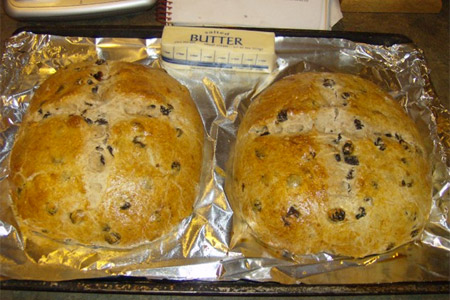
The contest for my most vivid St Patrick’s Day memory is a tie between seeing the excellent parade and bright green river in Chicago and on another year splashing my arm with boiling hot corned beef and cabbage juices and developing a nasty burn! So my advice would be to be very careful when transferring any large cuts of meat from the hot crockpot to a cutting board. Both of these meals—corned beef and cabbage and Irish lamb stew – are great rounded out with a loaf of Irish soda bread.
So whether you are cooking authentic Irish, or Irish American, Happy St. Patrick’s Day to you!

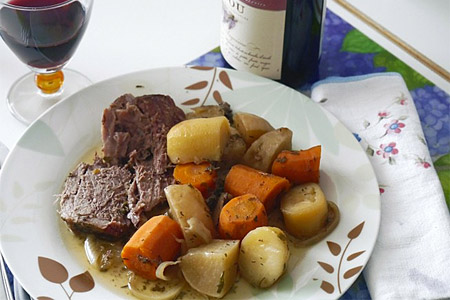
Made with potatoes, vegetable stock, onions, olive oil, lamb, fresh herbs, carrots, celery, parsnips
Serves/Makes: 4
- 2 tablespoons olive oil
- 1 pound diced lamb
- 1 tablespoon chopped fresh herbs, such as rosemary and oregano
- 4 carrots, peeled and sliced
- 3 stalks celery, sliced
- 2 parsnips, peeled and sliced
- 2 onions, chopped
- 4 cups vegetable stock
- 8 small potatoes, quartered
Heat the oil in a skillet over medium-high heat. Add the diced lamb and herbs and cook, stirring frequently, for 15 minutes. Transfer the lamb and herbs to the slow cooker.
Add the carrots, celery, parsnips, and onions to the skillet and saute for 10 minutes. Add to the lamb in the slow cooker.
Add the vegetable stock and potatoes to the slow cooker and stir. Cover the slow cooker and cook on low heat for 6 hours.
10 minutes before serving, mix the cornstarch with the water until smooth. Stir into the liquid in the slow cooker. Stir well then cover and cook on high heat for 15 minutes or until thickened.


related articles



3 comments
You are right of course that corned beef was never a tradition in the "ol' sod" nor was any beef dish. Beef was seldom eaten because cows are raised for dairy and normaly not slaughtered untill "there time is near", about two miles this side of the glue factory. Of course by then ther'e as tough as and old shoe which is the reason any beef,corned or other wise is always slow boiled when ever it is cooked. The corning and the boiling and a good set of teeth,hard to find years ago on the isle,helped to make the beef eatable. Now you know the rest of the story.
Comment posted by big billy goat gruff
Thank you so much...I have had so many disagreements on this subject. My grandparents, Irish immigrants (who raised pigs), raised us on "ham & cabbage" (heavy on the potatoes and cabbage)...NOT "corned beef". I have always felt that the so called tradition of corned beef was a direct result of the Jewish influence in New York when they got off the boat at Ellis Island.
Comment posted by MamieO'Rourke
a story about the use of corned beef in the usa. when ships returned to port after a long voyage they would discard their leftover cured meat into the harbor where it was 'fished outby starving Irish Immigrants. They ships mates eventually sold their leftovers for a penny or two a lb. and the now infamous boiled dinner was tied to the Irish forever. I can't understand any connection to beer though.
Comment posted by big mac
Write a comment:
©2026 CDKitchen, Inc. No reproduction or distribution of any portion of this article is allowed without express permission from CDKitchen, Inc.
To share this article with others, you may link to this page:
https://www.cdkitchen.com/cooking-experts/pamela-chester/473-corned-beef-tradition/