

cdkitchen > cooking experts > lauren braun costello

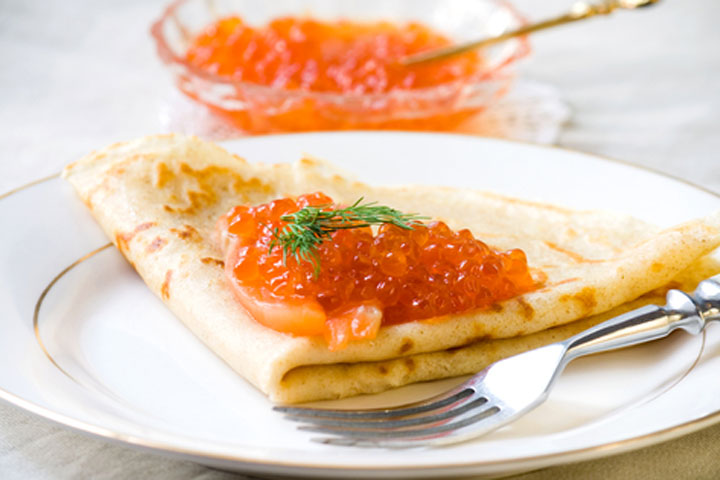
One of summer's great pleasures is vacation. I just returned from my summer vacation of two weeks in Europe. My husband, sister, grandfather and I finished our trip in Moscow, a city conjured in our minds simply by the colorful onion domes of St. Basil's cathedral in the Kremlin. Rich in architecture, history and culture, Moscow is also a culinary capital. There is a lot more to Russian gastronomy than vodka and caviar (though surely that would be more than enough of a fair contribution to the culinary world). Since the Soviet Union was made up of 15 republics, the Russian Federation today boasts not only its own cookery, but Ukranian, Uzbek, and Georgian.
Our first meal in Moscow was lunch at a famous restaurant frequented by Anglophone tourists called Pushkin Café. Considered by many to be the best restaurant in Moscow if not Russia, Pushkin recalls the pre-revolutionary era of the early 20th century. Located in a wealthy chemist's townhouse, the restaurant occupies four stories of ornate walls and stacked antique bookcases. The haute cuisine matches the aristocratic and exclusive décor.
We savored Russian classics like hot Borscht, made with beef, cabbage and honey roasted apples, and cold Okroshka, a soup based on Russian cider, known as kvass. Suckling pig was served with sour cream and buckwheat groats, also known as kasha. Our desserts of honey cake and sour cherry dumplings (vareniki) were simple, traditional and out of this world. The meal and atmosphere was so spectacular that we had our last supper at Café Pushkin before returning to New York. At our dinner there, we splurged on osetra caviar, blinis, vodka and Beef Stroganoff.
At the time, it seemed hard to top that lunch at Café Pushkin. But sure enough, dinner our first night was nothing short of too good to be true. We dined at an eatery called Shinok, a Ukranian restaurant also known for its stellar combination of food and décor. We climbed a wooden flight of stairs two stories high and then entered an old farmhouse setting with waitresses dressed in traditional Ukranian garb.
When we were seated, we noticed that the outside wall of the restaurant had no windows, but the inside wall did. Much to our astonishment, the windows offered a view of an indoor Ukranian farmyard, complete with a live horse, sheep, goat, turkey, chicken and farm maiden knitting atop a pile of hay! This was one of the most unique eating experiences of my life, and it put a whole new twist on the notion of "theme" restaurants.
The food was equally surprising and enticing. We drank sauerkraut juice, kvass, and pear juice (uzvar). Then we enjoyed many delicacies, many of which were already familiar to us through Jewish foods: pickled tomatoes, sauerkraut, cabbage and prune-stuffed vareniki, chopped liver vareniki, carp baked in sour cream with fried onions, fried fish cakes (tolcheniki), chopped herring (forshmack) and cheese blintzes.
We are not a theme restaurant family, but in Moscow we could not seem to escape the reality that some of the city's best meals come with a kitschy décor. On our second night in Moscow we had dinner at an Uzbek establishment called Beloye Solntse Pustyni (White Sun of the Desert), named after the eponymous Soviet-era film. The restaurant is a diorama of scenes from the movie, including a ship stranded in the desert and rebel soldiers ready to fire. My view of the abandoned ship was far superior to my grandfather's direct line of sight to the scruffy rebels in action.
Nevertheless, the food was delicious. Course after course we enjoyed an array of vegetables and fish, grilled meats (shashlik) and pilaf. Somehow we found a way, as always, to make room for dessert, a feast in its own right of dried fruits, pastries cakes and candies.
We enjoyed two more meals in Moscow worth mentioning. We found a Jewish restaurant named Chagall, after the Jewish Russian-born French Painter. There we ate a lot of soul food: chopped eggs and onions (geshmack), black radish salad with goose fat (schmaltz) and cracklings (gribiners), gefilte fish cooked in beet juice, and potato pancakes (latkes). Eating such food at a restaurant was a real treat, since we really only know these foods in the home at our holiday table.
Our final lunch, however, was a totally new food experience at a Georgian restaurant in the pedestrian shopping oasis of Arbat Street. Cheese pie (khachapuri), pickled eggplants filled with walnut paste, and crisp chicken (tabaka) cooked in sour milk were the most tasty dishes.
Thank you for traveling on this extraordinary food journey with me. If you want to keep traveling, try this simple uzvar recipe for a cold, refreshing Russian drink.
©2026 CDKitchen, Inc. No reproduction or distribution of any portion of this article is allowed without express permission from CDKitchen, Inc.
To share this article with others, you may link to this page:
https://www.cdkitchen.com/cooking-experts/lauren-braun-costello/133-russian-cuisine/
From Russia With Love
One of summer's great pleasures is vacation. I just returned from my summer vacation of two weeks in Europe. My husband, sister, grandfather and I finished our trip in Moscow, a city conjured in our minds simply by the colorful onion domes of St. Basil's cathedral in the Kremlin. Rich in architecture, history and culture, Moscow is also a culinary capital. There is a lot more to Russian gastronomy than vodka and caviar (though surely that would be more than enough of a fair contribution to the culinary world). Since the Soviet Union was made up of 15 republics, the Russian Federation today boasts not only its own cookery, but Ukranian, Uzbek, and Georgian.
Our first meal in Moscow was lunch at a famous restaurant frequented by Anglophone tourists called Pushkin Café. Considered by many to be the best restaurant in Moscow if not Russia, Pushkin recalls the pre-revolutionary era of the early 20th century. Located in a wealthy chemist's townhouse, the restaurant occupies four stories of ornate walls and stacked antique bookcases. The haute cuisine matches the aristocratic and exclusive décor.
We savored Russian classics like hot Borscht, made with beef, cabbage and honey roasted apples, and cold Okroshka, a soup based on Russian cider, known as kvass. Suckling pig was served with sour cream and buckwheat groats, also known as kasha. Our desserts of honey cake and sour cherry dumplings (vareniki) were simple, traditional and out of this world. The meal and atmosphere was so spectacular that we had our last supper at Café Pushkin before returning to New York. At our dinner there, we splurged on osetra caviar, blinis, vodka and Beef Stroganoff.
At the time, it seemed hard to top that lunch at Café Pushkin. But sure enough, dinner our first night was nothing short of too good to be true. We dined at an eatery called Shinok, a Ukranian restaurant also known for its stellar combination of food and décor. We climbed a wooden flight of stairs two stories high and then entered an old farmhouse setting with waitresses dressed in traditional Ukranian garb.
When we were seated, we noticed that the outside wall of the restaurant had no windows, but the inside wall did. Much to our astonishment, the windows offered a view of an indoor Ukranian farmyard, complete with a live horse, sheep, goat, turkey, chicken and farm maiden knitting atop a pile of hay! This was one of the most unique eating experiences of my life, and it put a whole new twist on the notion of "theme" restaurants.
The food was equally surprising and enticing. We drank sauerkraut juice, kvass, and pear juice (uzvar). Then we enjoyed many delicacies, many of which were already familiar to us through Jewish foods: pickled tomatoes, sauerkraut, cabbage and prune-stuffed vareniki, chopped liver vareniki, carp baked in sour cream with fried onions, fried fish cakes (tolcheniki), chopped herring (forshmack) and cheese blintzes.
We are not a theme restaurant family, but in Moscow we could not seem to escape the reality that some of the city's best meals come with a kitschy décor. On our second night in Moscow we had dinner at an Uzbek establishment called Beloye Solntse Pustyni (White Sun of the Desert), named after the eponymous Soviet-era film. The restaurant is a diorama of scenes from the movie, including a ship stranded in the desert and rebel soldiers ready to fire. My view of the abandoned ship was far superior to my grandfather's direct line of sight to the scruffy rebels in action.
Nevertheless, the food was delicious. Course after course we enjoyed an array of vegetables and fish, grilled meats (shashlik) and pilaf. Somehow we found a way, as always, to make room for dessert, a feast in its own right of dried fruits, pastries cakes and candies.
We enjoyed two more meals in Moscow worth mentioning. We found a Jewish restaurant named Chagall, after the Jewish Russian-born French Painter. There we ate a lot of soul food: chopped eggs and onions (geshmack), black radish salad with goose fat (schmaltz) and cracklings (gribiners), gefilte fish cooked in beet juice, and potato pancakes (latkes). Eating such food at a restaurant was a real treat, since we really only know these foods in the home at our holiday table.
Our final lunch, however, was a totally new food experience at a Georgian restaurant in the pedestrian shopping oasis of Arbat Street. Cheese pie (khachapuri), pickled eggplants filled with walnut paste, and crisp chicken (tabaka) cooked in sour milk were the most tasty dishes.
Thank you for traveling on this extraordinary food journey with me. If you want to keep traveling, try this simple uzvar recipe for a cold, refreshing Russian drink.


Serves/Makes: 1 qt.
- 2 ounces dried pears
- 2 ounces dried apples
- 1 ounce raisins
- 1/3 cup honey
- 1 quart water
Rinse the pears, apples and raisins. Bring the water and honey to boil in a small pot. Put the rinsed fruit in the boiling liquid and cook gently for 15 minutes.
Remove the pan from the heat and brew the mixture in a cold place for at least an hour.
Strain the mixture, discard the fruit, and chill the liquid. Serve cold.
Alternative: Try prunes, apricots or dates for another flavor combination.
share this article:


related articles


Write a comment:
©2026 CDKitchen, Inc. No reproduction or distribution of any portion of this article is allowed without express permission from CDKitchen, Inc.
To share this article with others, you may link to this page:
https://www.cdkitchen.com/cooking-experts/lauren-braun-costello/133-russian-cuisine/