

cdkitchen > cooking experts > christine gable


Yes, that’s one advertising jingle that has stuck in my head. While media headlines have grappled to-and-fro with both the pros and cons of the health effects of this little white orb, eggs are still known as a source of healthy, lean protein. With only 68 calories per egg, it’s a nifty little prepackaged food that offers a handy all-in-one source of carbohydrates, protein, fat and micronutrients. Best of all, eggs are an easy way to get kids cookin’.
Ready in a Flash: Yes, one of the best things about eggs is that they’re economical, easy, and quick to prepare. And even if there’s one style of egg that won’t pass your lips (poached, over-easy or fried?), the adaptability of the egg is truly amazing.
Choices, choices: Like variety? The egg offers tremendous potential. An egg can nimbly go from breakfast to lunch to snack—even dinner—and provide healthy protein that complements many other foods. Whether it’s hard-boiled with a salad, open-faced with cheese and herbs, your imagination is the limit to what eggs can offer.
Adaptable: Perhaps that jingle should be the incredible adaptable egg. For whether you’re in the mood for some Mediterranean food—think feta, tomato, and olive; or Italian—with oregano, basil, and garlic; or Mexican—by including a dash of salsa with sour cream and guacamole, eggs adapt to the cuisine and to the season. And if you keep some hard-boiled ones on-call, they are a super-quick grab and run protein. Even hotels and B & Bs are offering them on their continental breakfast buffets. Paired up with an English muffin or half a bagel, they help to balance an all-carb overload of many a grain-based breakfast.
We have found the trick with eggs is to not overcook them. Delicate heat and careful timing will make the best egg. For not only does an overcooked egg make folks run from the kitchen with noses pinched shut (not to return for hours), eggs are just not tasty when they’re singed, darkened or overdone. So I’d say we’ve discovered over the years that eggs are a bit finicky and delicate in the cooking method they require. But they’re still simple: one hot non-stick skillet and an attentive cook are the two biggest requirements in my book.
Here are a few of our favorite ways to enjoy eggs:
• Sandwich: seasoned with minced onion, oregano and soy sauce on whole wheat toast
• Open-face Bagel: seasoned with garlic salt, oregano and/or basil with cheddar or American cheese on a bagel (plain or onion)
• Scrambled with a dash of onion powder and Tabasco
• Scrambled plain and served with ketchup and Tabasco on the side
• Omelets with fried onion, ham and cheese tucked inside
Eggs provide brain-boosting choline (of which a recent study noted that 90 percent of Americans are deficient), in addition to B vitamins. While some experts advised caution due to eggs’ high cholesterol content (the yolk), studies have shown that it’s saturated fat in the diet—not dietary cholesterol—that affects blood cholesterol levels. Yet just like anything else in life (and your diet), it’s important not to overdo. Current recommendations state that one to two eggs per day included in a low-fat day is fine—and won’t affect cholesterol levels. According to recent studies, they may even have a beneficial effect on cholesterol.
So go ahead—encourage your kids to try their hand at some egg-ceptional creations. They just might surprise you with an all-original breakfast sandwich one day. My son makes a mean egg sandwich, and last year I shared his simple—yet quite delightful—recipe for making scrambled eggs. How do you like to make eggs? Kids, chime in … what’s the most unusual egg concoction you’ve ever made?
Just yesterday my daughter was thinking about devilled eggs. And while plates of these paprika-topped delicacies are often found at summer picnics, when I asked if she would like to learn to make devilled eggs, the response was all go—so here’s our kid-friendly recipe:
©2026 CDKitchen, Inc. No reproduction or distribution of any portion of this article is allowed without express permission from CDKitchen, Inc.
To share this article with others, you may link to this page:
https://www.cdkitchen.com/cooking-experts/christine-gable/600-eggs/
The Incredible, Edible Egg

Yes, that’s one advertising jingle that has stuck in my head. While media headlines have grappled to-and-fro with both the pros and cons of the health effects of this little white orb, eggs are still known as a source of healthy, lean protein. With only 68 calories per egg, it’s a nifty little prepackaged food that offers a handy all-in-one source of carbohydrates, protein, fat and micronutrients. Best of all, eggs are an easy way to get kids cookin’.
Ready in a Flash: Yes, one of the best things about eggs is that they’re economical, easy, and quick to prepare. And even if there’s one style of egg that won’t pass your lips (poached, over-easy or fried?), the adaptability of the egg is truly amazing.
Choices, choices: Like variety? The egg offers tremendous potential. An egg can nimbly go from breakfast to lunch to snack—even dinner—and provide healthy protein that complements many other foods. Whether it’s hard-boiled with a salad, open-faced with cheese and herbs, your imagination is the limit to what eggs can offer.
Adaptable: Perhaps that jingle should be the incredible adaptable egg. For whether you’re in the mood for some Mediterranean food—think feta, tomato, and olive; or Italian—with oregano, basil, and garlic; or Mexican—by including a dash of salsa with sour cream and guacamole, eggs adapt to the cuisine and to the season. And if you keep some hard-boiled ones on-call, they are a super-quick grab and run protein. Even hotels and B & Bs are offering them on their continental breakfast buffets. Paired up with an English muffin or half a bagel, they help to balance an all-carb overload of many a grain-based breakfast.
We have found the trick with eggs is to not overcook them. Delicate heat and careful timing will make the best egg. For not only does an overcooked egg make folks run from the kitchen with noses pinched shut (not to return for hours), eggs are just not tasty when they’re singed, darkened or overdone. So I’d say we’ve discovered over the years that eggs are a bit finicky and delicate in the cooking method they require. But they’re still simple: one hot non-stick skillet and an attentive cook are the two biggest requirements in my book.
Here are a few of our favorite ways to enjoy eggs:
• Sandwich: seasoned with minced onion, oregano and soy sauce on whole wheat toast
• Open-face Bagel: seasoned with garlic salt, oregano and/or basil with cheddar or American cheese on a bagel (plain or onion)
• Scrambled with a dash of onion powder and Tabasco
• Scrambled plain and served with ketchup and Tabasco on the side
• Omelets with fried onion, ham and cheese tucked inside
Eggs provide brain-boosting choline (of which a recent study noted that 90 percent of Americans are deficient), in addition to B vitamins. While some experts advised caution due to eggs’ high cholesterol content (the yolk), studies have shown that it’s saturated fat in the diet—not dietary cholesterol—that affects blood cholesterol levels. Yet just like anything else in life (and your diet), it’s important not to overdo. Current recommendations state that one to two eggs per day included in a low-fat day is fine—and won’t affect cholesterol levels. According to recent studies, they may even have a beneficial effect on cholesterol.
So go ahead—encourage your kids to try their hand at some egg-ceptional creations. They just might surprise you with an all-original breakfast sandwich one day. My son makes a mean egg sandwich, and last year I shared his simple—yet quite delightful—recipe for making scrambled eggs. How do you like to make eggs? Kids, chime in … what’s the most unusual egg concoction you’ve ever made?
Just yesterday my daughter was thinking about devilled eggs. And while plates of these paprika-topped delicacies are often found at summer picnics, when I asked if she would like to learn to make devilled eggs, the response was all go—so here’s our kid-friendly recipe:
Classic Deviled Eggs
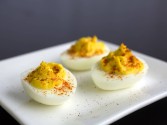

Made with paprika, salt and freshly ground black pepper, hard-cooked eggs, mayonnaise, Dijon mustard, vinegar, sweet pickle relish
Made with paprika, salt and freshly ground black pepper, hard-cooked eggs, mayonnaise, Dijon mustard, vinegar, sweet pickle relish
Serves/Makes: 12 pcs
- 6 hard-cooked eggs, peeled and cut in half lengthwise
- 2 tablespoons mayonnaise
- 2 teaspoons Dijon mustard
- 1/2 teaspoon mild vinegar
- 2 tablespoons sweet pickle relish, plus more for garnish, optional
- salt and freshly ground black pepper, to taste
- paprika, for garnish, optional
Carefully remove the yolks from the hard cooked eggs. Set the whites aside, cut side up, on a platter.
Place the yolks in a bowl and mix with the mayonnaise, mustard, vinegar, relish, salt and pepper. Taste and adjust ingredients as needed.
Spoon the yolk mixture back into the egg whites. You can also use a pastry bag fitted with a decorative tip to pipe the mixture into the whites.
Garnish the filled eggs with a sprinkle of paprika and extra relish on top if desired. Serve immediately or refrigerate until ready to serve.
share this article:


related articles



Write a comment:
©2026 CDKitchen, Inc. No reproduction or distribution of any portion of this article is allowed without express permission from CDKitchen, Inc.
To share this article with others, you may link to this page:
https://www.cdkitchen.com/cooking-experts/christine-gable/600-eggs/