

cdkitchen > cooking experts > amy powell

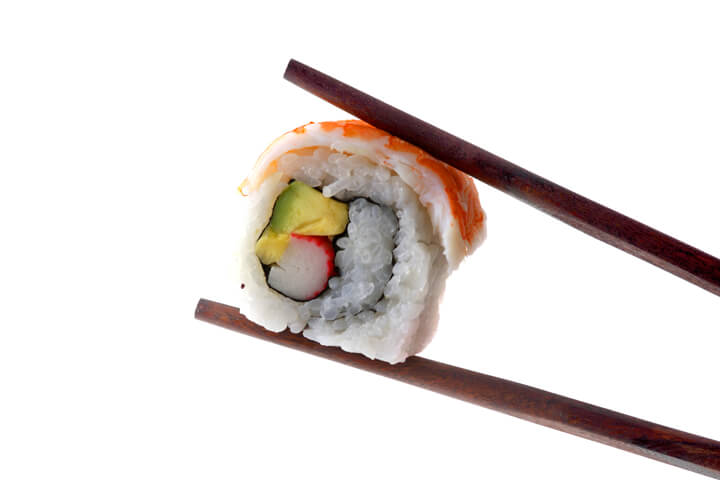
If there is one food that always seems better suited for eating out than cooking ourselves it has to be sushi. All it takes is a flip through a restaurant guide for nearly any American city or a stroll down the prepared food aisle of the typical supermarket to see that sushi has infiltrated nearly every corner of this country. And yet for some reason, this Japanese culinary export, a seemingly simple combination of fish and rice, involves a process that many of us will not touch with much more than our chopsticks.
Sushi, the modern form of which today we typically associate with the Japanese, did not actually begin in Japan. Although the precise origin of sushi is unclear, it is thought that an early form of the dish came from South East Asia over 1,000 years ago. The word “sushi” has an archaic root meaning of “tastes sour” and dates back to a time when fish was preserved in fermented sweet rice. At that time, the rice, sushi, was not eaten but discarded.
At some point, possibly around the 7th Century C.E., early sushi was introduced to Japan. It was almost 700 years later during the Muromachi period that cooks discovered that the addition of vinegar to rice improved the taste and the preservation of the fish. It was from these early roots that raw fish eaten with vinegared rice emerged as the sushi we know today.
There is a reason we often leave sushi making to professionals. To begin with, sushi requires the freshest possible fish and many outside of professional kitchens do not have access to such high quality seafood. Also, complex rolls require a skill that many home cooks do not have the time or patience to master. That being said, sushi in its very basic form is no more than fish and rice, a combination that even the most novice home cook should be able to grasp.
The starting point for any sushi is the fish. If you are going to eat it raw, ask the fish department at your supermarket for the freshest sushi-grade fish they have in stock. Common raw fish used for sushi include tuna (ahi, albacore, yellow fin), salmon, snapper, eel, and hamachi (yellow tail). If you are unsure about the quality of the available fish, smoked salmon or cooked shellfish such as shrimp and lump crab can all work in place of the raw kind.
When working with raw fish, the most important detail is to use a very sharp knife to slice across the grain. If the fish is good and you are a bold eater, try it sashimi style. Lay out raw fish such as ahi on a platter and top with condiments of your choice such as thinly sliced Serrano chilies, julienned pickled ginger, a sprinkle of Hawaiian sea salt, and maybe a drizzle of wasabi vinaigrette.
To move into the world of maki sushi, the rolls that most of us are familiar with, one will need the all-important sushi rice. Western sushi restaurants now experiment with brown and wild rice sushi, but for the original form, a short grained sticky white rice, often labeled “sushi rice”, is required.
The rice is made according to package directions on the stove or in a rice cooker. It will need to be cooled to room temperature before mixing the rice with unseasoned rice vinegar, and optional sugar, salt, and kombu (sea kelp). Forming nigiri sushi (a palm-formed ball of rice with fish on top) can be tricky, and, if you don’t have a bamboo roller, making most rolled sushi will be difficult.
However, hand rolls (temaki) can be made by just about anyone with two hands. Making a hand roll a half sheet of nori (seaweed available in the Asian section of most markets) is layered with a few tablespoons of rice, small pieces of raw fish, and condiments such as cucumber spears, and radish sprouts then rolled to form a cone. Hand rolls are typically eaten right away or else the nori becomes soggy and hard to bite through. Therefore having all the ingredients out makes for a fun eat-as-you go dinner for that everyone at the table can get into.
Outside of rice and fish, the last important component of sushi is the condiments. The ubiquitous green paste called wasabi is a type of Japanese horseradish to be used sparingly. Wasabi can be rolled up in a maki with the fish and rice or mixed with soy sauce, another staple condiment, for dipping. Pickled ginger is used to cleanse the palate between fish but can also serve as a biting addition when slivered and layered on sashimi or rolled up in a maki. Vegetables such as cucumber, avocado, daikon radish, and green onion frequently make appearances. For those who like vegetables, fish, and sushi rice but find the prospect of rolling to be daunting, layer all of the ingredients in bowl and serve with a side of soy sauce and wasabi for the fast and filling dish known as chirashi.
Low in fat, high in protein, and fun to eat, it is no wonder that the sushi phenomenon has swept the country. Just because some sushi combinations are complex does not mean you have to wait for a restaurant to enjoy the pleasures of raw fish and rice. Simple sliced raw fish, easy hand rolls, or layered bowls of your favorite fish rice and condiments can allow you to enjoy what was once a strictly Asian sensation in the pleasure of your own home, chopsticks optional.
©2026 CDKitchen, Inc. No reproduction or distribution of any portion of this article is allowed without express permission from CDKitchen, Inc.
To share this article with others, you may link to this page:
https://www.cdkitchen.com/cooking-experts/amy-powell/1064-sushi-at-home/
You Too Can Make Sushi!

If there is one food that always seems better suited for eating out than cooking ourselves it has to be sushi. All it takes is a flip through a restaurant guide for nearly any American city or a stroll down the prepared food aisle of the typical supermarket to see that sushi has infiltrated nearly every corner of this country. And yet for some reason, this Japanese culinary export, a seemingly simple combination of fish and rice, involves a process that many of us will not touch with much more than our chopsticks.
Sushi, the modern form of which today we typically associate with the Japanese, did not actually begin in Japan. Although the precise origin of sushi is unclear, it is thought that an early form of the dish came from South East Asia over 1,000 years ago. The word “sushi” has an archaic root meaning of “tastes sour” and dates back to a time when fish was preserved in fermented sweet rice. At that time, the rice, sushi, was not eaten but discarded.
At some point, possibly around the 7th Century C.E., early sushi was introduced to Japan. It was almost 700 years later during the Muromachi period that cooks discovered that the addition of vinegar to rice improved the taste and the preservation of the fish. It was from these early roots that raw fish eaten with vinegared rice emerged as the sushi we know today.
There is a reason we often leave sushi making to professionals. To begin with, sushi requires the freshest possible fish and many outside of professional kitchens do not have access to such high quality seafood. Also, complex rolls require a skill that many home cooks do not have the time or patience to master. That being said, sushi in its very basic form is no more than fish and rice, a combination that even the most novice home cook should be able to grasp.
The starting point for any sushi is the fish. If you are going to eat it raw, ask the fish department at your supermarket for the freshest sushi-grade fish they have in stock. Common raw fish used for sushi include tuna (ahi, albacore, yellow fin), salmon, snapper, eel, and hamachi (yellow tail). If you are unsure about the quality of the available fish, smoked salmon or cooked shellfish such as shrimp and lump crab can all work in place of the raw kind.
When working with raw fish, the most important detail is to use a very sharp knife to slice across the grain. If the fish is good and you are a bold eater, try it sashimi style. Lay out raw fish such as ahi on a platter and top with condiments of your choice such as thinly sliced Serrano chilies, julienned pickled ginger, a sprinkle of Hawaiian sea salt, and maybe a drizzle of wasabi vinaigrette.
To move into the world of maki sushi, the rolls that most of us are familiar with, one will need the all-important sushi rice. Western sushi restaurants now experiment with brown and wild rice sushi, but for the original form, a short grained sticky white rice, often labeled “sushi rice”, is required.
The rice is made according to package directions on the stove or in a rice cooker. It will need to be cooled to room temperature before mixing the rice with unseasoned rice vinegar, and optional sugar, salt, and kombu (sea kelp). Forming nigiri sushi (a palm-formed ball of rice with fish on top) can be tricky, and, if you don’t have a bamboo roller, making most rolled sushi will be difficult.
However, hand rolls (temaki) can be made by just about anyone with two hands. Making a hand roll a half sheet of nori (seaweed available in the Asian section of most markets) is layered with a few tablespoons of rice, small pieces of raw fish, and condiments such as cucumber spears, and radish sprouts then rolled to form a cone. Hand rolls are typically eaten right away or else the nori becomes soggy and hard to bite through. Therefore having all the ingredients out makes for a fun eat-as-you go dinner for that everyone at the table can get into.
Outside of rice and fish, the last important component of sushi is the condiments. The ubiquitous green paste called wasabi is a type of Japanese horseradish to be used sparingly. Wasabi can be rolled up in a maki with the fish and rice or mixed with soy sauce, another staple condiment, for dipping. Pickled ginger is used to cleanse the palate between fish but can also serve as a biting addition when slivered and layered on sashimi or rolled up in a maki. Vegetables such as cucumber, avocado, daikon radish, and green onion frequently make appearances. For those who like vegetables, fish, and sushi rice but find the prospect of rolling to be daunting, layer all of the ingredients in bowl and serve with a side of soy sauce and wasabi for the fast and filling dish known as chirashi.
Low in fat, high in protein, and fun to eat, it is no wonder that the sushi phenomenon has swept the country. Just because some sushi combinations are complex does not mean you have to wait for a restaurant to enjoy the pleasures of raw fish and rice. Simple sliced raw fish, easy hand rolls, or layered bowls of your favorite fish rice and condiments can allow you to enjoy what was once a strictly Asian sensation in the pleasure of your own home, chopsticks optional.
Ahi Sashimi with Wasabi Vinaigrette


Made with pickled ginger, green onion, rice wine vinegar, vegetable oil, sugar, wasabi powder, serrano chili, soy sauce, water, sesame oil
Made with pickled ginger, green onion, rice wine vinegar, vegetable oil, sugar, wasabi powder, serrano chili, soy sauce, water, sesame oil
Serves/Makes: 1
- 4 ounces sushi grade ahi tuna
- 1 ounce pickled ginger (preferably all natural with no artificial preservatives)
- 1 green onion
- 1 serrano chili
- 1 teaspoon wasabi powder
- 1 teaspoon sugar
- 3 tablespoons rice wine vinegar
- 2 tablespoons soy sauce
- 1 tablespoon water
- 1 tablespoon sesame oil
- 3 tablespoons vegetable oil
- Hawaiian sea salt
Working across the grain, slice the ahi tuna steak into 1/4-inch thick slices and lay out on a platter. Julienne the ginger. Remove the white part of the green onion and thinly slice the green part into rounds. Thinly slice the chili cross-wise. Set aside all prepped vegetables.
In a small bowl mix wasabi, sugar, vinegar, soy sauce, water, and oils.
Top each slice of tuna with a thin round of chili, a bit of sliced green onion, a sliver of ginger, and a couple of grains of sea salt. When all are assembled, drizzle the vinaigrette over the fish and serve immediately.
share this article:


related articles


Write a comment:
©2026 CDKitchen, Inc. No reproduction or distribution of any portion of this article is allowed without express permission from CDKitchen, Inc.
To share this article with others, you may link to this page:
https://www.cdkitchen.com/cooking-experts/amy-powell/1064-sushi-at-home/