

cdkitchen > cooking experts > victoria wesseler

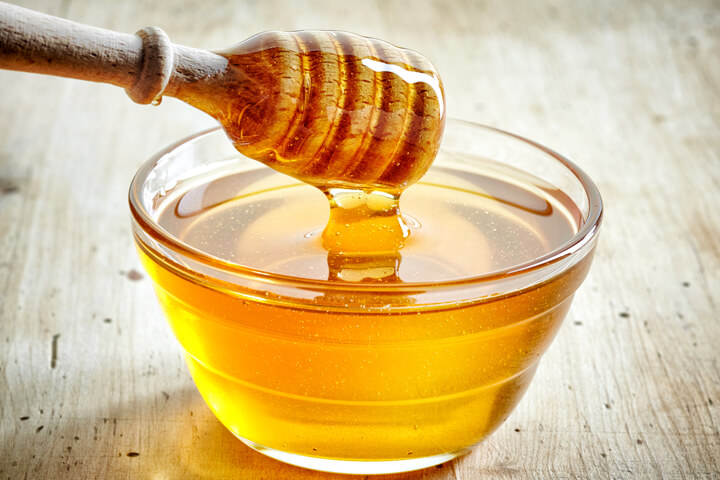
Did you eat today? Thank a honey bee. The American Beekeeping Federation notes that every third bite of food in our diet is dependent upon a honey bee to pollinate plant flowers. Zooming around at a wing stroke of 11,400 times per minute and 15 miles per hour, the industrious honey bee pollinates our food supply as it searches for sources of nectar to make honey. Crops such as almonds, apples, avocados, blueberries, cranberries, cherries asparagus, broccoli, celery, pumpkins, melons, and squash are 90-100% dependent upon the honey bee.
But it’s not just fruits and vegetables that benefit from the busy little bees. Most of the beef and dairy products consumed in the United States are dependent on insect-pollinated legumes such as alfalfa and clover and the honey bee, according to the United States Department of Agriculture, does 80% of that work with other insects contributing the remaining 20% of the pollination activity.
And if the pollination efforts aren’t enough, honey bees provide us with one of nature’s most amazing foods: honey. In order to produce one pound of honey, honey bees will visit 2 million flowers and fly over 55,000 miles. Each tiny bee produces 1 ½ teaspoons of honey in a lifetime.
In addition to approximately 1,600 commercial honey producers in the United States, there are over 200,000 home beekeepers that maintain hives, process honey, and make other related products such as beeswax candles and cosmetics. Recently I visited the three hives of Laura Karr and Jim Gifford who manage KG Acres in Lebanon, Indiana. Along with their honey bees, they raise homegrown produce, herbs, and poultry including some very stately heritage turkeys. But I was there to see the bees—up close and personal.
While dressing me in full beekeeping regalia, Jim cautioned me not to remove my bonnet if any bees got in it. I was to remain calm, search for the intruders with my fingers and unceremoniously squish them. Reminding myself that Laura’s last email to me opened with the sentence “You’re not allergic to bee stings, are you?” I wondered if it was too late to make a beeline (no pun intended) for my car! But before I knew it I was standing close to the hive as Jim removed the lid and we entered the incredible world of the honey bee. I was entranced by the steady hum of the workers and the precise craftsmanship of the honeycombs.
After the hive visit, Jim, Laura and I talked a bit about their beekeeping hobby which they started ten years ago in an effort to pollinate their apple orchard. Their 120,000 Italian honey bees produce about 100 pounds of honey annually, much of which Laura sells at the Zionsville Farmers’ Market in Zionsville, Indiana.
Home beekeeping is not without its challenges. Both Jim and Laura are entomologists and despite their vast knowledge of insects and the great care they take to maintain their hives, they have experienced hive destruction due to cold weather and mites. But over the years they have replenished the hives and happily continue their beekeeping activities.
You don’t have to be an entomologist to be a successful home beekeeper. Lisa Schluttenhofer is a junior at Western Boone Junior/Senior High School and she has been keeping bees for over 5 years. When she was 12 years old, she started working on a Future Farmers of America (FFA) Supervised Agricultural Experience on the topic of honeybees. She manages one hive which houses 60,000 Italian honey bees. In addition to selling and cooking extensively with her honey, she makes candles, lip balms, soaps, and body butters from the honey and wax. Lisa is passionate about the honey bee and lectures to grade school children about the importance of the tiny creature in agriculture and the benefits of adding honey to their diets.
Lisa, Laura, and Jim think Americans should eat more honey. And I agree. Right now, the average American eats 1.29 pounds of honey per year compared to 135 pounds of white refined sugar per year. Why eat more honey? Honey includes a small, but wide array, of vitamins, minerals, and antioxidants. With approximately 20 calories per teaspoon, honey is 1 ½ times sweeter than regular table sugar so you will use less of it to sweeten your food and drink. But the ultimate reason for me is flavor. Try this experiment. Take a teaspoon of refined sugar, put it on your tongue and eat it. Rinse your mouth out with cool water. Now eat a teaspoon of honey. Which do you prefer?
Laura has many customers who prefer to buy local honey believing that the ingestion of the trace amounts of local pollen in the honey can help them alleviate allergies. Many regular customers tell Laura that since they have begun to eat local honey on a daily basis, they have significantly mitigated their allergy problems. Charlotte Jordan, Project Manager at the National Honey Board (www.honey.com) says that there is no scientific proof to confirm these statements but she has plenty of anecdotal evidence to support the claims of individuals who say that a daily dose of local honey is a great help for reducing their allergies (To find a source of local honey in your area visit www.honeylocator.com).
While honey is healthy for most of us, the National Honey Board, along with other health organizations, recommends that honey not be fed to infants under one year of age because it has the potential to cause infant botulism. Infant botulism is a rare but serious paralytic disease caused by the microorganism Clostridium botulinum. After ingestion, C. botulinum spores can germinate, grow and produce toxin in the lower bowel of some infants under one year of age. C. botulinum spores are widely distributed in nature. They can be found in soil, dust, the air and raw agricultural products. Honey is also a potential source of C. botulinum spores. Infants are susceptible to infant botulism until their intestinal microflora develop. Children and adults with normal intestinal microflora are able to ingest C. botulinum spores without harm.
One great way to introduce more honey into your eating plan is to use it as an inexpensive and healthy alternative to sports gels before and after your workouts. Instead of packaged sports gels and goos, use honey sticks for a quick source of energy. For a refreshing hydrator that you can use to replace commercial energy drinks after you exercise, try the National Honey Board’s Honey Hydrator.
There are hundreds of different honeys from around the world, most of them named after the flower from which they originate such as wildflowers, blueberry, clover, orange blossom, fireweed, chestnut, and buckwheat. Each has a distinctive flavor and color.
©2026 CDKitchen, Inc. No reproduction or distribution of any portion of this article is allowed without express permission from CDKitchen, Inc.
To share this article with others, you may link to this page:
https://www.cdkitchen.com/cooking-experts/victoria-wesseler/522-honey/
Oh, Honey!
Did you eat today? Thank a honey bee. The American Beekeeping Federation notes that every third bite of food in our diet is dependent upon a honey bee to pollinate plant flowers. Zooming around at a wing stroke of 11,400 times per minute and 15 miles per hour, the industrious honey bee pollinates our food supply as it searches for sources of nectar to make honey. Crops such as almonds, apples, avocados, blueberries, cranberries, cherries asparagus, broccoli, celery, pumpkins, melons, and squash are 90-100% dependent upon the honey bee.
But it’s not just fruits and vegetables that benefit from the busy little bees. Most of the beef and dairy products consumed in the United States are dependent on insect-pollinated legumes such as alfalfa and clover and the honey bee, according to the United States Department of Agriculture, does 80% of that work with other insects contributing the remaining 20% of the pollination activity.
And if the pollination efforts aren’t enough, honey bees provide us with one of nature’s most amazing foods: honey. In order to produce one pound of honey, honey bees will visit 2 million flowers and fly over 55,000 miles. Each tiny bee produces 1 ½ teaspoons of honey in a lifetime.
In addition to approximately 1,600 commercial honey producers in the United States, there are over 200,000 home beekeepers that maintain hives, process honey, and make other related products such as beeswax candles and cosmetics. Recently I visited the three hives of Laura Karr and Jim Gifford who manage KG Acres in Lebanon, Indiana. Along with their honey bees, they raise homegrown produce, herbs, and poultry including some very stately heritage turkeys. But I was there to see the bees—up close and personal.
While dressing me in full beekeeping regalia, Jim cautioned me not to remove my bonnet if any bees got in it. I was to remain calm, search for the intruders with my fingers and unceremoniously squish them. Reminding myself that Laura’s last email to me opened with the sentence “You’re not allergic to bee stings, are you?” I wondered if it was too late to make a beeline (no pun intended) for my car! But before I knew it I was standing close to the hive as Jim removed the lid and we entered the incredible world of the honey bee. I was entranced by the steady hum of the workers and the precise craftsmanship of the honeycombs.
After the hive visit, Jim, Laura and I talked a bit about their beekeeping hobby which they started ten years ago in an effort to pollinate their apple orchard. Their 120,000 Italian honey bees produce about 100 pounds of honey annually, much of which Laura sells at the Zionsville Farmers’ Market in Zionsville, Indiana.
Home beekeeping is not without its challenges. Both Jim and Laura are entomologists and despite their vast knowledge of insects and the great care they take to maintain their hives, they have experienced hive destruction due to cold weather and mites. But over the years they have replenished the hives and happily continue their beekeeping activities.
You don’t have to be an entomologist to be a successful home beekeeper. Lisa Schluttenhofer is a junior at Western Boone Junior/Senior High School and she has been keeping bees for over 5 years. When she was 12 years old, she started working on a Future Farmers of America (FFA) Supervised Agricultural Experience on the topic of honeybees. She manages one hive which houses 60,000 Italian honey bees. In addition to selling and cooking extensively with her honey, she makes candles, lip balms, soaps, and body butters from the honey and wax. Lisa is passionate about the honey bee and lectures to grade school children about the importance of the tiny creature in agriculture and the benefits of adding honey to their diets.
Lisa, Laura, and Jim think Americans should eat more honey. And I agree. Right now, the average American eats 1.29 pounds of honey per year compared to 135 pounds of white refined sugar per year. Why eat more honey? Honey includes a small, but wide array, of vitamins, minerals, and antioxidants. With approximately 20 calories per teaspoon, honey is 1 ½ times sweeter than regular table sugar so you will use less of it to sweeten your food and drink. But the ultimate reason for me is flavor. Try this experiment. Take a teaspoon of refined sugar, put it on your tongue and eat it. Rinse your mouth out with cool water. Now eat a teaspoon of honey. Which do you prefer?
Laura has many customers who prefer to buy local honey believing that the ingestion of the trace amounts of local pollen in the honey can help them alleviate allergies. Many regular customers tell Laura that since they have begun to eat local honey on a daily basis, they have significantly mitigated their allergy problems. Charlotte Jordan, Project Manager at the National Honey Board (www.honey.com) says that there is no scientific proof to confirm these statements but she has plenty of anecdotal evidence to support the claims of individuals who say that a daily dose of local honey is a great help for reducing their allergies (To find a source of local honey in your area visit www.honeylocator.com).
While honey is healthy for most of us, the National Honey Board, along with other health organizations, recommends that honey not be fed to infants under one year of age because it has the potential to cause infant botulism. Infant botulism is a rare but serious paralytic disease caused by the microorganism Clostridium botulinum. After ingestion, C. botulinum spores can germinate, grow and produce toxin in the lower bowel of some infants under one year of age. C. botulinum spores are widely distributed in nature. They can be found in soil, dust, the air and raw agricultural products. Honey is also a potential source of C. botulinum spores. Infants are susceptible to infant botulism until their intestinal microflora develop. Children and adults with normal intestinal microflora are able to ingest C. botulinum spores without harm.
One great way to introduce more honey into your eating plan is to use it as an inexpensive and healthy alternative to sports gels before and after your workouts. Instead of packaged sports gels and goos, use honey sticks for a quick source of energy. For a refreshing hydrator that you can use to replace commercial energy drinks after you exercise, try the National Honey Board’s Honey Hydrator.
There are hundreds of different honeys from around the world, most of them named after the flower from which they originate such as wildflowers, blueberry, clover, orange blossom, fireweed, chestnut, and buckwheat. Each has a distinctive flavor and color.

Serves/Makes: 8
- 1/2 cup honey
- 1/2 teaspoon lite salt
- 2 cups orange juice
- 5 1/2 cups warm water
Combine the honey, salt, orange juice, and warm water in a pitcher or other container. Let cool, then place in the refrigerator until well chilled or serve over ice.
Recipe Source: adapted from the National Honey Board.
Cook's Notes: Honey should not be fed to infants under one year of age.
share this article:


related articles



Write a comment:
©2026 CDKitchen, Inc. No reproduction or distribution of any portion of this article is allowed without express permission from CDKitchen, Inc.
To share this article with others, you may link to this page:
https://www.cdkitchen.com/cooking-experts/victoria-wesseler/522-honey/