

cdkitchen > cooking experts > victoria wesseler

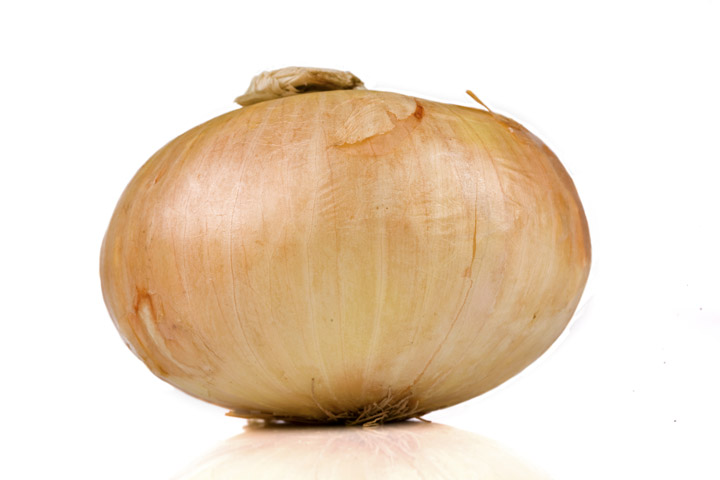
Often bridesmaids, but hardly ever the bride, onions play a significant, and sometimes unrecognized, supporting role in the kitchen. While their contribution to our cooking may be taken for granted, many of our favorite recipes would be disappointingly bland without the addition of an onion or two.
Onions, which come in over 500 varieties, are divided into three categories: spring, storage, and sweet. Spring onions, such as scallions, are characterized by their high water content which makes them sweet and mild, but it also makes them poor candidates for long term storage. The sturdier storage onions, such as boiler, pearl, and Spanish red onions, are known for their strong flavor and durability. They have thick, dry, papery skins which protect them and make them ideal candidates for long term storage. The sweet onions, such as Walla Walla, Texas Sweet, and Vidalia, have thin papery skins and are less hearty than the storage onions. But they will keep longer than the spring ones.
Onions contain calcium, fiber, folic acid, potassium, vitamin C, vitamin B6, and quercetin (which may protect us against heart disease, cataracts, and cancer). A half cup of raw onion has only 30 calories and 7 grams of carbohydrates.
When you cut into an onion, its cells are broken and release a gas which, once it reaches the water in your eyes, forms a weak solution of sulfuric acid causing your tear glands to react to the irritant by producing tears. Many strategies have been tested over the years to reduce this unwelcome side effect of prepping onions. They’ve included wearing onion goggles, slicing the onions under water (sounds a bit dangerous), or chilling the onion before cutting it. None have been proven to be very effective. One strategy that has resulted in less tears for me is to cut off the top tip of the onion (the end without the roots), peel the onion’s skin off leaving the root in tact, and then cut it in half lengthwise from tip to root end, before I slice or chop the onion. The root end contains the greatest concentration of the onion’s sulphuric compounds and by leaving it somewhat intact as you dice or slice the onion, you minimize the compound’s release into the air.
Purchase storage and sweet onions that are heavy for their size and have dry skins without any wrinkles, blemishes, or mold. Store them in a mesh bag or open bowl in a cool, dry, dark, well ventilated area. They should last for a few weeks if properly ventilated. Never refrigerate them. Fresh onions such as scallions, spring salad onions, and chives should be plump and free of blemishes, brown spots, and wrinkles. They should be stored in the refrigerator and used within a few days.
One of the most delicious ways to appreciate the flavor of an onion is to slowly cook it until it caramelizes. The trick to a delicious pile of meltingly sweet onions is to be very patient while you cook the onion slices low and slow to bring out their natural sugar. Use them as a topping for grilled bread, served over a bowl of warm brown rice, piled high on a hamburger, or as an accompaniment to grilled meat or chicken.
©2026 CDKitchen, Inc. No reproduction or distribution of any portion of this article is allowed without express permission from CDKitchen, Inc.
To share this article with others, you may link to this page:
https://www.cdkitchen.com/cooking-experts/victoria-wesseler/506-types-of-onions/
Peeling the Onion
Often bridesmaids, but hardly ever the bride, onions play a significant, and sometimes unrecognized, supporting role in the kitchen. While their contribution to our cooking may be taken for granted, many of our favorite recipes would be disappointingly bland without the addition of an onion or two.
Onions, which come in over 500 varieties, are divided into three categories: spring, storage, and sweet. Spring onions, such as scallions, are characterized by their high water content which makes them sweet and mild, but it also makes them poor candidates for long term storage. The sturdier storage onions, such as boiler, pearl, and Spanish red onions, are known for their strong flavor and durability. They have thick, dry, papery skins which protect them and make them ideal candidates for long term storage. The sweet onions, such as Walla Walla, Texas Sweet, and Vidalia, have thin papery skins and are less hearty than the storage onions. But they will keep longer than the spring ones.
Onions contain calcium, fiber, folic acid, potassium, vitamin C, vitamin B6, and quercetin (which may protect us against heart disease, cataracts, and cancer). A half cup of raw onion has only 30 calories and 7 grams of carbohydrates.
When you cut into an onion, its cells are broken and release a gas which, once it reaches the water in your eyes, forms a weak solution of sulfuric acid causing your tear glands to react to the irritant by producing tears. Many strategies have been tested over the years to reduce this unwelcome side effect of prepping onions. They’ve included wearing onion goggles, slicing the onions under water (sounds a bit dangerous), or chilling the onion before cutting it. None have been proven to be very effective. One strategy that has resulted in less tears for me is to cut off the top tip of the onion (the end without the roots), peel the onion’s skin off leaving the root in tact, and then cut it in half lengthwise from tip to root end, before I slice or chop the onion. The root end contains the greatest concentration of the onion’s sulphuric compounds and by leaving it somewhat intact as you dice or slice the onion, you minimize the compound’s release into the air.
Purchase storage and sweet onions that are heavy for their size and have dry skins without any wrinkles, blemishes, or mold. Store them in a mesh bag or open bowl in a cool, dry, dark, well ventilated area. They should last for a few weeks if properly ventilated. Never refrigerate them. Fresh onions such as scallions, spring salad onions, and chives should be plump and free of blemishes, brown spots, and wrinkles. They should be stored in the refrigerator and used within a few days.
One of the most delicious ways to appreciate the flavor of an onion is to slowly cook it until it caramelizes. The trick to a delicious pile of meltingly sweet onions is to be very patient while you cook the onion slices low and slow to bring out their natural sugar. Use them as a topping for grilled bread, served over a bowl of warm brown rice, piled high on a hamburger, or as an accompaniment to grilled meat or chicken.

Serves/Makes: 4
- 2 pounds sweet onions, peeled
- 1 tablespoon grapeseed oil
- 1 tablespoon butter
- salt, to taste
Cut the onions in half then slice each half into thin slices. A mandoline works well for this.
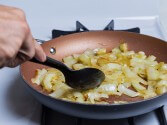
Combine the oil and butter in a skillet over medium-low heat. Add the onions, sprinkle with salt, and cook, stirring occasionally, for 20-30 minutes or until the onions are browned and caramelized.
Serve the onions warm (or use in another recipe).
share this article:


related articles


Write a comment:
©2026 CDKitchen, Inc. No reproduction or distribution of any portion of this article is allowed without express permission from CDKitchen, Inc.
To share this article with others, you may link to this page:
https://www.cdkitchen.com/cooking-experts/victoria-wesseler/506-types-of-onions/