

cdkitchen > cooking experts > victoria wesseler

March is National Frozen Food Month and today, March 6, is National Frozen Food Day. While some culinary purists may feel guilty serving meals made from frozen, rather than fresh, fruits and vegetables, nutritionists say that frozen is often the better choice. Frozen vegetables are considered “healthy” by the FDA. Research shows that they have equivalent, if not higher, nutrient profiles when compared to their fresh counterparts. A study conducted by the University of Illinois found that frozen green beans actually contained twice as much vitamin C as fresh ones. This finding was attributed to the fact that fresh produce often sits in refrigeration units and/or display cases for days after it is harvested while frozen vegetables and fruits are picked at their peak, blanched, and frozen within hours. The fresh vegetables begin to lose their nutrients over time but the frozen ones retain them.
In the colder months when locally grown fresh produce is nowhere to be found and many of the items available at your local supermarket look a bit wilted, frozen fruits and vegetables offer us a lot of benefits. They are readily available, nutritious, convenient, and economical. Stocking your freezer with frozen fruits and vegetables is a smart strategy for healthy eating.
Like most people, there are times when I am not quite sure what I have lurking in the depths of my freezer. So, I decided to explore my frozen food collection this morning and, as an experiment, see what I could make for dinner using only frozen items I had on hand.
Because we grow so much of our own food, I have two large freezers in the garage plus the one in the refrigerator. One of the garage freezers is for fruit and vegetables and the other is for meat, fish, and poultry. Today I decided to limit my inventory and dinner experiment to the items available in my freezer in the kitchen. Here’s what I found:
The top shelf had ice cub trays filled with chopped bell peppers, jalapenos, parsley, cilantro, and basil pesto. During the summer, I take advantage of the extra peppers and herbs in the garden, chop them up in the food processor, and put them by the tablespoonful into inexpensive plastic ice cube trays which I then tightly cover with plastic wrap and foil. They are readily available for frittatas and to season stews, soups, chili, and sauces. There were also herbed butters, grated ginger, and tomato paste. The tablespoon-sized chunks of frozen grated ginger are really convenient when the mood to cook an Asian inspired dish hits me and I don’t have or want to grate fresh ginger. And who doesn’t have leftover tomato paste? Just freeze it in tablespoon sized pieces and toss it in a freezer bag for later use.
On the second shelf, there was a selection of store bought frozen raviolis (cheese, spinach, artichoke, and mushroom), a few balls of pizza dough, tomato sauce, vodka, and gin. I also found a few bags of shredded cheddar and mozzarella cheeses.
The third shelf housed a collection of phyllo dough, puff pastry, peas, spinach, artichokes, the last remaining bag of peach slices from our summer harvest, a loaf of crusty bread, and some ham slices.
The bottom shelf had freezer bags filled with different kinds of bread crumbs. The shelves inside the door held freezer bags full of nuts including pine nuts, walnuts, pecans, and almonds. Because nuts go rancid so easily, I freeze them and then bring them to room temperature for cooking or baking with them.
Frozen foods won’t “spoil”, but they do get freezer burn which renders them tasteless and makes them inedible. While taking stock of my freezer, I did notice a few items that were freezer burned beyond saving and tossed them out. I hate to waste food so I made a mental note to check my freezer at least once a month and use up the food in a more timely manner before that happens again.
Of course, commercially frozen foods are ready to go right from the store’s freezer to yours. No additional packaging or wrapping on your part is necessary. But, if you prepare your own foods for freezing, adhering to proper techniques for assuring food safety is essential. Check out the USDA’s site www.fsis.usda.gov/Fact_Sheets/Focus_On_Freezing/index.asp#2 for detailed information about how to safely freeze and handle frozen foods.
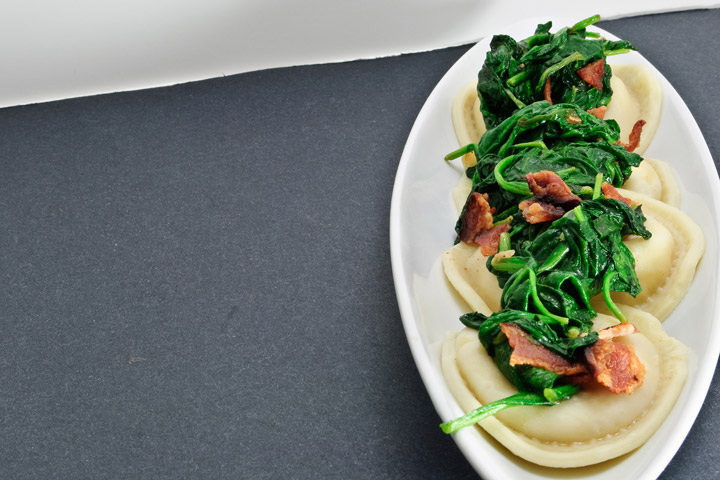
Making a delicious dinner was easy—cheese ravioli topped with sautéed spinach and diced ham. For desert, I thawed out a few of the peach slices and sprinkled them with some toasted slivered almonds.
So, what’s in your freezer? In the next few weeks, you might want to take a peek. It’s a good time to take stock of what you have, discard any items that are no longer recognizable or edible, and develop a plan for stocking it with a few items that can be made into a quick, nutritious, and guilt free meal.
©2026 CDKitchen, Inc. No reproduction or distribution of any portion of this article is allowed without express permission from CDKitchen, Inc.
To share this article with others, you may link to this page:
https://www.cdkitchen.com/cooking-experts/victoria-wesseler/468-frozen-food-finds/
What's In Your Freezer?
March is National Frozen Food Month and today, March 6, is National Frozen Food Day. While some culinary purists may feel guilty serving meals made from frozen, rather than fresh, fruits and vegetables, nutritionists say that frozen is often the better choice. Frozen vegetables are considered “healthy” by the FDA. Research shows that they have equivalent, if not higher, nutrient profiles when compared to their fresh counterparts. A study conducted by the University of Illinois found that frozen green beans actually contained twice as much vitamin C as fresh ones. This finding was attributed to the fact that fresh produce often sits in refrigeration units and/or display cases for days after it is harvested while frozen vegetables and fruits are picked at their peak, blanched, and frozen within hours. The fresh vegetables begin to lose their nutrients over time but the frozen ones retain them.
In the colder months when locally grown fresh produce is nowhere to be found and many of the items available at your local supermarket look a bit wilted, frozen fruits and vegetables offer us a lot of benefits. They are readily available, nutritious, convenient, and economical. Stocking your freezer with frozen fruits and vegetables is a smart strategy for healthy eating.
Like most people, there are times when I am not quite sure what I have lurking in the depths of my freezer. So, I decided to explore my frozen food collection this morning and, as an experiment, see what I could make for dinner using only frozen items I had on hand.
Because we grow so much of our own food, I have two large freezers in the garage plus the one in the refrigerator. One of the garage freezers is for fruit and vegetables and the other is for meat, fish, and poultry. Today I decided to limit my inventory and dinner experiment to the items available in my freezer in the kitchen. Here’s what I found:
The top shelf had ice cub trays filled with chopped bell peppers, jalapenos, parsley, cilantro, and basil pesto. During the summer, I take advantage of the extra peppers and herbs in the garden, chop them up in the food processor, and put them by the tablespoonful into inexpensive plastic ice cube trays which I then tightly cover with plastic wrap and foil. They are readily available for frittatas and to season stews, soups, chili, and sauces. There were also herbed butters, grated ginger, and tomato paste. The tablespoon-sized chunks of frozen grated ginger are really convenient when the mood to cook an Asian inspired dish hits me and I don’t have or want to grate fresh ginger. And who doesn’t have leftover tomato paste? Just freeze it in tablespoon sized pieces and toss it in a freezer bag for later use.
On the second shelf, there was a selection of store bought frozen raviolis (cheese, spinach, artichoke, and mushroom), a few balls of pizza dough, tomato sauce, vodka, and gin. I also found a few bags of shredded cheddar and mozzarella cheeses.
The third shelf housed a collection of phyllo dough, puff pastry, peas, spinach, artichokes, the last remaining bag of peach slices from our summer harvest, a loaf of crusty bread, and some ham slices.
The bottom shelf had freezer bags filled with different kinds of bread crumbs. The shelves inside the door held freezer bags full of nuts including pine nuts, walnuts, pecans, and almonds. Because nuts go rancid so easily, I freeze them and then bring them to room temperature for cooking or baking with them.
Frozen foods won’t “spoil”, but they do get freezer burn which renders them tasteless and makes them inedible. While taking stock of my freezer, I did notice a few items that were freezer burned beyond saving and tossed them out. I hate to waste food so I made a mental note to check my freezer at least once a month and use up the food in a more timely manner before that happens again.
Of course, commercially frozen foods are ready to go right from the store’s freezer to yours. No additional packaging or wrapping on your part is necessary. But, if you prepare your own foods for freezing, adhering to proper techniques for assuring food safety is essential. Check out the USDA’s site www.fsis.usda.gov/Fact_Sheets/Focus_On_Freezing/index.asp#2 for detailed information about how to safely freeze and handle frozen foods.
Making a delicious dinner was easy—cheese ravioli topped with sautéed spinach and diced ham. For desert, I thawed out a few of the peach slices and sprinkled them with some toasted slivered almonds.
So, what’s in your freezer? In the next few weeks, you might want to take a peek. It’s a good time to take stock of what you have, discard any items that are no longer recognizable or edible, and develop a plan for stocking it with a few items that can be made into a quick, nutritious, and guilt free meal.
Ravioli with Spinach and Diced Bacon

Made with salt and black pepper, cheese ravioli, frozen spinach, grapeseed oil, nutmeg, cooked bacon or ham
Made with salt and black pepper, cheese ravioli, frozen spinach, grapeseed oil, nutmeg, cooked bacon or ham
Serves/Makes: 2
- 1 package (9 ounce size) frozen cheese ravioli
- 1 package (10 ounce size) frozen spinach, thawed
- 1 tablespoon grapeseed oil
- 4 ounces cooked bacon or ham, chopped
- 1/4 teaspoon freshly grated nutmeg (optional)
- salt and black pepper
Prepare the ravioli according to package directions.
Remove the spinach from the package and place it in a clean kitchen towel. Wring the spinach in the towel to remove the excess water.
While the ravioli is cooking, heat the oil in a non-stick skillet and add the diced bacon.
Add the spinach to the skillet and saute for 5 minutes or until the spinach is warmed.
Place the drained raviolis in a serving bowl and top with the spinach and bacon mixture.
Sprinkle with the nutmeg, if using.
Add salt and pepper to taste.
Serve immediately.
share this article:


related articles



Write a comment:
©2026 CDKitchen, Inc. No reproduction or distribution of any portion of this article is allowed without express permission from CDKitchen, Inc.
To share this article with others, you may link to this page:
https://www.cdkitchen.com/cooking-experts/victoria-wesseler/468-frozen-food-finds/