

Are Grilled Foods Hazardous to Your Health?


True or False: Eating grilled meats can increase your risk of cancer.
Conventional wisdom says that grilling is a healthy way to prepare foods. But, you might be surprised at what Colleen Doyle, M.S., R.D., Nutrition and Physical Activity Director for the American Cancer Society had to say when I asked her a number of questions about this issue.
Question: On the American Cancer Society's website, there are articles which mention that grilled meats contain substances which may increase an individual's risk of cancer. What are those substances and how are they formed?
Doyle: Those substances are chemicals called heterocyclic amines (HA's) and they are formed when proteins (like steak or hamburgers) are cooked at high temperatures--as they are when you grill out. These chemicals have been shown to increase cancer risk in animals, but it's not really clear just how much they might increase cancer risk in humans. Some studies have suggested that people who eat a lot of grilled meats have higher rates of stomach, pancreatic, colorectal or breast cancer.
You also hear about other chemicals associated with grilling that have been tied to increased cancer risk. These are called polycyclic aromatic hydrocarbons, and they are formed when fat drips onto coals. The smoke that results can deposit those chemicals back onto your meat.
Question: Does this also happen with grilled chicken or fish?
Doyle: Yes. Since they are both high in protein, those same heterocyclic amines can form when you grill chicken or fish.
Question: What about grilling vegetables or fruits? If I coat them with oil (i.e. olive oil, canola oil, grapeseed oil) before I grill them, will that cause these harmful substances to be formed?
Doyle: Grilling fruits and vegetables does not pose the same risk that grilling meats does. That's because they are not high protein foods.
Question: Would the same cautions apply to meats cooked by broiling or pan frying?
Doyle: Meats cooked in close contact with any heat source--whether on the grill, on the stove, or broiled in the oven--have higher levels of HA's than meats cooked by stewing, braising, roasting or microwaving.
Question: Can we minimize our risk and still enjoy grilled meats? Or would you advise that people avoid eating them?
Doyle: You don't have to totally give up grilled meats altogether, but there are definitely some "healthy grilling" tips to follow:
1. Be sure to clean your grill ahead of time, just in case there are any burned bits of meat from the last time you grilled.
2. Of course we all try to avoid burning whatever it is we're grilling, but sometimes that does happen! If it does, be sure to cut off any charred parts before serving.
3. Consider cooking meats a bit in the kitchen ahead of time--in the microwave or oven--so they can sit on the grill for a shorter period of time. You can still get that great grilled flavor, but with less exposure to those chemicals which we think may be related to cancer risk.
4. Marinate your meat. Some studies suggest that marinating your meat for 30 minutes or more can reduce the formation of HA's.
5. Because fat dripping on hot coals may pose a risk, try the following:
• Select leaner cuts of meat, and also trim any visible fat from your meat, so that less fat drips on your coals.
• Consider lining the grill with foil, poked with holes. That way the fat can still drip off, but all that smoke with potential cancer-causing chemicals won't come in contact with what you're grilling.
• Don't pierce your meats while they are on the grill. The less fat dripping onto the coals, the better!
All of these tips can help promote a healthier grilling season, but it's also good to think about other ways to make those grilled meats part of a healthier meal:
• Eat smaller portion sizes of processed and red meats (hot dogs, bratwursts, hamburgers, pork and lamb chops, steak)
• Choose chicken, fish and turkey more often than beef, pork and lamb.
• Whether you are grilling steak, chicken or fish, surround your plate with healthy and colorful vegetables and fruits. While the chicken is grilling, throw on some peppers, squash, mushrooms and onion--even pineapple! All these grill up great and pack a nutritious punch to your meal.
For additional information about this topic, visit www.cancer.org.
Fruits and vegetables are delicious when grilled. A favorite of mine is grilled sugar snap peas. You'll need a vegetable grill basket to make this delicious, fast and easy side dish which goes well with grilled fish or chicken.
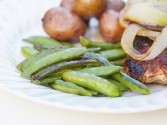

Serves/Makes: 4
- 1 1/2 pound sugar snap peas
- 2 tablespoons olive oil
- sea salt
- toasted sesame oil (optional)
- toasted sesame seeds (optional)
Preheat the grill to Medium-High.
Place the sugar snap peas and olive oil in a quart size food storage bag. Close the bag, removing as much air as possible. Gently massage the sugar snap peas until they evenly coated with the oil.
Wipe the vegetable grill basket by dipping a soft cotton cloth in vegetable oil and lightly coating its interior. Place the vegetable grill basket on the grill and pour the snap peas from the zipper bag into the basket.
Grill the sugar snap peas for 3-5 minutes, or until they develop a nice brown color on the "grill side". Turn the vegetables over to grill on the other side.
(Cooking time varies with the freshness of the produce (generally, the fresher the vegetable the faster it will cook), so keep an eye on them and remove them from the grill when they are browned slightly but not charred.)
When the sugar snap peas are finished grilling, place them on a serving platter and sprinkle lightly with sea salt. A light drizzle of toasted sesame seed oil and a sprinkling of toasted sesame seeds is optional.


related articles




Write a comment:
©2026 CDKitchen, Inc. No reproduction or distribution of any portion of this article is allowed without express permission from CDKitchen, Inc.
To share this article with others, you may link to this page:
https://www.cdkitchen.com/cooking-experts/victoria-wesseler/279-grilled-food-health-quiz/