

cdkitchen > cooking experts > sarah christine bolton

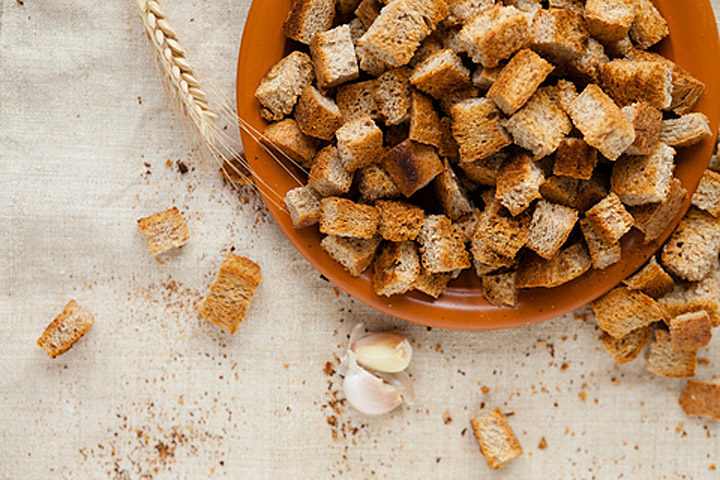
There have always been three guarantees at Christmas time for me: oranges in my stocking, lots of photographing and filming during present-opening, and sage stuffing for Christmas dinner.
In my family, we always called it sage stuffing. When I came to the South, many people called it dressing. From what I could find online, there isn’t really a difference. Regardless of what you call it, stuffing/dressing is all the same: bread with herbs and broth cooked inside the turkey (or sometimes out).
My mom has been making sage stuffing for as long as I can remember. She learned the recipe from watching her grandparents make it. I asked her to re-tell me the story recently, because I couldn’t remember exact details.
She told me that the night before Christmas, her grandma and grandpa would put a loaf of bread out on the counter to dry out. The morning of, they would make a big pan of cornbread, and put the giblets from the turkey into a pan of simmering water for an hour. Meanwhile, they cut up celery and onion and sautéed it with lots of fresh sage. When the giblets were cooked, they added those to the onion mixture. The final step was to combine the hardened bread and cornbread (broken into bite-size pieces), the onion/celery mix, and the broth from the giblets.
The whole thing was then stuffed into the turkey and baked along with the turkey. It would come out moist and juicy and oh so flavorful.
My mom remembers that her grandparents had the whole procedure down to a system. “They didn’t talk too much about it,” she told me. “They just did it. They probably started the tradition before we were born. Grandpa Terry would cut up a big relish plate. The special item on the plate was radishes cut like roses.”
While I was still at home, I made the sage stuffing a couple of holidays. It never quite turned out like my mom’s version, though. She knew just the right amount of sage and celery and onions to make the perfect combination of flavors. The other key ingredient is the cornbread. It had to be homemade, with just the perfect amount of honey and freshly ground corn flour. The cornbread had to be broken into bite-size pieces before it could be added to the whole stuffing mixture. I always wanted to be the one to do that job, because you had to keep testing whether your bite-size pieces were really bite-sized by popping one in your mouth every now and then.
My favorite serving of stuffing wasn’t the stuff that was in the turkey. Usually, there would be more stuffing than room in the turkey, so my mom baked a separate pan of it in the oven. The stuff in the pan was perfect: crisp on the outside, soft and hot on the inside.
The day after Christmas always included lots of leftovers: turkey, cranberry sauce, pumpkin pie, and green bean casserole. Usually, the stuffing wouldn’t make it until the day after. Maybe if I hadn’t eaten so much of the cornbread, there would have been enough to last.
©2026 CDKitchen, Inc. No reproduction or distribution of any portion of this article is allowed without express permission from CDKitchen, Inc.
To share this article with others, you may link to this page:
https://www.cdkitchen.com/cooking-experts/sarah-christine-bolton/820-sage-stuffing/
Stuff Your Face With Sage Stuffing
There have always been three guarantees at Christmas time for me: oranges in my stocking, lots of photographing and filming during present-opening, and sage stuffing for Christmas dinner.
In my family, we always called it sage stuffing. When I came to the South, many people called it dressing. From what I could find online, there isn’t really a difference. Regardless of what you call it, stuffing/dressing is all the same: bread with herbs and broth cooked inside the turkey (or sometimes out).
My mom has been making sage stuffing for as long as I can remember. She learned the recipe from watching her grandparents make it. I asked her to re-tell me the story recently, because I couldn’t remember exact details.
She told me that the night before Christmas, her grandma and grandpa would put a loaf of bread out on the counter to dry out. The morning of, they would make a big pan of cornbread, and put the giblets from the turkey into a pan of simmering water for an hour. Meanwhile, they cut up celery and onion and sautéed it with lots of fresh sage. When the giblets were cooked, they added those to the onion mixture. The final step was to combine the hardened bread and cornbread (broken into bite-size pieces), the onion/celery mix, and the broth from the giblets.
The whole thing was then stuffed into the turkey and baked along with the turkey. It would come out moist and juicy and oh so flavorful.
My mom remembers that her grandparents had the whole procedure down to a system. “They didn’t talk too much about it,” she told me. “They just did it. They probably started the tradition before we were born. Grandpa Terry would cut up a big relish plate. The special item on the plate was radishes cut like roses.”
While I was still at home, I made the sage stuffing a couple of holidays. It never quite turned out like my mom’s version, though. She knew just the right amount of sage and celery and onions to make the perfect combination of flavors. The other key ingredient is the cornbread. It had to be homemade, with just the perfect amount of honey and freshly ground corn flour. The cornbread had to be broken into bite-size pieces before it could be added to the whole stuffing mixture. I always wanted to be the one to do that job, because you had to keep testing whether your bite-size pieces were really bite-sized by popping one in your mouth every now and then.
My favorite serving of stuffing wasn’t the stuff that was in the turkey. Usually, there would be more stuffing than room in the turkey, so my mom baked a separate pan of it in the oven. The stuff in the pan was perfect: crisp on the outside, soft and hot on the inside.
The day after Christmas always included lots of leftovers: turkey, cranberry sauce, pumpkin pie, and green bean casserole. Usually, the stuffing wouldn’t make it until the day after. Maybe if I hadn’t eaten so much of the cornbread, there would have been enough to last.
Very Sage Slow Cooker Stuffing
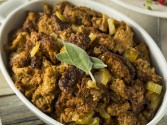

Made with salt and pepper, fresh sage, celery, whole wheat bread, cornbread, turkey giblets, onion, water
Made with salt and pepper, fresh sage, celery, whole wheat bread, cornbread, turkey giblets, onion, water
Serves/Makes: 8
- 1/2 loaf whole wheat bread, dried out on the kitchen counter overnight and then broken into bite-size pieces
- 1/2 pan freshly made cornbread, broken into bite-size pieces
- turkey giblets
- 3 cups water in a pan
- 1 large white onion, chopped
- 2 stalks celery, chopped
- 1 large handful fresh sage, finely chopped
- salt and pepper, to taste
Simmer giblets in water for one hour.
Meanwhile, saute onions, celery, sage, salt and pepper until vegetables are softened. When giblets are cooked, chop up finely and add to onion mixture. Saute for another 1-2 minutes.
Pour giblet broth over vegetables. Add cornbread and bread to broth; mix gently. Place mixture in crockpot. Cover and cook on LOW for 4-6 hours.
share this article:


related articles



Write a comment:
©2026 CDKitchen, Inc. No reproduction or distribution of any portion of this article is allowed without express permission from CDKitchen, Inc.
To share this article with others, you may link to this page:
https://www.cdkitchen.com/cooking-experts/sarah-christine-bolton/820-sage-stuffing/