

cdkitchen > cooking experts > rebecca michaels

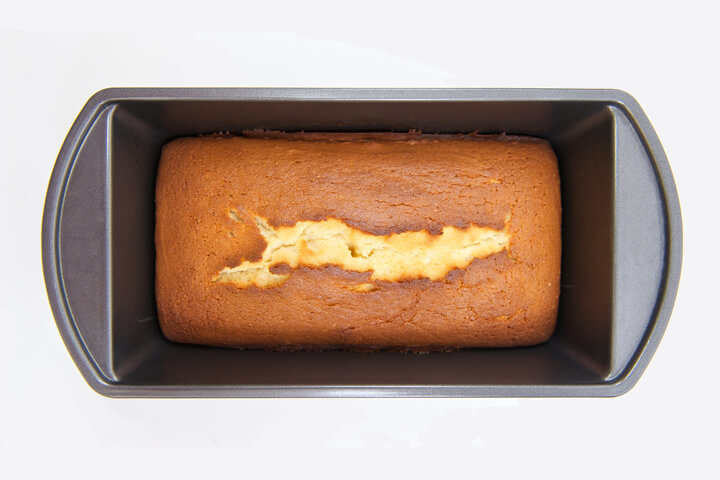
This week I thought a hearty discussion on pound cake was in order. After all, it makes a quick and tasty dessert that will match well with your Thanksgiving or Christmas meals and it makes a lovely gift for your friends and family. Can't get better than that, right?
Pound cake was invented by (yet again!) the British in the 1700s. The original recipe for pound cake was quite simple--a pound of sugar, a pound of flour, a pound of butter, and a pound of eggs. Hence, the rather apt name. Actually, it was a great recipe for the vastly illiterate population at the time. Since then, it has become a little bit more sophisticated, but it's still got the same idea: a dense, moist, rich, buttery, eggy cake that slices easily and has a good long shelf life.
There are a gazillion recipes for pound cake out there. All of them include the aforementioned Fab Four ingredients and most also include some form of dairy to keep the cake moist, as well as a little flavoring. Classic pound cakes do not use chemical leveners (baking powder and baking soda), which were not included in the recipe until the 1900s.
Beating the eggs is the sole source of the cake's rise. I don't recommend attempting a classic pound cake recipe using your arm and a spatula, unless you're practicing for the World Arm Wrestling Championship. I highly recommend using a hand mixer, or better yet, the old trusty stand alone. You must beat them for at least five minutes in order to get enough air in the batter, but you will have to practice with your particular recipe and mixing method to gauge the absolute correct time.
Pound cakes are great for their versatility. You can add any flavoring instead of vanilla, or even some finely chopped crystallized ginger, lemon, lime or orange zest, nuts, or dried fruits--whatever suits your fancy or happens to be in your pantry at the time. If you do add fruits or nuts, I recommend mixing some of the flour in with them so that they don't fall to the bottom of your loaf when you bake.
Another trick I use for flavoring pound cake is to make a sugar syrup, infuse it with flavor and brush it heavily on the pound cake while it's still warm. Boil one part water and one part sugar. Infuse with extract, tea, liquor, fresh ginger, or fruit juice and let it sit until it's warm enough to handle.
But the major reason why I like pound cakes so much is because they hold up fantastically to shipping. Be sure to double wrap it in film very tightly. Throw it in the freezer overnight to let it firm up and then pack it snugly in a box and ship it off to your favorite human for their Thanksgiving, Christmas, or Hannukah dinner. They'll be pounding on your door for more!
Take a look at CDKitchen's pound cake recipes
©2026 CDKitchen, Inc. No reproduction or distribution of any portion of this article is allowed without express permission from CDKitchen, Inc.
To share this article with others, you may link to this page:
https://www.cdkitchen.com/cooking-experts/rebecca-michaels/186-pound-cake/
That's My # Cake, Buddy!
This week I thought a hearty discussion on pound cake was in order. After all, it makes a quick and tasty dessert that will match well with your Thanksgiving or Christmas meals and it makes a lovely gift for your friends and family. Can't get better than that, right?
Pound cake was invented by (yet again!) the British in the 1700s. The original recipe for pound cake was quite simple--a pound of sugar, a pound of flour, a pound of butter, and a pound of eggs. Hence, the rather apt name. Actually, it was a great recipe for the vastly illiterate population at the time. Since then, it has become a little bit more sophisticated, but it's still got the same idea: a dense, moist, rich, buttery, eggy cake that slices easily and has a good long shelf life.
There are a gazillion recipes for pound cake out there. All of them include the aforementioned Fab Four ingredients and most also include some form of dairy to keep the cake moist, as well as a little flavoring. Classic pound cakes do not use chemical leveners (baking powder and baking soda), which were not included in the recipe until the 1900s.
Beating the eggs is the sole source of the cake's rise. I don't recommend attempting a classic pound cake recipe using your arm and a spatula, unless you're practicing for the World Arm Wrestling Championship. I highly recommend using a hand mixer, or better yet, the old trusty stand alone. You must beat them for at least five minutes in order to get enough air in the batter, but you will have to practice with your particular recipe and mixing method to gauge the absolute correct time.
Pound cakes are great for their versatility. You can add any flavoring instead of vanilla, or even some finely chopped crystallized ginger, lemon, lime or orange zest, nuts, or dried fruits--whatever suits your fancy or happens to be in your pantry at the time. If you do add fruits or nuts, I recommend mixing some of the flour in with them so that they don't fall to the bottom of your loaf when you bake.
Another trick I use for flavoring pound cake is to make a sugar syrup, infuse it with flavor and brush it heavily on the pound cake while it's still warm. Boil one part water and one part sugar. Infuse with extract, tea, liquor, fresh ginger, or fruit juice and let it sit until it's warm enough to handle.
But the major reason why I like pound cakes so much is because they hold up fantastically to shipping. Be sure to double wrap it in film very tightly. Throw it in the freezer overnight to let it firm up and then pack it snugly in a box and ship it off to your favorite human for their Thanksgiving, Christmas, or Hannukah dinner. They'll be pounding on your door for more!
Take a look at CDKitchen's pound cake recipes
share this article:


related articles



Write a comment:
©2026 CDKitchen, Inc. No reproduction or distribution of any portion of this article is allowed without express permission from CDKitchen, Inc.
To share this article with others, you may link to this page:
https://www.cdkitchen.com/cooking-experts/rebecca-michaels/186-pound-cake/