

cdkitchen > cooking experts > pamela chester

Recently I had a wonderful meal at a nearby Italian restaurant that specializes in homemade pasta and sauces. The owners are from Italy and don’t serve the Italian American standard spaghetti and meatballs and garlic bread like most of the rest of the Italian joints around town.
Instead they offer authentic Italian sauces such as Puttanesca (tomatoes, olives, chili peppers, anchovies, capers, and garlic), Carbonara (Pancetta, eggs, and black pepper), Walnut Cream sauce, and Ragu Bolognese, over your choice of homemade pasta. It reminded me how truly delicious regional Italian cuisine can be.
While most Italian pasta sauces are named for their place of origin, the names of some of them translate as colorfully as their flavors. Neapolitan Pasta alla Puttanesca means “woman of the night” style sauce, and is said to have originated as a way for a busy working lady to put together a quick meal!
The Roman Carbonara sauce is said to have originated from camping charcoal makers who would put the ingredients together from local farms for a simple meal cooked over fire, while out for months on the job site. More basically, Pesto translates from a piece of equipment — the pestle— which pounds the ingredients into a paste.
When you think pesto, basil, pine nuts, Parmesan cheese and olive oil come to mind. I am a big fan of classic Pesto alla Genovese (Genoa is city from which pesto originated), and generally I don’t like to mess with classics, but that night I tried a Pistachio Arugula pesto that was out of this world. Just that slight change brought a whole new flavor to one of my favorite summer dishes. You can try the same at home, modifying your favorite pesto recipe with a different type of nut or herb flavoring. Just a few tweaks can take your pesto in a completely different direction.
Pasta with pesto makes a classic light dinner, perfect for these still super hot days of summer and for harvesting a fresh herb crop. Or try tossing meat or shrimp in pesto and then grilling. Use it as a dressing in your next pasta salad or a potato and green bean salad. It’s so simple, yet so classic!
Another way to change up your pasta routine is to vary the shape of pasta from what you normally serve. At the restaurant we were able to choose from about eight different varieties of homemade pasta, with the waitstaff making suggestions of which pasta would go with each sauce. What a treat to learn about pastas such as Tonarelli (which is a like a square shaped spaghetti and cut with a guitar like device) or Trotolle, which are shaped like little toy tops.
Just like the sauces, pasta shapes can have some really inspired names: Capelli D-Angelo (angel hair), Rotelle (wheels), Lumache (snails), Orechiete (little ears) and Farfalle (butterflies). My kids always laugh when I tell them the tortellini I am serving are like belly buttons.
Pairing the right pasta with the type of sauce is truly an Italian art. Pesto goes with all types of pasta, but particularly well with those twisty shapes like Corkscrews, Fusilli, or Trotolle, as the shape catches and holds the delicious sauce. Another Italian trick is tossing the cooked pasta with the sauce and a bit (maybe 1/2 cup) of the pasta cooking water over low heat for just one minute before serving to really flavor the pasta with the sauce. Buon Appetito!
©2026 CDKitchen, Inc. No reproduction or distribution of any portion of this article is allowed without express permission from CDKitchen, Inc.
To share this article with others, you may link to this page:
https://www.cdkitchen.com/cooking-experts/pamela-chester/1287-pesto-pasta/
Presto, Pistachio Pesto!

Recently I had a wonderful meal at a nearby Italian restaurant that specializes in homemade pasta and sauces. The owners are from Italy and don’t serve the Italian American standard spaghetti and meatballs and garlic bread like most of the rest of the Italian joints around town.
Instead they offer authentic Italian sauces such as Puttanesca (tomatoes, olives, chili peppers, anchovies, capers, and garlic), Carbonara (Pancetta, eggs, and black pepper), Walnut Cream sauce, and Ragu Bolognese, over your choice of homemade pasta. It reminded me how truly delicious regional Italian cuisine can be.
While most Italian pasta sauces are named for their place of origin, the names of some of them translate as colorfully as their flavors. Neapolitan Pasta alla Puttanesca means “woman of the night” style sauce, and is said to have originated as a way for a busy working lady to put together a quick meal!
The Roman Carbonara sauce is said to have originated from camping charcoal makers who would put the ingredients together from local farms for a simple meal cooked over fire, while out for months on the job site. More basically, Pesto translates from a piece of equipment — the pestle— which pounds the ingredients into a paste.
When you think pesto, basil, pine nuts, Parmesan cheese and olive oil come to mind. I am a big fan of classic Pesto alla Genovese (Genoa is city from which pesto originated), and generally I don’t like to mess with classics, but that night I tried a Pistachio Arugula pesto that was out of this world. Just that slight change brought a whole new flavor to one of my favorite summer dishes. You can try the same at home, modifying your favorite pesto recipe with a different type of nut or herb flavoring. Just a few tweaks can take your pesto in a completely different direction.
Pasta with pesto makes a classic light dinner, perfect for these still super hot days of summer and for harvesting a fresh herb crop. Or try tossing meat or shrimp in pesto and then grilling. Use it as a dressing in your next pasta salad or a potato and green bean salad. It’s so simple, yet so classic!
Another way to change up your pasta routine is to vary the shape of pasta from what you normally serve. At the restaurant we were able to choose from about eight different varieties of homemade pasta, with the waitstaff making suggestions of which pasta would go with each sauce. What a treat to learn about pastas such as Tonarelli (which is a like a square shaped spaghetti and cut with a guitar like device) or Trotolle, which are shaped like little toy tops.
Just like the sauces, pasta shapes can have some really inspired names: Capelli D-Angelo (angel hair), Rotelle (wheels), Lumache (snails), Orechiete (little ears) and Farfalle (butterflies). My kids always laugh when I tell them the tortellini I am serving are like belly buttons.
Pairing the right pasta with the type of sauce is truly an Italian art. Pesto goes with all types of pasta, but particularly well with those twisty shapes like Corkscrews, Fusilli, or Trotolle, as the shape catches and holds the delicious sauce. Another Italian trick is tossing the cooked pasta with the sauce and a bit (maybe 1/2 cup) of the pasta cooking water over low heat for just one minute before serving to really flavor the pasta with the sauce. Buon Appetito!
Pistachio Arugula Pesto


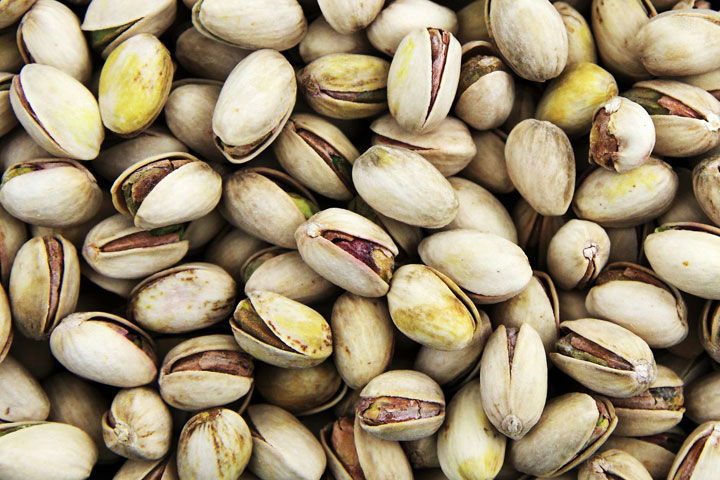
Made with Pecorino Romano cheese, olive oil, garlic, pistachio nuts, arugula or baby spinach, kosher salt and freshly ground black pepper
Made with Pecorino Romano cheese, olive oil, garlic, pistachio nuts, arugula or baby spinach, kosher salt and freshly ground black pepper
Serves/Makes: 1 cup
- 2 cloves garlic, peeled and finely chopped
- 1/2 cup pistachio nuts, lightly toasted
- 1 small bunch fresh arugula or baby spinach, washed and dried and picked of stems
- kosher salt and freshly ground black pepper, to taste
- 1/2 cup extra virgin olive oil
- 3/4 cup freshly grated Pecorino Romano cheese
Place the garlic and pistachio nuts in a food processor and blend for 20 seconds. Add arugula or spinach, salt and pepper. With food processor running slowly, add olive oil in a steady stream through the opening, and process until pureed. Add pecorino cheese and pulse or stir until just blended and a creamy sauce is formed. Check for seasoning.
Serve with freshly cooked pasta or with grilled meat.
Keeps in an airtight container covered with a thin layer of olive oil for up to one week in the refrigerator or in the freezer for up to one month.
share this article:


related articles


Write a comment:
©2026 CDKitchen, Inc. No reproduction or distribution of any portion of this article is allowed without express permission from CDKitchen, Inc.
To share this article with others, you may link to this page:
https://www.cdkitchen.com/cooking-experts/pamela-chester/1287-pesto-pasta/