

cdkitchen > cooking experts > pamela chester

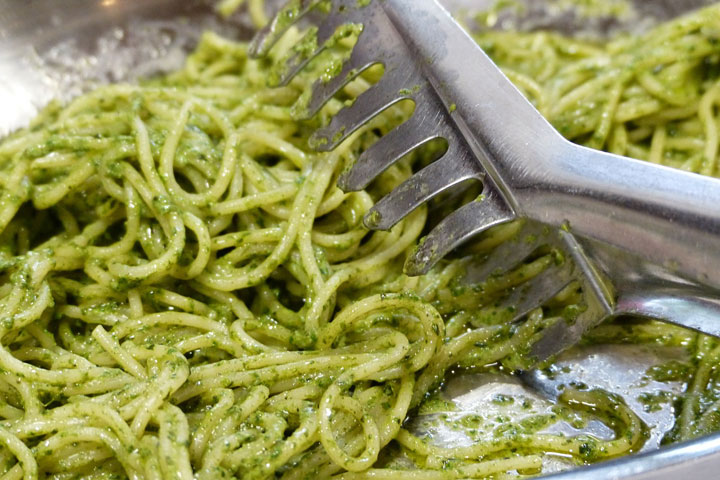
Today marks another national holiday, Columbus Day. Whether your kids are off from school or not, you can celebrate this “minor holiday” with an easy pasta dinner tonight, featuring homemade pesto. As we celebrate Christopher Columbus’s arrival in the New World this year, you can teach your kids a valuable culinary history lesson.
Columbus Day is a big deal in Italian American communities because of the navigator’s Italian heritage. Many people, Italian or not, like to celebrate Columbus Day with a delicious Italian dinner. But here’s the catch: your kids may think of Italian food as pizza and spaghetti and meatballs. But today, you can let them know that in Columbus’s time, Italy had never heard of the new world food, the tomato!
Along with other foods like corn, potatoes, and chocolate, the tomato was introduced to Europe following Columbus’ contact with the new world in 1492. So believe it or not, pasta with tomato sauce, so synonymous with Italian cuisine, was not common in Italy until the eighteenth century.
Similarly, European explorers brought with them horses, dandelions, and citrus fruits (along with a number of communicable diseases which devastated some native populations) to the Americas. Columbus’ voyage launched an era of large-scale contact between the eastern and western hemispheres, termed the Columbian Exchange. This significant transfer of resources fueled global population growth and forever changed the course of human and culinary history. So you see, what most of us consider just another day off or long weekend actually marks a pretty major global event.
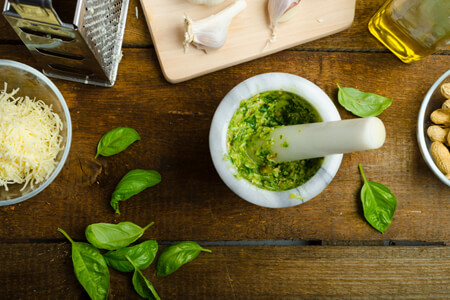
Columbus hailed from Genoa, Italy, land of Pesto Genovese. This much loved green sauce traditionally contains basil, fresh garlic, grated hard cheese such as pecorino or parmesan, olive oil, and pine nuts that are crushed together into a smooth paste. The word pesto comes from “pestare,” Italian word for “to crush” or “to pound.”
Pesto is traditionally made in a marble mortar with a wooden pestle, using a circular motion of the pestle to grind the pine nuts to a paste that is then crushed with the basil and salt. The cheese and olive oil are added last, to give the pesto the desired creaminess and consistency. As a kid I thought the mortar and pestle was really neat, and I’ll bet any modern day kid would enjoy learning about using this old fashioned cooking implement.
My New World method is to use a food processor to grind everything together. I usually blanch my basil leaves before, so that they retain a bright green color, and pulse it just until it is blended, stirring in the parmesan cheese and seasoning to taste. However, I am a traditionalist when it comes to the pesto ingredients, so this is one recipe you won’t find me tinkering a lot with. But you can try your hand at making it with other fresh green herbs such as parsley, mint or cilantro, and nuts like walnut or almonds. Vary the cheese and use whatever suits your fancy, or try adding fresh spinach or arugula.
Pesto is a great way to appreciate this last harvest of fresh grown basil if your summer herb garden still has a little life left in it. It keeps jarred with a thin layer of olive oil over it to retain the color, for up to about a week in the refrigerator. You can even freeze some extras as a delicious sauce for grilled meat or add as an addition to warm minestrone soup.
Pesto is one food I wouldn’t suggest taking a shortcut on and buying store-bought. I have yet to find a commercial pesto that tastes one-tenth as good as the homemade kind. The jarred variety can be passable, but it never retains the brilliant green color of fresh basil and the snappy kick of garlic and pecorino cheese that you can get from homemade.
So celebrate this Columbus Day with a delicious, vibrantly colored homemade pesto and your choice of pasta. Tortellini, butterflies, or twists are just a few that go excellently. It just also happens to fit in nicely as a meatless Monday dinner!
©2026 CDKitchen, Inc. No reproduction or distribution of any portion of this article is allowed without express permission from CDKitchen, Inc.
To share this article with others, you may link to this page:
https://www.cdkitchen.com/cooking-experts/pamela-chester/1195-pesto-facts/
Introducing Your Kids to the Joys of Pesto

Today marks another national holiday, Columbus Day. Whether your kids are off from school or not, you can celebrate this “minor holiday” with an easy pasta dinner tonight, featuring homemade pesto. As we celebrate Christopher Columbus’s arrival in the New World this year, you can teach your kids a valuable culinary history lesson.
Columbus Day is a big deal in Italian American communities because of the navigator’s Italian heritage. Many people, Italian or not, like to celebrate Columbus Day with a delicious Italian dinner. But here’s the catch: your kids may think of Italian food as pizza and spaghetti and meatballs. But today, you can let them know that in Columbus’s time, Italy had never heard of the new world food, the tomato!
Along with other foods like corn, potatoes, and chocolate, the tomato was introduced to Europe following Columbus’ contact with the new world in 1492. So believe it or not, pasta with tomato sauce, so synonymous with Italian cuisine, was not common in Italy until the eighteenth century.
Similarly, European explorers brought with them horses, dandelions, and citrus fruits (along with a number of communicable diseases which devastated some native populations) to the Americas. Columbus’ voyage launched an era of large-scale contact between the eastern and western hemispheres, termed the Columbian Exchange. This significant transfer of resources fueled global population growth and forever changed the course of human and culinary history. So you see, what most of us consider just another day off or long weekend actually marks a pretty major global event.
Columbus hailed from Genoa, Italy, land of Pesto Genovese. This much loved green sauce traditionally contains basil, fresh garlic, grated hard cheese such as pecorino or parmesan, olive oil, and pine nuts that are crushed together into a smooth paste. The word pesto comes from “pestare,” Italian word for “to crush” or “to pound.”
Pesto is traditionally made in a marble mortar with a wooden pestle, using a circular motion of the pestle to grind the pine nuts to a paste that is then crushed with the basil and salt. The cheese and olive oil are added last, to give the pesto the desired creaminess and consistency. As a kid I thought the mortar and pestle was really neat, and I’ll bet any modern day kid would enjoy learning about using this old fashioned cooking implement.
My New World method is to use a food processor to grind everything together. I usually blanch my basil leaves before, so that they retain a bright green color, and pulse it just until it is blended, stirring in the parmesan cheese and seasoning to taste. However, I am a traditionalist when it comes to the pesto ingredients, so this is one recipe you won’t find me tinkering a lot with. But you can try your hand at making it with other fresh green herbs such as parsley, mint or cilantro, and nuts like walnut or almonds. Vary the cheese and use whatever suits your fancy, or try adding fresh spinach or arugula.
Pesto is a great way to appreciate this last harvest of fresh grown basil if your summer herb garden still has a little life left in it. It keeps jarred with a thin layer of olive oil over it to retain the color, for up to about a week in the refrigerator. You can even freeze some extras as a delicious sauce for grilled meat or add as an addition to warm minestrone soup.
Pesto is one food I wouldn’t suggest taking a shortcut on and buying store-bought. I have yet to find a commercial pesto that tastes one-tenth as good as the homemade kind. The jarred variety can be passable, but it never retains the brilliant green color of fresh basil and the snappy kick of garlic and pecorino cheese that you can get from homemade.
So celebrate this Columbus Day with a delicious, vibrantly colored homemade pesto and your choice of pasta. Tortellini, butterflies, or twists are just a few that go excellently. It just also happens to fit in nicely as a meatless Monday dinner!
Fresh Basil Pesto
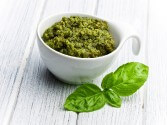

Made with Parmesan cheese, olive oil, pine nuts, garlic, fresh basil, kosher salt, black pepper
Made with Parmesan cheese, olive oil, pine nuts, garlic, fresh basil, kosher salt, black pepper
Serves/Makes: 4 cups
- 1/4 cup pine nuts
- 2 tablespoons minced garlic
- 4 cups packed fresh basil leaves
- 1 teaspoon kosher salt
- 1 teaspoon freshly ground black pepper
- 1 1/2 cup good-quality olive oil
- 1 cup freshly grated Parmesan cheese
Combine the pine nuts and garlic in a food processor with a metal blade. Pulse process for 15 seconds until the pine nuts are partially chopped.
Add the basil, salt, and pepper. With the food processor running, slowly add the olive oil through the feed tube and process until smooth.
Add the Parmesan cheese and process for 1 more minute.
If storing the pesto, transfer to an airtight container. Drizzle a light layer of olive oil on top and seal the lid. Refrigerate for up to 4-5 days.
share this article:


related articles


Write a comment:
©2026 CDKitchen, Inc. No reproduction or distribution of any portion of this article is allowed without express permission from CDKitchen, Inc.
To share this article with others, you may link to this page:
https://www.cdkitchen.com/cooking-experts/pamela-chester/1195-pesto-facts/