

cdkitchen > cooking experts > lauren braun costello

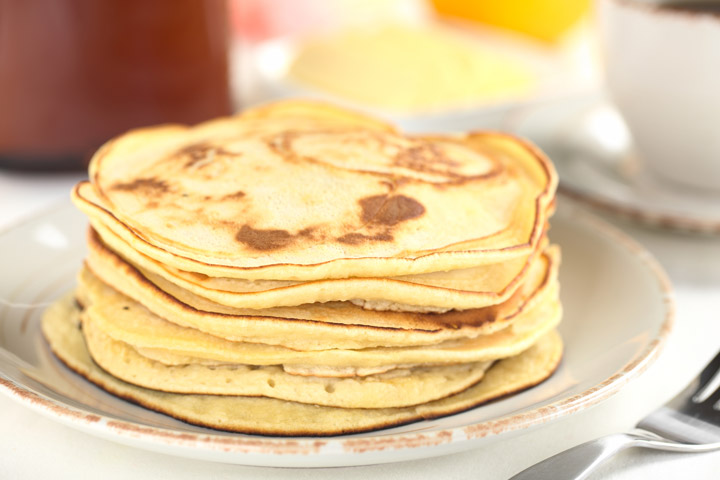
I just returned from a family weekend in Massachusetts where my cousin Marc (whom my sister affectionately and accurately calls "The Renaissance Man") prepared a pancake feast for a family of 50. In advance, he cooked dozens and dozens of strawberry and banana pecan pancakes served with the best New England maple syrup. They were utterly delicious, and an inspiration for anyone who wants to make homemade batter with a twist.
Whether you call them flapjacks, pancakes, griddle cakes, or hotcakes, these fluffy breakfast skillet creations are part of the American culinary quilt. We are not the only country to enjoy this food, of course. The French have their crepes, the Russians have blinis, and the Swedish have plattar. But there is undoubtedly an art to making the perfect pancake--one that is fluffy, yet tender and spongy enough to soak up all that sweet syrup.
Batter Basics
Pancake batter is made of dry and wet ingredients. Fluffy and puffy pancakes will have a leavening agent in them, such as baking powder or yeast, in addition to the flour and perhaps sugar. The wet ingredients can be milk, buttermilk, sour cream, yogurt, eggs and fat, such as melted butter or bacon drippings. Depending on the kind of pancake you are making, you will use a combination of these ingredients.
In my experience, pancake batter can be made up to one day in advance, but does not last much longer than that. Some people believe that pancake batter must be made fresh in order to produce the fluffiest cakes, in which case they would mix the wet ingredients and dry ingredients in advance separately to combine them right before cooking.
The ideal method for mixing homemade pancake batter is first to combine the dry ingredients in a large mixing bowl and make a well in the center. Then add the wet ingredients into that well. With a whisk, gently beat the batter, about 20 strokes or so, until the wet and the dry ingredients are well incorporated. The one mistake a lot of people make is to overbeat the batter. Believe it or not, lumps in pancake batter are not only acceptable; they are desirable because it indicates that the ingredients have been gently combined. The lumps will settle as the batter sits and as the pancakes cook. When the batter is beaten too vigorously, the results may yield a flatter, thinner, and certainly tougher pancake.
Flipping Flapjacks
Pancakes can be made in a nonstick pan, and griddle cakes can be made in a cast iron griddle. These different names do not refer to different dishes--just different ways of cooking the same thing. Most everyone who cooks has a non-stick skillet, so it is a logical choice for making pancakes. Flat griddles--electric, cast iron or nonstick--are generally used for this very purpose. If you have a cast iron pan of any sort and it is well seasoned, it will make flavorful cakes with a slightly toastier crust. A nonstick pan, on the other hand, will most likely produce a softer skin. Be sure to oil or grease a cast iron surface before cooking pancakes on it. A nonstick skillet does not need fat, but fat undoubtedly enhances the flavor.
No matter what vessel you use, there is one universal rule: make sure the pan is hot. There are many ways to test a dry pan to see if it is ready for batter. The easiest method is to drop a few bits of water on the dry pan. If those drops bounce and sizzle, then the pan is ready. If the water sits still and holds its shape, the pan is too cool. In the event that the water evaporates the second it hits the pan, then the pan is most likely too hot.
Most of us always have the experience that the first few pancakes do not come out as well as the rest. This usually has to do with the heat of the pan. We turn on the heat and expect it to be ready in just moments, but the truth is it can take several minutes for a pan to come to temperature.
Once the pan is hot enough, small amounts of fat can be added before spooning the batter onto the pan. If you are using a nonstick skillet, you will find that adding fat makes for a patterned skin, whereas cooking pancakes in a dry nonstick pan will give an even hue.
A classic pancake is about 4-5 inches in diameter. To achieve this size and an even circular shape, use a third-cup dry measure (silver dollars require a mere tablespoon of batter). Fill the measuring cup with batter and poor it onto the pan, just a few inches from the pan’s surface. Once you begin pouring the batter, keep your hand steady and do not move. This will help to make a fluffy pancake. When the top of the pancake bubbles, it is ready to be turned with a spatula. Once turned, it will take only about half as long for the second side to cook. Never turn a pancake more than once. This will make a tougher pancake.
Keep It Hot, Store It Cold
An easy way to keep pancakes warm for service is to preheat an oven to 200F degrees before you begin cooking. As they come off the pan, place the cakes on a sheet pan in a single layer and hold them in the oven. They can be slightly overlapped if you are making too many to fit in a single layer.
If you want to freeze your pancakes be sure to let them cool completely before wrapping and storing them in plastic or containers. Even though they will not be as fluffy and tender as pancakes right off the griddle, they will still be more than serviceable and just as tasty. Reheating is best in a 350F degree oven straight from the freezer for about 10-15 minutes. Frozen pancakes are also wonderful when toasted. The crust is darker and it makes the inside seem that much more tender. Microwaving is the least appealing option since it makes the pancakes tough and dense.
The next time you crave pancakes, do not go for the box in the grocery store. Try the recipe below and the techniques above. Be creative and flavor as you wish. You will flip out for your fabulous flapjacks!
©2026 CDKitchen, Inc. No reproduction or distribution of any portion of this article is allowed without express permission from CDKitchen, Inc.
To share this article with others, you may link to this page:
https://www.cdkitchen.com/cooking-experts/lauren-braun-costello/244-american-flapjacks/
Flipping Out For American Flapjacks
I just returned from a family weekend in Massachusetts where my cousin Marc (whom my sister affectionately and accurately calls "The Renaissance Man") prepared a pancake feast for a family of 50. In advance, he cooked dozens and dozens of strawberry and banana pecan pancakes served with the best New England maple syrup. They were utterly delicious, and an inspiration for anyone who wants to make homemade batter with a twist.
Whether you call them flapjacks, pancakes, griddle cakes, or hotcakes, these fluffy breakfast skillet creations are part of the American culinary quilt. We are not the only country to enjoy this food, of course. The French have their crepes, the Russians have blinis, and the Swedish have plattar. But there is undoubtedly an art to making the perfect pancake--one that is fluffy, yet tender and spongy enough to soak up all that sweet syrup.
Batter Basics
Pancake batter is made of dry and wet ingredients. Fluffy and puffy pancakes will have a leavening agent in them, such as baking powder or yeast, in addition to the flour and perhaps sugar. The wet ingredients can be milk, buttermilk, sour cream, yogurt, eggs and fat, such as melted butter or bacon drippings. Depending on the kind of pancake you are making, you will use a combination of these ingredients.
In my experience, pancake batter can be made up to one day in advance, but does not last much longer than that. Some people believe that pancake batter must be made fresh in order to produce the fluffiest cakes, in which case they would mix the wet ingredients and dry ingredients in advance separately to combine them right before cooking.
The ideal method for mixing homemade pancake batter is first to combine the dry ingredients in a large mixing bowl and make a well in the center. Then add the wet ingredients into that well. With a whisk, gently beat the batter, about 20 strokes or so, until the wet and the dry ingredients are well incorporated. The one mistake a lot of people make is to overbeat the batter. Believe it or not, lumps in pancake batter are not only acceptable; they are desirable because it indicates that the ingredients have been gently combined. The lumps will settle as the batter sits and as the pancakes cook. When the batter is beaten too vigorously, the results may yield a flatter, thinner, and certainly tougher pancake.
Flipping Flapjacks
Pancakes can be made in a nonstick pan, and griddle cakes can be made in a cast iron griddle. These different names do not refer to different dishes--just different ways of cooking the same thing. Most everyone who cooks has a non-stick skillet, so it is a logical choice for making pancakes. Flat griddles--electric, cast iron or nonstick--are generally used for this very purpose. If you have a cast iron pan of any sort and it is well seasoned, it will make flavorful cakes with a slightly toastier crust. A nonstick pan, on the other hand, will most likely produce a softer skin. Be sure to oil or grease a cast iron surface before cooking pancakes on it. A nonstick skillet does not need fat, but fat undoubtedly enhances the flavor.
No matter what vessel you use, there is one universal rule: make sure the pan is hot. There are many ways to test a dry pan to see if it is ready for batter. The easiest method is to drop a few bits of water on the dry pan. If those drops bounce and sizzle, then the pan is ready. If the water sits still and holds its shape, the pan is too cool. In the event that the water evaporates the second it hits the pan, then the pan is most likely too hot.
Most of us always have the experience that the first few pancakes do not come out as well as the rest. This usually has to do with the heat of the pan. We turn on the heat and expect it to be ready in just moments, but the truth is it can take several minutes for a pan to come to temperature.
Once the pan is hot enough, small amounts of fat can be added before spooning the batter onto the pan. If you are using a nonstick skillet, you will find that adding fat makes for a patterned skin, whereas cooking pancakes in a dry nonstick pan will give an even hue.
A classic pancake is about 4-5 inches in diameter. To achieve this size and an even circular shape, use a third-cup dry measure (silver dollars require a mere tablespoon of batter). Fill the measuring cup with batter and poor it onto the pan, just a few inches from the pan’s surface. Once you begin pouring the batter, keep your hand steady and do not move. This will help to make a fluffy pancake. When the top of the pancake bubbles, it is ready to be turned with a spatula. Once turned, it will take only about half as long for the second side to cook. Never turn a pancake more than once. This will make a tougher pancake.
Keep It Hot, Store It Cold
An easy way to keep pancakes warm for service is to preheat an oven to 200F degrees before you begin cooking. As they come off the pan, place the cakes on a sheet pan in a single layer and hold them in the oven. They can be slightly overlapped if you are making too many to fit in a single layer.
If you want to freeze your pancakes be sure to let them cool completely before wrapping and storing them in plastic or containers. Even though they will not be as fluffy and tender as pancakes right off the griddle, they will still be more than serviceable and just as tasty. Reheating is best in a 350F degree oven straight from the freezer for about 10-15 minutes. Frozen pancakes are also wonderful when toasted. The crust is darker and it makes the inside seem that much more tender. Microwaving is the least appealing option since it makes the pancakes tough and dense.
The next time you crave pancakes, do not go for the box in the grocery store. Try the recipe below and the techniques above. Be creative and flavor as you wish. You will flip out for your fabulous flapjacks!

Serves/Makes: 4
- 1 1/2 cup all-purpose flour
- 1/2 teaspoon salt
- 2 1/2 teaspoons baking powder
- 1 egg
- 1 cup milk
- 3 tablespoons butter, melted and cooled
- syrup, for serving (maple, blueberry, etc)
- butter, for serving
Sift the flour, salt, and baking powder together in a large bowl.
In another bowl, whisk the egg, milk, and melted butter until smooth. Slowly stir the egg mixture into the flour mixture, mixing until just moist. The batter will be lumpy. Do not overmix the batter.
Heat a griddle over medium-high heat and grease it generously.
Spoon the batter on to the griddle, about 1/4 cup per pancake.
Let the pancakes cook until bubbles form on the surface then flip them over. Cook until lightly browned.
Serve the pancakes immediately with butter and syrup. Or top with your favorite fruit.
share this article:


related articles


Write a comment:
©2026 CDKitchen, Inc. No reproduction or distribution of any portion of this article is allowed without express permission from CDKitchen, Inc.
To share this article with others, you may link to this page:
https://www.cdkitchen.com/cooking-experts/lauren-braun-costello/244-american-flapjacks/