

Fondue It Yourself


My good friend, Lauren, always gives a fondue pot as an engagement present or housewarming gift. She firmly believes that every household should have this equipment because fondue is easy, fun, festive and delicious. She is absolutely right, and I thank her for giving me my elegant fondue pot several years ago. Fondue is an oldie but goodie, especially when it is cold outside.
It's All in the Name
Fondue literally means "melted" in French, the past participle of the verb fondre, "to melt." This dish absolutely originated in Switzerland, not France as has been said. Perhaps the French formally named the dish, as they have the historical habit of culinary classification. But it was the Swiss mountain herders who created this dish out of necessity. They got by on what they had available: scraps of cheese, wine and crusty bread. Cheese and wine were added to a clay pot called the caquelon and bread was dipped in the hot cauldron of liquid cheese.
Fondue eventually made its way down the hills of Switzerland to domestic servants who improved the dish by using scraps of the finer cheeses and wines accessible to them where they worked. The well-traveled aristocracy helped to spread this dish across Europe. Fondue first made its appearance in the United States when culinary legend Jean Brillat-Savarin lived in New York and later published his gastronomic tomes.
The world-famous Swiss Chalet restaurant in New York put fondue on the map in the 1950s. This Alpine delicacy was certainly no fad. Its popularity peaked in the 1960s and 1970s when fondue parties were happening everywhere from Boston to San Francisco. By then cheese fondue was just one of many versions served across the country.
One Method, Many Dishes
Clearly Fondue de Fromage, or cheese fondue, is the classic, original recipe. There are some variations from country to country. The Swiss use cheese, garlic, white wine and cornstarch, while the French often add cream and butter (but, of course!). In Wales, a dish called Welsh Rarebit, which evolved into Welsh Rabbit, is made with local cheddar cheese and was served when husbands came home empty-handed from hunting trips.
Fondue Bourguignonne was introduced in the 1950s at Swiss Chalet in New York when Chef Konrad Elgi served cubes of beef cooked in hot oil. Chocolate fondue was introduced in the 1960s and became instantly popular as the fondue craze spread across the country.
By the 1980s, America was becoming more health-conscious so Fondue Orientale was conceived. Although cleverly named, there was nothing at all original about the idea of cooking pieces of meat is a simmering broth at the table. As the name suggests, many Asian cultures enjoy communal pots of broth in which meat and vegetables are cooked. The Japanese call this method shabu-shabu, literally meaning "swish-swish." The slices of meat are cut paper-thin, and cook almost instantly when swished with chopsticks in the broth with vegetables.
Tools and Tips
Preparing classic cheese fondue at home requires only one thing: high quality, freshly grated Gruyere cheese. A special caquelon or fondue pot is not necessary, though elegant for service. Many people take raw garlic cloves and simply rub them along the inside of the cauldron merely to perfume the cheese mixture. Dry white wine adds depth of flavor and helps to break down the cheese as it melts. Cornstarch provides an even and thick texture that perfectly coats and holds onto the bread. Crusty freshly baked bread is the best accompaniment to cheese fondue, but tart apples and boiled potatoes are appropriate alternatives.
Chocolate fondue can be as simple as melting chocolate and holding it in a warm pot. It can be more involved by using heavy cream, evaporated milk or sweetened condensed milk. Either way, dip fresh fruit or cake into the molten chocolate for an unadulterated treat.
One final word of advice: never, ever drink ice water during a meal of cheese fondue. All that saucy cheese will seize into a big ball in your belly. Drink wine or beer to help the cheese breakdown and digest.
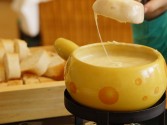

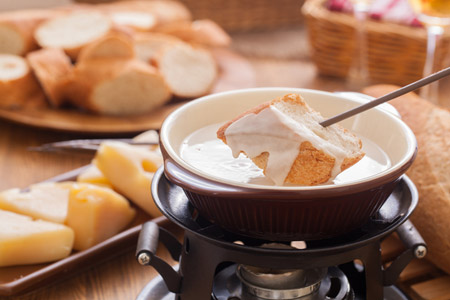
Made with bread, Emmentaler cheese, Gruyere cheese, garlic, white wine, cornstarch, lemon juice, black pepper, ground nutmeg
Serves/Makes: 4
- 1/2 pound grated Emmentaler cheese
- 1/2 pound grated Gruyere cheese
- 1 clove garlic, smashed
- 1 1/2 cup dry white wine
- 2 tablespoons cornstarch
- 1 tablespoon fresh lemon juice
- ground black pepper, to taste
- freshly ground nutmeg, to taste
- 2 loaves bread with thick crust cut into 1-inch cubes
Combine grated cheesed with cornstarch in a large mixing bowl. Toss well to coat and set aside. Rub the inside of a fondue pot or small Dutch oven with smashed garlic. Pour wine into pot and heat over medium heat until warm. Add lemon juice.
Add cheese by the handful, stirring constantly with a wooden spoon.
Once each handful is melted, add more cheese until all the cheese has melted and the mixture has the consistency of a creamy sauce.
Add pepper and nutmeg to taste. Bring to boil, then remove pot from heat and transfer to table burner. Adjust flame so fondue continues bubbling lightly. Alternatively, bring pot to table and set on a trivet.
Serve with cubed bread on fondue forks or long skewers. Dunk and stir well to cover bread cube with cheese mixture.


related articles




Write a comment:
©2026 CDKitchen, Inc. No reproduction or distribution of any portion of this article is allowed without express permission from CDKitchen, Inc.
To share this article with others, you may link to this page:
https://www.cdkitchen.com/cooking-experts/lauren-braun-costello/232-fondue/