

cdkitchen > cooking experts > lauren braun costello

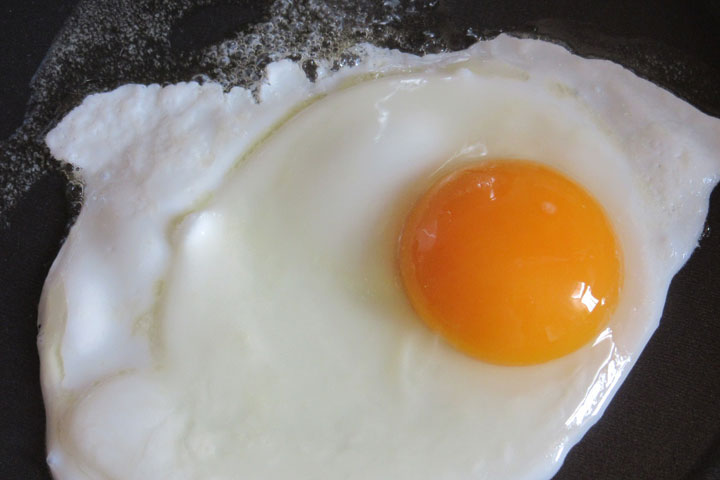
Eggs are so essential to the art of cooking and baking that without them we might as well all throw in our whisks and give up. So often eggs are used to thicken, bind, and coat, but they are equally multi-purposeful on their own. Think of all the different ways we eat just eggs, anywhere from breakfast to dessert, savory to sweet. Omelets, quiches, frittatas, custards, meringues, sponge cakes and soufflés, to name a few. Both versatile and nutritious, eggs are an excellent source of protein, iron and Vitamins A, D and E. There are many kinds of eggs to cook with, such as quail and ostrich, but for now we will focus on the ubiquitous chicken egg.
What's In an Egg?
An egg is made of the shell, the yolk, the chalaza, an air cell, shell membranes, and albumen. We will talk about the shell in just a moment, so let's just focus on the yolk (yellow) and the albumen (egg white). The albumen, making up about 70% of the liquid weight of the egg, is opalescent in the raw state and turns white when cooked. When beaten to a foam (meringue), the volume is increased up to 8 times. The egg yolk, about 30% of the egg, contains all the egg's fat and about half the protein. It also contains a higher proportion of the egg's vitamins. The rope-like white strand, the chalaza, is what anchors the yolk in place in the thick white. Contrary to popular misconception, the chalaza is not an embryo or an imperfection.
Color Me Brown
So many people want to know whether the color of the egg's outer shell makes a difference in the taste, quality, nutrients, or ultimate cooking properties. The answer is no. The shell color is determined by the breed of hen. Breeds with white feathers and white ear lobes lay white eggs; breeds with red feathers and red ear lobes lay brown eggs. Brown eggs tend to be more expensive than white eggs because they are often laid by larger birds that require more food.
Size Matters
Several factors influence egg size, including environment, hen size, hen age, and hen weight. There are six sizes in total, from big to small: jumbo, extra large, large, medium, small and pee wee. Most of us have access, at the very least, to large or extra large eggs.
The bigger the egg does not mean the better. But size does matter when it comes to cooking and baking. Most recipes--baking in particular--call for large eggs. The minimum weight for a large egg is 2 oz., whereas the minimum weight for an extra large egg is 2.25 oz. So, if you casually use extra large eggs, and the recipe calls for half a dozen large eggs, you are increasing your egg quantity by almost another whole egg. When a recipe does not specify the egg size, it is best to use large eggs.
The Freshness Factor
Eggs are an appealing food for so many reasons, one of which is staying power. They last a long time without losing much of anything in quality or flavor. The packing date on the egg carton is some indicator of freshness. It usually takes about 4-5 days for eggs to get from the chicken to the store.
If refrigerated after being purchased from a refrigerated case, eggs can be stored for up to 4-5 weeks. Ideally eggs should be stored in their carton in order to insulate the eggs, maintain moisture, and avoid odor absorption. Eggs age more in one day at room temperature than in one week in the refrigerator. Fresh eggs tend to stand tall and firm in the frying pan, while older eggs tend to spread out. The more prominent the chalaza, the fresher the egg.
Eggspectations
Here are a few more fun facts so that you get what you eggspect when cooking or baking with eggs:
• Hard cook eggs that are at least one week old; you will find them
easier to peel after cooking and cooling them than fresher eggs.
• Egg whites beat to a higher volume when left at room temperature
for at least 15 minutes.
• Eggs are easier to separate when they are cold.
• To tell if an egg is raw or hard-cooked, spin it. If the egg spins
easily, it is hard-cooked but if it wobbles, it is raw.
• If an egg is accidentally dropped on the floor, sprinkle it heavily
with salt for easy clean-up.
1 comments
©2026 CDKitchen, Inc. No reproduction or distribution of any portion of this article is allowed without express permission from CDKitchen, Inc.
To share this article with others, you may link to this page:
https://www.cdkitchen.com/cooking-experts/lauren-braun-costello/143-egg-advice-1/
Eggspert Advice, Part I
Eggs are so essential to the art of cooking and baking that without them we might as well all throw in our whisks and give up. So often eggs are used to thicken, bind, and coat, but they are equally multi-purposeful on their own. Think of all the different ways we eat just eggs, anywhere from breakfast to dessert, savory to sweet. Omelets, quiches, frittatas, custards, meringues, sponge cakes and soufflés, to name a few. Both versatile and nutritious, eggs are an excellent source of protein, iron and Vitamins A, D and E. There are many kinds of eggs to cook with, such as quail and ostrich, but for now we will focus on the ubiquitous chicken egg.
What's In an Egg?
An egg is made of the shell, the yolk, the chalaza, an air cell, shell membranes, and albumen. We will talk about the shell in just a moment, so let's just focus on the yolk (yellow) and the albumen (egg white). The albumen, making up about 70% of the liquid weight of the egg, is opalescent in the raw state and turns white when cooked. When beaten to a foam (meringue), the volume is increased up to 8 times. The egg yolk, about 30% of the egg, contains all the egg's fat and about half the protein. It also contains a higher proportion of the egg's vitamins. The rope-like white strand, the chalaza, is what anchors the yolk in place in the thick white. Contrary to popular misconception, the chalaza is not an embryo or an imperfection.
Color Me Brown
So many people want to know whether the color of the egg's outer shell makes a difference in the taste, quality, nutrients, or ultimate cooking properties. The answer is no. The shell color is determined by the breed of hen. Breeds with white feathers and white ear lobes lay white eggs; breeds with red feathers and red ear lobes lay brown eggs. Brown eggs tend to be more expensive than white eggs because they are often laid by larger birds that require more food.
Size Matters
Several factors influence egg size, including environment, hen size, hen age, and hen weight. There are six sizes in total, from big to small: jumbo, extra large, large, medium, small and pee wee. Most of us have access, at the very least, to large or extra large eggs.
The bigger the egg does not mean the better. But size does matter when it comes to cooking and baking. Most recipes--baking in particular--call for large eggs. The minimum weight for a large egg is 2 oz., whereas the minimum weight for an extra large egg is 2.25 oz. So, if you casually use extra large eggs, and the recipe calls for half a dozen large eggs, you are increasing your egg quantity by almost another whole egg. When a recipe does not specify the egg size, it is best to use large eggs.
The Freshness Factor
Eggs are an appealing food for so many reasons, one of which is staying power. They last a long time without losing much of anything in quality or flavor. The packing date on the egg carton is some indicator of freshness. It usually takes about 4-5 days for eggs to get from the chicken to the store.
If refrigerated after being purchased from a refrigerated case, eggs can be stored for up to 4-5 weeks. Ideally eggs should be stored in their carton in order to insulate the eggs, maintain moisture, and avoid odor absorption. Eggs age more in one day at room temperature than in one week in the refrigerator. Fresh eggs tend to stand tall and firm in the frying pan, while older eggs tend to spread out. The more prominent the chalaza, the fresher the egg.
Eggspectations
Here are a few more fun facts so that you get what you eggspect when cooking or baking with eggs:
• Hard cook eggs that are at least one week old; you will find them
easier to peel after cooking and cooling them than fresher eggs.
• Egg whites beat to a higher volume when left at room temperature
for at least 15 minutes.
• Eggs are easier to separate when they are cold.
• To tell if an egg is raw or hard-cooked, spin it. If the egg spins
easily, it is hard-cooked but if it wobbles, it is raw.
• If an egg is accidentally dropped on the floor, sprinkle it heavily
with salt for easy clean-up.
share this article:


related articles


1 comments
Lauren, I always enjoy reading your articles. They are loaded with information and have just the right amount of humor. I can't wait for Part II!
Comment posted by Gary
Write a comment:
©2026 CDKitchen, Inc. No reproduction or distribution of any portion of this article is allowed without express permission from CDKitchen, Inc.
To share this article with others, you may link to this page:
https://www.cdkitchen.com/cooking-experts/lauren-braun-costello/143-egg-advice-1/