

cdkitchen > cooking experts > christine gable

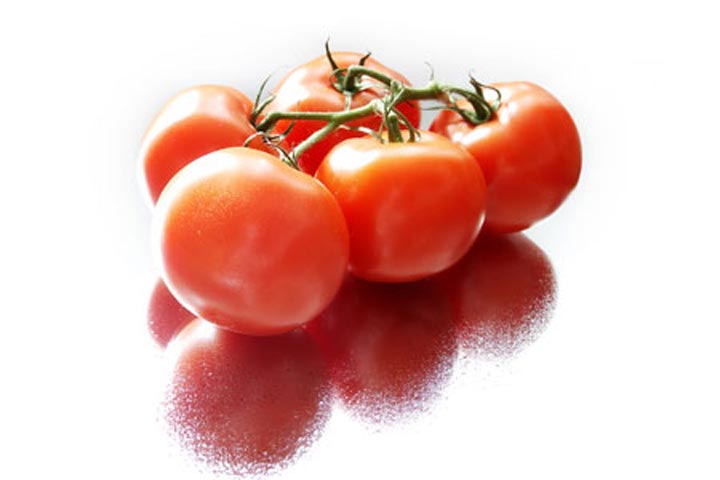
Whether or not you have a garden, I bet you’re seeing a lot of red around now. It’s that time of the year that finds gardens and farms bursting with the last of the juiciest, ripest tomatoes. Yes, we sure do love those scarlet orbs, and one tasty way to add them into your daily fare is to bite into a BLT.
That’s bacon. Lettuce. And tomato—in a sandwich, of course. Are these sandwiches served in your part of the world?
Bacon itself was one of my favorite foods when I was growing up—especially when I still was blissfully unaware of the saturated fat and sodium. I was known to consume large quantities of bacon in one sitting. I even embraced canned bacon for a time, content that large quantities of the stuff could be stocked on the cupboard shelf, sitting at-the-ready, for frying up at any hour of the day or night.
Yes, the bacon in a BLT was one of my favorite adolescent indulgences—and I often sliced a garden-fresh tomato atop the ensemble. Even when I went strictly vegetarian in my 20s, I found a feasible substitute: Fakin’ Bakin’ made from tempeh, a fermented soybean product.
It was only several weeks ago that I revisited BLTs. It sure had been a long time. And true loves never die. So I fried up two pounds of the real stuff to share with the family, complete with those abundant garden tomatoes, lettuce and toast.
It really is a sandwich that’s a meal. And lucky for me, everyone in our clan likes them too. Just as we were chowing down, my daughter asked, “Who invented the BLT?”
Gosh, good question. So we did a little digging at the Food Timeline (http://www.foodtimeline.org/foodsandwiches.html#blt), and here’s what we discovered:
It seems that culinary evidence points to the BLT evolving from late Victorian-era tea sandwiches, and were originally known by a variety of names. And, get this—it’s thought that the main ingredients of BLTs (bread, bacon and lettuce) were a combo eaten by the Romans also. It wasn’t until tomatoes made their debut in Europe in the 16th century that they became part of the recipe though. And it seems that the birth of the BLT had something to do with club sandwiches in the 19th and 20th centuries. Some of the first recipes that approximate a BLT were found in cookbooks from the 1920s. And in the 1930s, BLTs even included cheese.
But how was the acronym BLT born?
According to the Food Timeline, they can’t trace the origins to any one person, time or place, although they state that John Mariani, American food historian, hypothesizes the following:
"Lunch counters have provided etymologists and linguists with one of the richest sources of American slang, cant, and jargon, usually based on a form of verbal shorthand bandied back and forth between waiters and cooks. Some terms have entered familiar language of most Americans--"BLT" (a bacon, lettuce, and tomato sandwich) and others--but most remain part of a bewildering and colorful language specific to the workers in such establishments."
---The Encyclopedia of American Food & Drink, John F. Mariani [Lebhar Freidman:New York] 1999 (p. 190)
So there ya have it, folks. If you’ve never cooked bacon with your kids—or if you have tons of tomatoes piling up—go ahead and try it. And pile up those veggies for a healthier BLT.
It’ll make you glad you’re alive!
©2026 CDKitchen, Inc. No reproduction or distribution of any portion of this article is allowed without express permission from CDKitchen, Inc.
To share this article with others, you may link to this page:
https://www.cdkitchen.com/cooking-experts/christine-gable/568-bacon-lettuce-tomato/
Tomatoes, Tomatoes . . . Everywhere
Whether or not you have a garden, I bet you’re seeing a lot of red around now. It’s that time of the year that finds gardens and farms bursting with the last of the juiciest, ripest tomatoes. Yes, we sure do love those scarlet orbs, and one tasty way to add them into your daily fare is to bite into a BLT.
That’s bacon. Lettuce. And tomato—in a sandwich, of course. Are these sandwiches served in your part of the world?
Bacon itself was one of my favorite foods when I was growing up—especially when I still was blissfully unaware of the saturated fat and sodium. I was known to consume large quantities of bacon in one sitting. I even embraced canned bacon for a time, content that large quantities of the stuff could be stocked on the cupboard shelf, sitting at-the-ready, for frying up at any hour of the day or night.
Yes, the bacon in a BLT was one of my favorite adolescent indulgences—and I often sliced a garden-fresh tomato atop the ensemble. Even when I went strictly vegetarian in my 20s, I found a feasible substitute: Fakin’ Bakin’ made from tempeh, a fermented soybean product.
It was only several weeks ago that I revisited BLTs. It sure had been a long time. And true loves never die. So I fried up two pounds of the real stuff to share with the family, complete with those abundant garden tomatoes, lettuce and toast.
It really is a sandwich that’s a meal. And lucky for me, everyone in our clan likes them too. Just as we were chowing down, my daughter asked, “Who invented the BLT?”
Gosh, good question. So we did a little digging at the Food Timeline (http://www.foodtimeline.org/foodsandwiches.html#blt), and here’s what we discovered:
It seems that culinary evidence points to the BLT evolving from late Victorian-era tea sandwiches, and were originally known by a variety of names. And, get this—it’s thought that the main ingredients of BLTs (bread, bacon and lettuce) were a combo eaten by the Romans also. It wasn’t until tomatoes made their debut in Europe in the 16th century that they became part of the recipe though. And it seems that the birth of the BLT had something to do with club sandwiches in the 19th and 20th centuries. Some of the first recipes that approximate a BLT were found in cookbooks from the 1920s. And in the 1930s, BLTs even included cheese.
But how was the acronym BLT born?
According to the Food Timeline, they can’t trace the origins to any one person, time or place, although they state that John Mariani, American food historian, hypothesizes the following:
"Lunch counters have provided etymologists and linguists with one of the richest sources of American slang, cant, and jargon, usually based on a form of verbal shorthand bandied back and forth between waiters and cooks. Some terms have entered familiar language of most Americans--"BLT" (a bacon, lettuce, and tomato sandwich) and others--but most remain part of a bewildering and colorful language specific to the workers in such establishments."
---The Encyclopedia of American Food & Drink, John F. Mariani [Lebhar Freidman:New York] 1999 (p. 190)
So there ya have it, folks. If you’ve never cooked bacon with your kids—or if you have tons of tomatoes piling up—go ahead and try it. And pile up those veggies for a healthier BLT.
It’ll make you glad you’re alive!
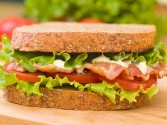

Serves/Makes: 6
- 1 pound bacon, fried and drained
- 3 large fresh tomatoes, washed and sliced
- 12 lettuce leaves, washed
- 6 tablespoons mayonnaise
- 12 slices bread, toasted if desired
Fry bacon according to package directions, then drain on paper towels. Prep vegetables and toast bread if desired.
Assemble sandwiches: Spread mayo on bread and top with slices of bacon, tomato and lettuce.
For those who prefer less bread, try serving it open-face with a lettuce leaf on top. Otherwise, top with second piece of bread and slice in half.
share this article:


related articles


Write a comment:
©2026 CDKitchen, Inc. No reproduction or distribution of any portion of this article is allowed without express permission from CDKitchen, Inc.
To share this article with others, you may link to this page:
https://www.cdkitchen.com/cooking-experts/christine-gable/568-bacon-lettuce-tomato/