

cdkitchen > cooking experts > christine gable

Fresh-cut fries, apple fritters, funnel cakes. It’s definitely feeling like fall here in Lancaster County and I’ve had the hankering for a delicious deep-fried dish—maybe since it’s been fair and farm show season. Surrounded by all those delicious stands, the smell of fries, blossoming onions, cheesesteaks, chicken corn soup and apple dumplings beckons.
Yet we all know that consuming a lot of fried food isn’t the best for our health. Trans fat, saturated fat . . . have you lost track of which fats and oils you should watch out for?
According to the American Heart Association, “trans fat (also called trans fatty acids) is formed when liquid vegetable oils go through a chemical process called hydrogenation, in which hydrogen is added to make the oils more solid.” They’re a boost to food manufacturers since they provide longer shelf life and add that tasty texture to foods such as cookies, crackers and snack foods. Trans fat can also be found in fried foods, doughnuts and baked goods—basically any processed food made with partially hydrogenated oils.
So what does trans fat do in your body? Recent studies suggest that it raises LDL (bad) cholesterol levels while lowering (HDL) levels, eventually causing the arteries to become clogged, increasing one’s risk of developing heart disease and stroke. Even vegetable oils such as coconut, palm and palm kernel oils contain high amounts of saturated fats that can contribute to high cholesterol. So it’s wise to go for the polyunsaturated fats that are found in sesame, sunflower, corn and soybeans. Or even better, the monounsaturated fats in olive and canola oils.
With the new trans fat labels required by the FDA, many (but not all) products will make it easier for you to find the level of saturated and trans fat. Yet beware: Some companies have filed for an extension and may not yet be listing the total trans fat—so read the ingredient lists carefully.
But don’t give up: those same trans and saturated fats that don’t do your body good can do good for the environment—as fuel, that is. Have you and your kids heard about cars that can run on vegetable oil as fuel?
Indeed, any diesel engine can operate on a fuel made from vegetable oil called biodiesel. Biodiesel is an alternative fuel that is made from new or waste vegetable oil or animal fat and can be burned in any diesel engine—no modifications necessary. Biodiesel is often mixed with petroleum diesel in different percentages, from 1 to 99. So if you pull up to a station and see B20, that means it’s 20 percent biodiesel and 80 percent petroleum.
Why put your diesel on a vegetarian diet?
For one thing, it’s cleaner: Biodiesel reduces emissions of carbon monoxide, carbon dioxide, sulfur dioxide and particulate matter. And it’s plant-based which makes it another way to support your farmer. While the market for soybean oil used in salad dressings and cooking oils is dropping off, farmers are still able to make a good living by growing those very same soybeans for fuel. Biodiesel is also a natural lubricant and will help extend the life of your engine. But best of all, it has a pleasant exhaust smell—when burned, the fuel emits a French-fry aroma.
Don’t have a diesel? Don’t fret—other alternative fuels and vehicles are on the horizon—and I invite you (and your kids!) to join us and learn more. My husband and I have joined the About.com team as Guides for Alternative Fuels http://alternativefuels.about.com.
Remember, for your own diet, it’s all fairly simple when you use fats and oils sparingly, and choose high quality oils such as olive or canola. Limit the trans fat and saturated fats for special treats—like going to the fair or farm show—and your body will thank you.
And in the meantime, check out the alternative of fueling your car with that oil instead—it’ll make your doctor proud.
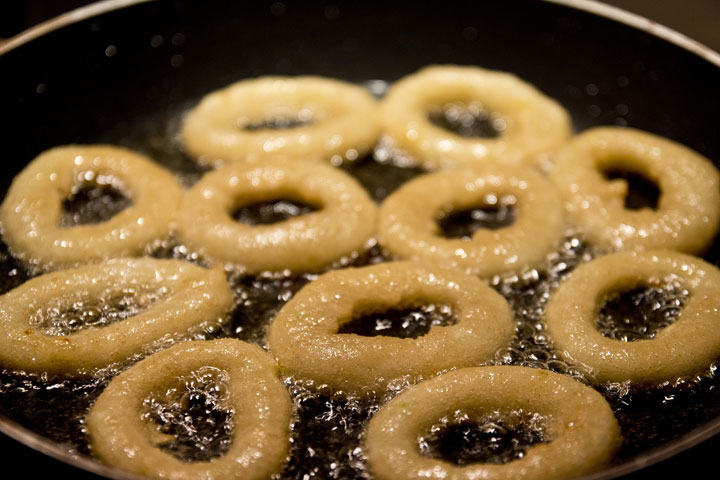
Here’s a recipe for onion rings that my daughter and I created while watching a movie the other night—it’s crispy and golden—and, yes, the oil could be filtered and used for fuel after you’re done cooking.
©2026 CDKitchen, Inc. No reproduction or distribution of any portion of this article is allowed without express permission from CDKitchen, Inc.
To share this article with others, you may link to this page:
https://www.cdkitchen.com/cooking-experts/christine-gable/401-vegetable-oil/
Vegetable Oil: Food and Fuel?
Fresh-cut fries, apple fritters, funnel cakes. It’s definitely feeling like fall here in Lancaster County and I’ve had the hankering for a delicious deep-fried dish—maybe since it’s been fair and farm show season. Surrounded by all those delicious stands, the smell of fries, blossoming onions, cheesesteaks, chicken corn soup and apple dumplings beckons.
Yet we all know that consuming a lot of fried food isn’t the best for our health. Trans fat, saturated fat . . . have you lost track of which fats and oils you should watch out for?
According to the American Heart Association, “trans fat (also called trans fatty acids) is formed when liquid vegetable oils go through a chemical process called hydrogenation, in which hydrogen is added to make the oils more solid.” They’re a boost to food manufacturers since they provide longer shelf life and add that tasty texture to foods such as cookies, crackers and snack foods. Trans fat can also be found in fried foods, doughnuts and baked goods—basically any processed food made with partially hydrogenated oils.
So what does trans fat do in your body? Recent studies suggest that it raises LDL (bad) cholesterol levels while lowering (HDL) levels, eventually causing the arteries to become clogged, increasing one’s risk of developing heart disease and stroke. Even vegetable oils such as coconut, palm and palm kernel oils contain high amounts of saturated fats that can contribute to high cholesterol. So it’s wise to go for the polyunsaturated fats that are found in sesame, sunflower, corn and soybeans. Or even better, the monounsaturated fats in olive and canola oils.
With the new trans fat labels required by the FDA, many (but not all) products will make it easier for you to find the level of saturated and trans fat. Yet beware: Some companies have filed for an extension and may not yet be listing the total trans fat—so read the ingredient lists carefully.
But don’t give up: those same trans and saturated fats that don’t do your body good can do good for the environment—as fuel, that is. Have you and your kids heard about cars that can run on vegetable oil as fuel?
Indeed, any diesel engine can operate on a fuel made from vegetable oil called biodiesel. Biodiesel is an alternative fuel that is made from new or waste vegetable oil or animal fat and can be burned in any diesel engine—no modifications necessary. Biodiesel is often mixed with petroleum diesel in different percentages, from 1 to 99. So if you pull up to a station and see B20, that means it’s 20 percent biodiesel and 80 percent petroleum.
Why put your diesel on a vegetarian diet?
For one thing, it’s cleaner: Biodiesel reduces emissions of carbon monoxide, carbon dioxide, sulfur dioxide and particulate matter. And it’s plant-based which makes it another way to support your farmer. While the market for soybean oil used in salad dressings and cooking oils is dropping off, farmers are still able to make a good living by growing those very same soybeans for fuel. Biodiesel is also a natural lubricant and will help extend the life of your engine. But best of all, it has a pleasant exhaust smell—when burned, the fuel emits a French-fry aroma.
Don’t have a diesel? Don’t fret—other alternative fuels and vehicles are on the horizon—and I invite you (and your kids!) to join us and learn more. My husband and I have joined the About.com team as Guides for Alternative Fuels http://alternativefuels.about.com.
Remember, for your own diet, it’s all fairly simple when you use fats and oils sparingly, and choose high quality oils such as olive or canola. Limit the trans fat and saturated fats for special treats—like going to the fair or farm show—and your body will thank you.
And in the meantime, check out the alternative of fueling your car with that oil instead—it’ll make your doctor proud.
Here’s a recipe for onion rings that my daughter and I created while watching a movie the other night—it’s crispy and golden—and, yes, the oil could be filtered and used for fuel after you’re done cooking.
Gluten Free Onion Rings


Made with oil, baking mix, cornmeal, milk, egg, canola or safflower oil, onions
Made with oil, baking mix, cornmeal, milk, egg, canola or safflower oil, onions
Serves/Makes: 4
- 1/2 cup Arrowhead Mills gluten-free baking mix
- 1/4 cup cornmeal
- 2/3 cup milk
- 1 egg
- 1 teaspoon canola or safflower oil
- 2 large onions, peeled and sliced and separated into 1/4-inch rings
- 1 quart safflower or canola oil for frying
Pour safflower or canola oil into large, deep heavy skillet and heat to 375 degrees F.
Meanwhile, slice onions and combine first 5 ingredients and whisk until smooth (depending upon batter thickness, add a teaspoon more of milk.)
Dip rings into batter with fork, briefly allowing extra batter to drip before plunging into the hot oil. Fill pan with batter-dipped rings, allowing enough room for turning each one over when golden on one side, approximately 1-2 minutes per side.
After each ring has been flipped and is golden, remove and drain on paper napkins or towels. Serve immediately or keep warm in 300 degrees F oven during remaining preparation.
share this article:


related articles


Write a comment:
©2026 CDKitchen, Inc. No reproduction or distribution of any portion of this article is allowed without express permission from CDKitchen, Inc.
To share this article with others, you may link to this page:
https://www.cdkitchen.com/cooking-experts/christine-gable/401-vegetable-oil/