

cdkitchen > cooking experts > christine gable

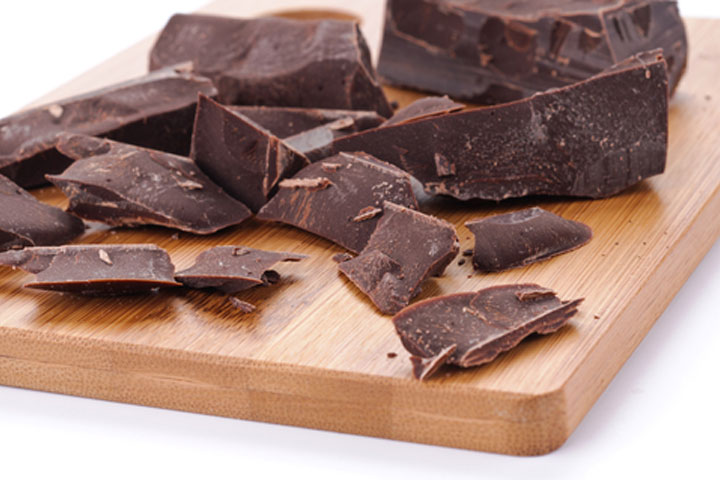
My seven-year-old daughter recently chose a topic to create an educational display for an end-of-year annual learning fair. Her choice? Chocolate.
Chocolate lovers that we both are, this was the perfect opportunity for us to learn more about the rich history of chocolate—and best of all, an educational excuse to discover and sample different chocolate delights.
Needless to say, all this learning about chocolate opened our eyes. It took this commonly found grocery store item and elevated it into the realm of wonder. Learning about the origins of cacao trees and the time and work that goes into making just one pound of chocolate has helped me to savor that melt-in-your mouth flavor even more.
For example, to make just one pound of chocolate, it takes ten to fifteen football size pods, each containing 30 to 40 beans. That’s not even mentioning the drying, roasting, pulverizing, mixing and blending that brings us a beloved bar of chocolate.
We can originally thank the Olmecs who lived in Mesoamerica from 1500-200 B.C, for managing to cut and pry open those hard wooden pods from the cacao tree, and attempting to use those unusual beans inside for a drink. From the Olmecs to the Mayans to the Aztecs, these beans were dried, roasted, ground, whipped and poured in myriad ways. Called xocoatl, which meant “bitter water,” their original drink was consumed only by the upper classes and soldiers on the march, since it was believed to be healthy and nourishing. Montezuma is said to have consumed in excess of 50 cups of his beloved chocolate per day, with palace storehouse vaults containing over 960 million beans. Now that is a serious chocoholic!
Cacao beans were even used as money, yet it wasn’t until the 1600s that the Spanish brought the chocolate drink recipe to the European colonies, where further experimentation gave birth to the beginnings of the sweetened drink and candy we know today.
One of the most engaging books we discovered was Smart About Chocolate: A Sweet History, written by Sandra Markle and illustrated by Charise Mericle Harper. Written and drawn in the form of a child’s illustrated report for school, not only was it lighthearted yet informative, it even had a science experiment involving chocolate chips. While science isn’t my daughter’s favorite subject, when combined with chocolate, it certainly gained appeal. She had the necessary items pulled together in no time and proceeded to tweak and tinker with the end-result a long time after the initial instructions were completed. It certainly was a fun way for her to learn that chocolate melts at 84ºF, and when plunged into cool water, it will solidify into whatever interesting shapes it’s been molded into. Never was learning how to read a thermometer so much fun!
We also learned about the environmental and social fair-trade ramifications regarding the rain forests, farmers and workers that make that candy bar possible. Plus, we’ve started using fair trade chocolate that will hopefully help improve the lives of farmers and families, such as those supported by www.yacao.com.
Our final delight in completing her project was when we discovered a bag of cacao nibs at a local natural foods store. One pound of 100 percent pure cacao beans from an organic fair trade company—dried, roasted and ready-to-eat. They are the pure taste of chocolate with no sugar added.
It was the perfect ending to weeks of preparation—to taste the original crunch of the bitter yet rich, unadulterated beans that started this journey of learning.
Here’s hoping that you find some time to read and explore chocolate (or another favorite food) with your kids this week!
©2026 CDKitchen, Inc. No reproduction or distribution of any portion of this article is allowed without express permission from CDKitchen, Inc.
To share this article with others, you may link to this page:
https://www.cdkitchen.com/cooking-experts/christine-gable/283-chocolate-discovery/
Chocolate Discovery
My seven-year-old daughter recently chose a topic to create an educational display for an end-of-year annual learning fair. Her choice? Chocolate.
Chocolate lovers that we both are, this was the perfect opportunity for us to learn more about the rich history of chocolate—and best of all, an educational excuse to discover and sample different chocolate delights.
Needless to say, all this learning about chocolate opened our eyes. It took this commonly found grocery store item and elevated it into the realm of wonder. Learning about the origins of cacao trees and the time and work that goes into making just one pound of chocolate has helped me to savor that melt-in-your mouth flavor even more.
For example, to make just one pound of chocolate, it takes ten to fifteen football size pods, each containing 30 to 40 beans. That’s not even mentioning the drying, roasting, pulverizing, mixing and blending that brings us a beloved bar of chocolate.
We can originally thank the Olmecs who lived in Mesoamerica from 1500-200 B.C, for managing to cut and pry open those hard wooden pods from the cacao tree, and attempting to use those unusual beans inside for a drink. From the Olmecs to the Mayans to the Aztecs, these beans were dried, roasted, ground, whipped and poured in myriad ways. Called xocoatl, which meant “bitter water,” their original drink was consumed only by the upper classes and soldiers on the march, since it was believed to be healthy and nourishing. Montezuma is said to have consumed in excess of 50 cups of his beloved chocolate per day, with palace storehouse vaults containing over 960 million beans. Now that is a serious chocoholic!
Cacao beans were even used as money, yet it wasn’t until the 1600s that the Spanish brought the chocolate drink recipe to the European colonies, where further experimentation gave birth to the beginnings of the sweetened drink and candy we know today.
One of the most engaging books we discovered was Smart About Chocolate: A Sweet History, written by Sandra Markle and illustrated by Charise Mericle Harper. Written and drawn in the form of a child’s illustrated report for school, not only was it lighthearted yet informative, it even had a science experiment involving chocolate chips. While science isn’t my daughter’s favorite subject, when combined with chocolate, it certainly gained appeal. She had the necessary items pulled together in no time and proceeded to tweak and tinker with the end-result a long time after the initial instructions were completed. It certainly was a fun way for her to learn that chocolate melts at 84ºF, and when plunged into cool water, it will solidify into whatever interesting shapes it’s been molded into. Never was learning how to read a thermometer so much fun!
We also learned about the environmental and social fair-trade ramifications regarding the rain forests, farmers and workers that make that candy bar possible. Plus, we’ve started using fair trade chocolate that will hopefully help improve the lives of farmers and families, such as those supported by www.yacao.com.
Our final delight in completing her project was when we discovered a bag of cacao nibs at a local natural foods store. One pound of 100 percent pure cacao beans from an organic fair trade company—dried, roasted and ready-to-eat. They are the pure taste of chocolate with no sugar added.
It was the perfect ending to weeks of preparation—to taste the original crunch of the bitter yet rich, unadulterated beans that started this journey of learning.
Here’s hoping that you find some time to read and explore chocolate (or another favorite food) with your kids this week!
No-Bake Chocolate Crunchies


Made with miniature marshmallows, crisped rice cereal, chow mein noodles, chocolate chips
Made with miniature marshmallows, crisped rice cereal, chow mein noodles, chocolate chips
Serves/Makes: 20 pcs
- 1/2 cup chocolate chips
- 1/2 cup chow mein noodles
- 1/2 cup crisped rice cereal
- 1/2 cup miniature marshmallows
In microwave-safe bowl, melt chocolate chips for approximately 30 seconds until creamy. Add remaining ingredients and mix well. When cool enough to handle, shape by spoonfuls into 1-inch balls and store in refrigerator separated by wax paper.
Christine's Note: Here's a simple, yet amazingly delicious chocolate snack that can be mixed in its entirety by little fingers. These little munchies can be shaped into 1-inch balls; refrigerated, they keep up to a week - if they last that long.
share this article:


related articles


Write a comment:
©2026 CDKitchen, Inc. No reproduction or distribution of any portion of this article is allowed without express permission from CDKitchen, Inc.
To share this article with others, you may link to this page:
https://www.cdkitchen.com/cooking-experts/christine-gable/283-chocolate-discovery/