

The New Couscous Is Fregola


Doesn't there always seem to be a starch of the moment? At one time couscous, the pointillist pasta of North Africa, was all the rage. Then people began forgoing wheat and the wind shifted west to the Americas and quinoa, a gluten-free seed more toothsome than couscous with all the same ease and speedy cooking. Great grains like barley and farro have had their moment, tossed into salads, cooked à la risotto, and posing as pedestals for filet mingon and seared sea bass.
Each newcomer treads the ground of the mashed potatoes and rice pilafs that have come before it, trying to bring a different twist to the old supporting role of starch to protein.
Now it seems, the time has come for fregola to take the place of the new darling starch to grace plates around town. In a way, that old saying rings true--what's old is new again--for fregola is a close cousin of, that’s right, couscous. Hailing from the island of Sardinia, fregola’s home is a mere stone's throw across the Mediterranean from North Africa, the birthplace of couscous.
Fregola is typically larger than traditional couscous, and similar looking to the larger, bead-like, Israeli couscous. It is thought the dish was brought to the southwestern corner of the island by immigrants from a colony in Tunisia. There, dough made of semolina flour was rolled to a diameter of 2-3mm before being toasted in the oven. The result is often a multi-hued mélange of tiny pasta balls, the darker ones adding deeply nutty flavor to a chewy plate of miniature pasta.
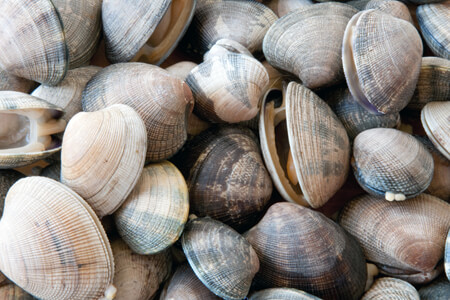
In Sardinia fregola most often appears as the base of a traditional dish made with tomatoes and clams. Discovered by chefs here in the United States, fregola is now finding its way into salads, under meats, and sometimes, though not often, as the base for a main course itself.
Like couscous and Quinoa, I like fregola for its ease of cooking. Once the liquid is added, fifteen to twenty minutes is all it takes for the pasta to reach the desired texture, just done enough to be chewy but not crunchy. I’ve done twists on traditional fregola sarda with the clams and tomatoes by adding sausage and saffron, giving it almost a paella quality. It can be cooked plain then tossed with vegetables for a salad, as a I had a week ago in the form of an asparagus and fregola appetizer, or it can be loaded up with meat and given a heaping dusting of Pecorino for a filling main course.
It is likely that six months from now some new grain, seed, or pasta will have unseated fregola as the hot starch of the moment. When that day comes, I’ll enjoy seeing how other chefs use it in new and inventive ways. Until that day, I’m taking notes on the fregola, because at least in my kitchen, this is one trend that is here to stay.


Made with fresh parsley, salt and black pepper, chicken stock, olive oil, Italian sausage, chorizo, garlic, chili flakes, diced tomatoes, fregola
Serves/Makes: 2
- 2 tablespoons olive oil plus additional
- 1/2 pound Italian sausage
- 1 ounce cured chorizo
- 2 cloves garlic, minced
- 1 pinch chili flakes
- 1 cup diced tomatoes and their juices
- 2 cups fregola
- 2 1/2 cups chicken stock
- salt and black pepper
- 1/4 cup chopped fresh parsley
Heat olive oil in a heavy pot over medium high heat. Remove sausage from its casing. Add sausage to olive oil. Saute for several minutes breaking up sausage with a wooden spoon.
Meanwhile, cut chorizo into small dice. When sausage is mostly browned but still has a little pink, add diced chorizo. Saute for another two minutes until chorizo browns slightly. Remove chorizo and sausage with a slotted spoon and set aside in a bowl.
If there is not enough oil remaining, add more olive oil so there is about 3 Tb. of fat in the pan between the sausage drippings and the oil.
Reduce heat to medium. Add garlic and chili flakes and saute for two minutes until softened. Add tomatoes and stir bringing liquid to a simmer. Add fregola to the pot and cook for 2-3 minutes until it has absorbed some of the liquid.
Add chicken stock along with a bit of salt and pepper. Bring to a boil, then reduce heat to medium low. Stir sausage and chorizo back into the pot. Let cook with the lid off for about 15 minutes stirring frequently until liquid is mostly absorbed and fregola is tender but still chewy.
Remove the pot from heat and stir in parsley. Serve immediately.


related articles


Write a comment:
©2026 CDKitchen, Inc. No reproduction or distribution of any portion of this article is allowed without express permission from CDKitchen, Inc.
To share this article with others, you may link to this page:
https://www.cdkitchen.com/cooking-experts/amy-powell/1340-fregola/