

Battle of the Breadcrumb


Until recently in human history, when it comes to food we humans have not been wasteful people. Probably for as long as mothers have baked bread, the scraps of the loaf have been re-purposed in the form of breadcrumbs. In Italy, grandmothers have saved up bits of ciabatta to use as a binder in meatballs. In France, nubs of baguettes were dried and ground to coat chicken, adding texture and moisture when over the flame. Even across the world in Japan, breadcrumbs were used to coat meat, which was then deep fried for a dish called tonkatsu. So it is that the stale leftover bread that we would now not think twice about throwing away was and still is an essential part of many recipes.
However, not all breadcrumbs are created equal. Before popping open one of those blue cans with an aluminum lid from the grocery store, consider that there might be a better crumb out there for you depending on the desired purpose. In fact, the perfect crumb for the dish you are working on might not even be made of bread at all.
If you are going about using breadcrumbs the old Italian grandmother way, do not fear, making breadcrumbs yourself is not difficult. The first key is that the bread should not be too old. If you are working with the ends of a baguette bought from a bakery, don’t use it if that bread is more than 2-3 days old. Sliced sandwich bread can also make perfectly good crumbs, just be sure you have not waited until it is on the verge of molding before using it.
In either case, the bread is almost always better for crumbs when the crusts have been removed. Use a sharp bread knife to slice off the crusts and discard. If the bread is still a bit moist, cut it in slices and cook in a low oven, 200-250°F until it is dried out. At this point the dry bread can be broken up by hand into pebble sized crumbs or quickly whizzed in a food processor. If you are not using the crumbs right away, store in an air-tight container or reseal-able plastic bag at room temperature for use that week, or in the freezer for use later on.
If choosing to go with store-bought breadcrumbs, one situation where it is acceptable is when the recipe is better suited to the Japanese style bread crumb called panko. Panko crumbs are essentially a crustless breadcrumb but the flakes tend to be larger and airier. They absorb less oil than typical breadcrumbs so the result is a crisper, crunchier texture that stays that way for a longer period of time that your typical crumb. These breadcrumbs are best suited to any recipe that calls for breading and frying. Whether deep fried as fried zucchini or arancini, or pan fried as with wiener schnitzel, chicken tonkatsu, or eggplant parmesan, panko is the choice for the crispiest possible finished product.
Aside from breading and frying, breadcrumbs are often used as a filler and binder for meat and seafood. For seafood such as crab cakes, I prefer standard homemade bread crumbs for a thinner coating than one often gets with panko. As a filler or binder, a traditional breadcrumb is preferable because it absorbs more. The idea is that the breadcrumb filler will absorb the moisture in a meatball, for instance, that would typically be released by the meat during cooking, thereby resulting in a juicy end product. Sometimes you will even see a recipe, for, say, a breadcrumb filling such as with a stuffing for a pork loin, advising to soak the large crumbs in water, milk, or broth before using, thus the bread actually adds moisture back into the meat during the cooking process. This is the time for a more absorbent crumb such as a fresh bread crumb versus the less absorbent panko.
If you are allergic to gluten or cooking for someone who is, there are alternatives to using bread for both the functions of creating a crispy crust and as a binder. For an alternative crispy coating that is gluten-free, try using day old quinoa. Just like day old rice is necessary for fried rice because it is dried out, day old quinoa will make for a better coating for pan frying because it will be less wet. Try dipping shrimp or chicken in an egg wash then dredging in quinoa before oven baking or pan frying for a textured and crispy alternative to bread. For meatball or meatloaf filling, toasted raw rice ground fine or plain uncooked rice left whole will serve a similar purpose as bread, but with even more capacity to absorb liquid from the meat as the rice puffs up and binds the dish together while cooking.
Unfortunately when it comes to breadcrumbs there are no one-size-fits all solutions. However, one does not need to rely on a blue canister in the cupboard to make the perfect meatball if rice or the stub of a baguette is around. And when it comes to perfectly crisp breaded chicken, fresh crumbs are nice, but leaving it to the Japanese might be even better. In the battle of the breadcrumb, depending on which fight you pick, everyone’s a winner.
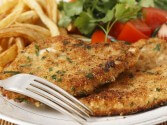

Made with fresh parsley, vegetable oil, chicken breast halves, flour, salt and pepper, eggs, panko breadcrumbs
Serves/Makes: 4
- 4 boneless, skinless chicken breast halves
- 1 cup all-purpose flour
- salt and pepper
- 3 eggs
- 2 cups panko breadcrumbs
- 1/4 cup vegetable oil
- 1/4 cup chopped fresh parsley
Cut each chicken breast in half horizontal to the work surface, forming two thinner breasts. Working between sheets of plastic wrap, pound each breast with a rolling pin or mallet until it is about 1/2-inch thick.
Set up the breading process by seasoning the flour heavily with salt and pepper and spreading it in a shallow dish. Lightly beat the eggs and spread them in a second dish. Finally, spread the panko in a third shallow dish.
Working with one piece of chicken at a time, dredge in flour, shaking off excess, dip in the egg, and then pat into the breadcrumbs, coating evenly. Repeat with each breast.
Heat oil in two large saute pans over medium high heat. Working with 2-3 pieces of chicken at a time in each pan (be sure not to over crowd, pieces should not be touching each other), cook for 3-4 minutes per side until browned and chicken is cooked through.
Transfer to a warm oven and repeat with remaining chicken.
To serve, plate two pieces of chicken schnitzel per person and top with chopped parsley.


related articles



Write a comment:
©2026 CDKitchen, Inc. No reproduction or distribution of any portion of this article is allowed without express permission from CDKitchen, Inc.
To share this article with others, you may link to this page:
https://www.cdkitchen.com/cooking-experts/amy-powell/1094-bread-crumbs/