

Lavender at Your Table


It is a Saturday morning in late June. The weather is perfect. I am standing, eyes closed, inhaling the sweet scent of lavender. I open my eyes to see row after row of tall, majestic purple flowers carpeting the landscape. It is breathtakingly beautiful. Am I in the south of France? No, just a few miles south of Indianapolis!
Lavender, sometimes referred to as blue gold by the French, has been grown in the Mediterranean for centuries. Prized for its scent, healing properties and beauty, its use has been historically documented for over 2500 years. Roman soldiers used the plant to cleanse wounds in the battlefield and are credited with giving it the Latin root name “lavare” which means to wash. The Egyptians used the plant for mummification and legend has it that Charles IV of France would insist upon a bed which had lavender filled pillows wherever he traveled. Today lavender is used in a number of ways including flavoring sweet and savory food products, as an insect repellant, in aromatherapy, and as a perfume and massage oil ingredient. And one cannot talk of lavender without thoughts of romance. Studies have shown that the scent of lavender is a powerful aphrodisiac for men.
Commercial-use lavender is grown widely in England and Provence, but the United States has its fair share of commercial production sites from Pennsylvania to California. On that Saturday in June I was visiting the Willowfield Lavender Farm in Mooresville, Indiana owned by Libbe and Kje O’Conner. I wanted to learn more about growing and using this beautiful herb. I’d come to the right place.
My interest in growing lavender started about 5 years ago when we were planning our new home and I was designing the herb and edible flower garden that now surrounds the back patio. At first I grew a hybrid lavender called Grosso. I was happy with its hardiness and beautiful flower. But the scent was camphor-like and, due to the plant’s high resin content, using it in my cooking left me with a disappointing pine-like taste in the dishes I prepared. Two years ago, I began to grow Provence lavender, a delicate French variety with a sweet fruity fragrance and appealing mild floral taste. I use it exclusively in my cooking and to make a lavender sugar for use in pastries, jellies, sorbets, ice creams, lemonades and teas.
Lavender flowers range from deep royal purple to pink and white. Most people think the fragrance and flavor are in the flower, but the leaves contain the more powerful scent and taste. When using lavender for culinary purposes be sure the lavender is specifically labeled “for culinary use.” Lavender used in commercially available potpourris may be sprayed with scented oils that are not suitable for human consumption. Of course, the best strategy for assuring the highest quality plant is to grow your own lavender.
To grow your own lavender you’ll need a place in your yard that gets full sun from 10:00 a.m. to 4:00 p.m. Libbe advises that the plants be placed in well drained soil that has some sand or gravel added to it. Mound the soil so that the plant is sitting on a small slope to assure good drainage. Good weed control is essential, but take care not to mulch too heavily especially around the base of the plant. Keep mulch away from the main plant stem or you will cause the plant to get root rot.
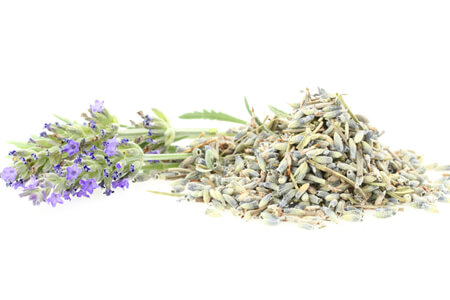
To harvest your lavender, grasp a handful of the flower stems and cut them close to the foliage. To retain the oils, cut the lavender when the flowers have not yet opened fully. It’s best to do this in the morning or early evening. Then wrap the stems with kitchen twine or an elastic band and hang the bunches in a cool, dark dry place with plenty of circulating air. Once the flowers have dried, place a clean cloth on a counter and gently rub the flower buds off the stems catching them in the cloth. Put the buds in a dark glass lidded jar and they will last for a few years. The dried stems can be tossed into a wood burning fireplace or soaked for 10 minutes and then placed on a charcoal grill to add flavor and scent to fish and chicken. You can also place them in a small wicker basket and set them on a bedside table to perfume your bedroom.
Lavender plants are disease resistant and generally insect free (except for the honey bees who will visit daily for the sweet nectar). They require little maintenance other than an annual pruning. Each year, right after the plant has flowered, cut back the plant by 30-50%.
Properly maintained, lavender plants can last up to a decade in your garden, but most home gardeners will find that the plants will need to be replaced every 3-5 years. Some of the dwarf lavender varieties can grow very well in containers and, if you have a sunroom or an overhead window, some lavenders can thrive indoors. Libbe recommends Munstead Dwarf, Hidecote Blue Dwarf and Nana (Dwarf Blue Lavender) for containers as well as indoor use.
To relax after a long day in the fields, Libbe likes to make a tea by steeping dried culinary lavender buds, dried spearmint or peppermint leaves and some dried lemon peel in hot water. She sweetens it with a bit of honey for a refreshing, soothing drink. For a special treat, she bakes the most delicious lavender shortbread cookies and she has given me the recipe to share with you. The only thing better than making the tea and cookies for yourself would be to sit in her magnificent lavender fields while you’re enjoying them!


Made with Provence culinary lavender buds, black pepper, cooking spray, potatoes, grapeseed oil, sea salt, butter
Serves/Makes: 4
- canola oil cooking spray
- 2 pounds red small potatoes, cut in half if they are over 2 inches in diameter
- 1 tablespoon grapeseed oil
- 1 tablespoon unsalted butter, melted
- 1 teaspoon coarse sea salt
- 1/2 teaspoon fresh, coarsely ground black pepper
- 1 tablespoon fresh or dried Provence culinary lavender buds
Preheat oven to 425 degrees F. Cover a rimmed baking sheet with no-stick foil and spray with cooking spray.
Put the potatoes in a gallon size, zipper top food storage bag. Add the grapeseed oil to the bag. Close the bag, removing as much air as possible, and massage the bag to evenly coat the potatoes with the oil.
Remove the potatoes from the bag and spread them in a single layer on the foil lined baking sheet. Roast for 20-25 minutes or until potatoes are golden and tender.
Remove the potatoes from the oven, place them in a serving bowl and drizzle them with the melted butter. Sprinkle the potatoes with salt, pepper and lavender buds.
Serve immediately.
NOTE: Although most people tend to use lavender in baking and the preparation of sweet foods such as ice cream and pastries, it can also be used to complement the flavor of many savory items. These easy-to-prepare potatoes are the perfect accompaniment for lamb chops or a roasted leg of lamb.
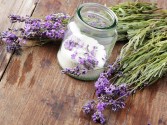
Serves/Makes: 3.5 cups
- 3 1/2 cups superfine granulated sugar *
- 1/4 cup dried Provence culinary lavender buds and leaves
Place 1 cup of sugar in a quart sized jar with a non reactive lid.
Fill a small linen herb bag with the lavender buds and leaves and place it in the jar.
Fill the jar with the rest of the sugar.
Place the lid on the jar and keep sealed for 4-6 weeks.
Use the lavender sugar in baking, hot and cold drinks and to sprinkle on fruit salads.
Cook's Note: For a special but easy dessert, replace the plain granulated white sugar in your favorite chocolate brownie recipe with lavender sugar and add 1/2 cup each of finely chopped dried apricots and walnuts to the batter. Bake as usual. The combination of lavender, chocolate, apricot and walnut is sensational!
This sugar adds a special flavor note when substituted for white sugar in a strawberry sorbet recipe. Garnish each serving of the lavender strawberry sorbet with a fresh lavender sprig.
*You can substitute confectioner's sugar for the granulated sugar in this method. The scented confectioner's sugar can then be used to make a lovely lavender perfumed icing for cakes and cookies.

Made with lavender buds, butter, sugar, flour, salt, vanilla extract, lemon extract
Serves/Makes: 72
- 3 cups unsalted butter, softened
- 2 cups granulated sugar
- 6 cups flour
- 1/2 teaspoon salt
- 1 tablespoon vanilla extract
- 3/4 teaspoon lemon extract
- 3 tablespoons dried Provence culinary lavender buds
Preheat the oven to 325 degrees F.
Cream the butter and sugar until light and fluffy.
Sift flour and salt. Add to butter mixture and stir until well incorporated.
Add vanilla extract, lemon extract, and lavender buds.
Form dough into logs and wrap in plastic wrap. Refrigerate until firm.
Slice dough into 1/2 thick slices.
Lay cookie slices on parchment lined baking sheet.
Bake for 10-15 minutes or until edges are slightly golden.
Allow to cool completely on wire racks before serving.


related articles



Write a comment:
©2026 CDKitchen, Inc. No reproduction or distribution of any portion of this article is allowed without express permission from CDKitchen, Inc.
To share this article with others, you may link to this page:
https://www.cdkitchen.com/cooking-experts/victoria-wesseler/365-lavender/