

cdkitchen > cooking experts > sarah christine bolton

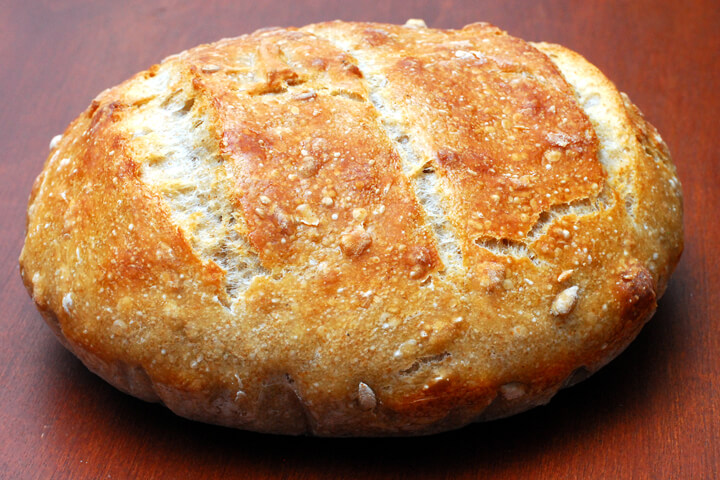
My husband and I are non-bread people. It’s not that we don’t like it. We just never buy it. We buy tortillas, pita bread, and corn chips. My husband makes submarine sandwiches, so he will buy a package of rolls every now and then. But bread? Never.
On a recent trip to California to visit my parents, my mom focused on two things: feeding us and buying us presents. Most of the presents involved food. Although I can’t hold that against her, because among the food-related gifts was a glorious large loaf of San Luis Obispo sourdough bread.
Now, many of you probably don’t even understand the significance of San Luis Obispo sourdough bread. I am very sorry that your life has been so empty thus far.
SLO sourdough bread is one of the most delectable inventions that mankind has ever come up with. It’s the perfect flavor of sourdough (strong, but not overpowering), softness (it melts in your mouth) and size (the slices are massive, which is great for making sandwiches).
Luckily, we had plenty of room in our suitcases. My sister had visited us a few months ago, and for some reason she brought her motorcycle helmet with her. Let me explain. My sister doesn’t own a motorcycle. Why she has a motorcycle helmet, I’m not sure. Along with her motorcycle helmet, she also brought her live bamboo plant and entire wardrobe…all packed into her canvas car cover.
I don’t try to explain her, I just love her in spite of herself.
Anyways, when she left our house, she forgot to take her motorcycle helmet. So, I stuffed it into my husband’s bag when we went out to California to visit, which meant we had room to store the bread on our return trip to Tennessee.
In spite of the fact that I absolutely love SLO sourdough bread, I’m also not used to eating bread. I had a slice of it here and there, but two weeks later, more than half of the loaf was still sitting on top of my fridge.
I felt bad that it was going to waste. I thought about making French toast, but breakfast for me usually means a protein bar while changing lanes on Memphis freeways. I considered panini sandwiches, but didn’t have the ingredients or a panini press.
Then, for some random reason, I thought of bread pudding. My first introduction to bread pudding was in my college cafeteria. It was one of the desserts that I actually tried and enjoyed. When I was in a musical with the college theatre department, I barely had time after class and before rehearsal to grab dinner. I would put whatever could fit into two Styrofoam cups and eat it while walking to rehearsal. One time, the only thing that looked appetizing and fit into a Styrofoam cup was bread pudding.
Maybe I liked it so much because it had lots of milk, sugar, and butter. But I like to think that a taste for bread pudding goes back further, much further, I’m talking ancient mankind further.
Alan Davidson, author of The Oxford Companion to Food, says that “from the very distant past cooks have sometimes turned stale bread into a sweet pudding, if only by soaking it in milk, sweetening it by one means or another, and baking the result.”
He goes on to describe bread puddings made in Egypt (called Om Ali and made with bread, milk or cream, raisins, and almonds) and India (Shahi tukra made with fried bread dipped in a saffron/rosewater syrup, and covered with a creamy sauce and decorated with sliced almonds).
Here in the U.S., the most common form of bread pudding is made with white bread, butter, milk, sugar, and raisins, although a huge variety of recipes are available.
©2026 CDKitchen, Inc. No reproduction or distribution of any portion of this article is allowed without express permission from CDKitchen, Inc.
To share this article with others, you may link to this page:
https://www.cdkitchen.com/cooking-experts/sarah-christine-bolton/732-breads/
Not Living By Bread Alone
My husband and I are non-bread people. It’s not that we don’t like it. We just never buy it. We buy tortillas, pita bread, and corn chips. My husband makes submarine sandwiches, so he will buy a package of rolls every now and then. But bread? Never.
On a recent trip to California to visit my parents, my mom focused on two things: feeding us and buying us presents. Most of the presents involved food. Although I can’t hold that against her, because among the food-related gifts was a glorious large loaf of San Luis Obispo sourdough bread.
Now, many of you probably don’t even understand the significance of San Luis Obispo sourdough bread. I am very sorry that your life has been so empty thus far.
SLO sourdough bread is one of the most delectable inventions that mankind has ever come up with. It’s the perfect flavor of sourdough (strong, but not overpowering), softness (it melts in your mouth) and size (the slices are massive, which is great for making sandwiches).
Luckily, we had plenty of room in our suitcases. My sister had visited us a few months ago, and for some reason she brought her motorcycle helmet with her. Let me explain. My sister doesn’t own a motorcycle. Why she has a motorcycle helmet, I’m not sure. Along with her motorcycle helmet, she also brought her live bamboo plant and entire wardrobe…all packed into her canvas car cover.
I don’t try to explain her, I just love her in spite of herself.
Anyways, when she left our house, she forgot to take her motorcycle helmet. So, I stuffed it into my husband’s bag when we went out to California to visit, which meant we had room to store the bread on our return trip to Tennessee.
In spite of the fact that I absolutely love SLO sourdough bread, I’m also not used to eating bread. I had a slice of it here and there, but two weeks later, more than half of the loaf was still sitting on top of my fridge.
I felt bad that it was going to waste. I thought about making French toast, but breakfast for me usually means a protein bar while changing lanes on Memphis freeways. I considered panini sandwiches, but didn’t have the ingredients or a panini press.
Then, for some random reason, I thought of bread pudding. My first introduction to bread pudding was in my college cafeteria. It was one of the desserts that I actually tried and enjoyed. When I was in a musical with the college theatre department, I barely had time after class and before rehearsal to grab dinner. I would put whatever could fit into two Styrofoam cups and eat it while walking to rehearsal. One time, the only thing that looked appetizing and fit into a Styrofoam cup was bread pudding.
Maybe I liked it so much because it had lots of milk, sugar, and butter. But I like to think that a taste for bread pudding goes back further, much further, I’m talking ancient mankind further.
Alan Davidson, author of The Oxford Companion to Food, says that “from the very distant past cooks have sometimes turned stale bread into a sweet pudding, if only by soaking it in milk, sweetening it by one means or another, and baking the result.”
He goes on to describe bread puddings made in Egypt (called Om Ali and made with bread, milk or cream, raisins, and almonds) and India (Shahi tukra made with fried bread dipped in a saffron/rosewater syrup, and covered with a creamy sauce and decorated with sliced almonds).
Here in the U.S., the most common form of bread pudding is made with white bread, butter, milk, sugar, and raisins, although a huge variety of recipes are available.
Slow Cooker Bread Pudding
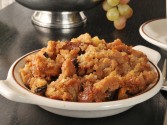

Made with raisins, ground nutmeg, vanilla extract, cinnamon or white bread, milk, eggs, sugar, butter
Made with raisins, ground nutmeg, vanilla extract, cinnamon or white bread, milk, eggs, sugar, butter
Serves/Makes: 6
- 8 cups cubed day-old cinnamon or white bread
- 2 cups milk
- 4 eggs, lightly beaten
- 1/4 cup sugar
- 1/4 cup butter, melted and cooled
- 1/2 teaspoon vanilla extract
- 1/4 teaspoon ground nutmeg
- 1 cup raisins
Place the bread cubes in a lightly greased crock pot.
Combine the milk, eggs, sugar, butter, vanilla, and nutmeg in a bowl until smooth and combined.
Sprinkle the raisins over the bread. Evenly pour the milk mixture over the bread and raisins and gently stir so the bread is mostly covered in the milk.
Cover the crock pot and cook on low heat for 3 hours or until the bread has absorbed the liquid and is heated through.
share this article:


related articles



Write a comment:
©2026 CDKitchen, Inc. No reproduction or distribution of any portion of this article is allowed without express permission from CDKitchen, Inc.
To share this article with others, you may link to this page:
https://www.cdkitchen.com/cooking-experts/sarah-christine-bolton/732-breads/