

cdkitchen > cooking experts > lauren braun costello

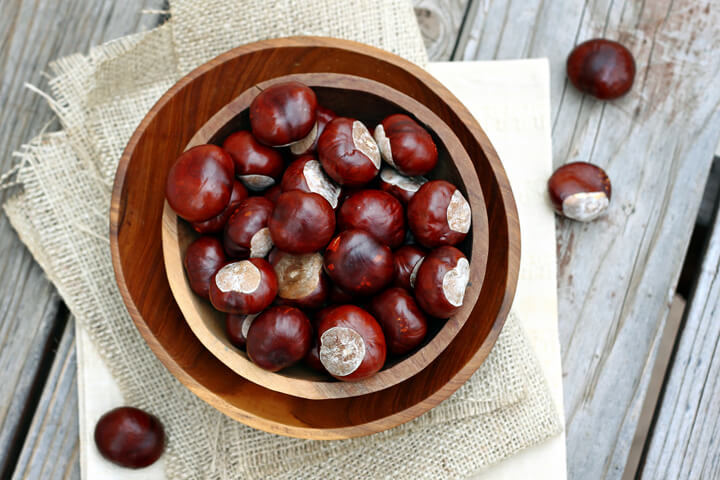
If Jack Frost has already started nipping at your nose, I sure hope you are roasting chestnuts, open fire or not. This seasonal delicacy is simple, festive, delicious and even nutritious. Like so many nuts, chestnuts can be used at virtually every juncture of a meal, from a savory hors d'oeuvre to a sweet dessert. Their starchy consistency and rich, slightly sweet flavor is what makes them so versatile.
Its All-Ancient History
The chestnut is an ancient whole food, used much like a potato amongst the poor for thousands of years. The Greeks are credited with bringing the chestnut tree to the Mediterranean more than three thousand years ago from Asia Minor. The Romans are responsible for extending chestnut cultivation into northwest and central Europe during the Roman Empire. In fact, it is thought that the chestnut’s Latin name, castanea, originated from the town of Castanea where the tree was quite common. The Old English name chestern, from which we ultimately get "chestnut," derives from Latin.
Nutrition
Unlike most nuts, chestnuts are incredibly low in fat and protein. However, the protein they do possess is of particularly high quality, making them the ideal snack food. They also contain potassium and vitamin C. Compositionally, they can be made up of almost fifty percent water at their freshest.
Fresh v. The Jar
Chestnuts as a stand-alone food item are best when fresh, peeled and cooked before serving (chestnuts are never eaten raw). Harvested in the fall, fresh chestnuts have a smooth brown shell inside of which is a ridged nut with a fuzzy skin covering. They have an earthy taste and are delicious either boiled or roasted. One pound of fresh chestnuts will yield about half a pound of peeled chestnuts, or approximately two cups.
However, chestnuts can be purchased already cooked in a jar, can, or vacuum-packed. Sometimes you can find frozen fresh chestnuts, which are raw. Assuming you wish to consume chestnuts while in season, the decision to use the fresh variety versus a packaged product really comes down to the recipe in which the chestnuts will be used. If I were making a chestnut soup, for example, ideally I would use boiled fresh chestnuts since the main flavor comes from chestnut. But I were making a stuffing with chestnuts and lots of other flavor components, jarred chestnuts would be more than satisfactory to accent the dish with chestnut flavor.
Boiling v. Roasting
Much like the decision to use fresh chestnuts depends on the ultimate use of the nut, so too does the decision to boil or roast fresh chestnuts. Boiling is an excellent method if you wish to use chestnuts in soup, stuffing or dessert dishes. Boiled chestnuts are tender and soft, with a creamy, smooth taste. Roasting, on the other hand, is useful if you plan to use the chestnuts with a roasted vegetable, or alone as a snack. Roasted chestnuts are more toothsome in that the outer layer of the nut may become tougher and textured.
To boil chestnuts, a two-step process must be followed. First, the chestnuts must be blanched in order to be peeled easily. Mark the flat side of the shell with an X using the sharp tip of a pairing knife. Drop the nuts into a pot of boiling water. Let the water return to a boil and time this first stage of cooking for five minutes. Remove the nuts from the heat, and remove only a few at a time to peel the shell and the inner skin. For the second stage, bring a pot of water to a boil with a teaspoon of salt and add the peeled chestnuts. Return to a boil and cook for 30-40 minutes, or until the nuts have no resistance when pierced with a knife. Once boiled, chestnuts can be simmered, sautéed, pureed, whipped, glazed, creamed or candied, just to name a few.
Roasting fresh chestnuts is a simple, one-step process. Preheat the oven to 375 degrees F. Cut an X on the rounded side of each chestnut and place in a baking dish or on a sheet pan. Roast until the X marks have opened and the nuts are tender when pierced with a skewer, about 30 minutes.
1 comments
©2026 CDKitchen, Inc. No reproduction or distribution of any portion of this article is allowed without express permission from CDKitchen, Inc.
To share this article with others, you may link to this page:
https://www.cdkitchen.com/cooking-experts/lauren-braun-costello/190-chestnuts/
Chestnut Choices
If Jack Frost has already started nipping at your nose, I sure hope you are roasting chestnuts, open fire or not. This seasonal delicacy is simple, festive, delicious and even nutritious. Like so many nuts, chestnuts can be used at virtually every juncture of a meal, from a savory hors d'oeuvre to a sweet dessert. Their starchy consistency and rich, slightly sweet flavor is what makes them so versatile.
Its All-Ancient History
The chestnut is an ancient whole food, used much like a potato amongst the poor for thousands of years. The Greeks are credited with bringing the chestnut tree to the Mediterranean more than three thousand years ago from Asia Minor. The Romans are responsible for extending chestnut cultivation into northwest and central Europe during the Roman Empire. In fact, it is thought that the chestnut’s Latin name, castanea, originated from the town of Castanea where the tree was quite common. The Old English name chestern, from which we ultimately get "chestnut," derives from Latin.
Nutrition
Unlike most nuts, chestnuts are incredibly low in fat and protein. However, the protein they do possess is of particularly high quality, making them the ideal snack food. They also contain potassium and vitamin C. Compositionally, they can be made up of almost fifty percent water at their freshest.
Fresh v. The Jar
Chestnuts as a stand-alone food item are best when fresh, peeled and cooked before serving (chestnuts are never eaten raw). Harvested in the fall, fresh chestnuts have a smooth brown shell inside of which is a ridged nut with a fuzzy skin covering. They have an earthy taste and are delicious either boiled or roasted. One pound of fresh chestnuts will yield about half a pound of peeled chestnuts, or approximately two cups.
However, chestnuts can be purchased already cooked in a jar, can, or vacuum-packed. Sometimes you can find frozen fresh chestnuts, which are raw. Assuming you wish to consume chestnuts while in season, the decision to use the fresh variety versus a packaged product really comes down to the recipe in which the chestnuts will be used. If I were making a chestnut soup, for example, ideally I would use boiled fresh chestnuts since the main flavor comes from chestnut. But I were making a stuffing with chestnuts and lots of other flavor components, jarred chestnuts would be more than satisfactory to accent the dish with chestnut flavor.
Boiling v. Roasting
Much like the decision to use fresh chestnuts depends on the ultimate use of the nut, so too does the decision to boil or roast fresh chestnuts. Boiling is an excellent method if you wish to use chestnuts in soup, stuffing or dessert dishes. Boiled chestnuts are tender and soft, with a creamy, smooth taste. Roasting, on the other hand, is useful if you plan to use the chestnuts with a roasted vegetable, or alone as a snack. Roasted chestnuts are more toothsome in that the outer layer of the nut may become tougher and textured.
To boil chestnuts, a two-step process must be followed. First, the chestnuts must be blanched in order to be peeled easily. Mark the flat side of the shell with an X using the sharp tip of a pairing knife. Drop the nuts into a pot of boiling water. Let the water return to a boil and time this first stage of cooking for five minutes. Remove the nuts from the heat, and remove only a few at a time to peel the shell and the inner skin. For the second stage, bring a pot of water to a boil with a teaspoon of salt and add the peeled chestnuts. Return to a boil and cook for 30-40 minutes, or until the nuts have no resistance when pierced with a knife. Once boiled, chestnuts can be simmered, sautéed, pureed, whipped, glazed, creamed or candied, just to name a few.
Roasting fresh chestnuts is a simple, one-step process. Preheat the oven to 375 degrees F. Cut an X on the rounded side of each chestnut and place in a baking dish or on a sheet pan. Roast until the X marks have opened and the nuts are tender when pierced with a skewer, about 30 minutes.
share this article:


related articles


1 comments
Very clear, concise and easy to follow. Thank you
Comment posted by Joluth
Write a comment:
©2026 CDKitchen, Inc. No reproduction or distribution of any portion of this article is allowed without express permission from CDKitchen, Inc.
To share this article with others, you may link to this page:
https://www.cdkitchen.com/cooking-experts/lauren-braun-costello/190-chestnuts/