

cdkitchen > cooking experts > lauren braun costello

All over the world culinary professionals speak in the secret code of the kitchen. Historically used as the language of diplomacy in the political sphere, French is equally ubiquitous gastronomically speaking. Some terms that we use every day are strictly French, like sauté, which means "to jump." Techniques, equipment, cuts, shapes, and classic ingredients often have French names. The very organization of what is known as the "kitchen brigade" was conceived by Escoffier, the great nineteenth-century French chef. Although it is not necessary to speak fluent French to make due in the kitchen, there are several terms worth knowing to make any cook more competent.
Mirepoix -- aromatic vegetables, cut in small unshaped chunks, used frequently when making stock, soups or sauces, or as a bed on which to braise or roast meat. Classically consists of two parts onion, one part carrot and one part celery. It is often browned in fat before it is used to impart flavor, and is usually strained out before the final product is served.
Supréme -- both a noun and a verb, this word has two contexts. The first meaning is the boneless breast of a duck or chicken. The second meaning is a method used to section a citrus fruit to remove the flesh from the membrane. Cut away the skin and the pith from the fruit and then slice the flesh next to the membrane on either side. What you are left with is also known as a supreme.
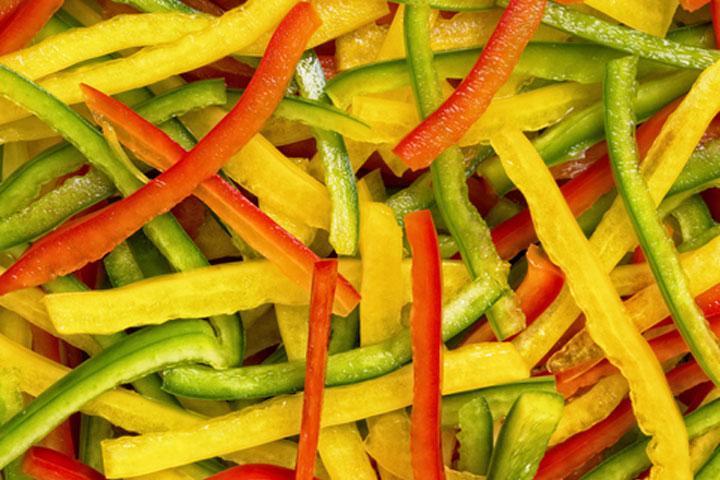
Julienne -- both a noun and a verb, this word means to be cut in long, thin matchsticks, usually referring to vegetables. Technically the measurement is about 1/8 inch by 1/8 inch by about 3 inches long. To make this shape, cut the vegetable into 3-inch long sections, then 1/8 inch slices, then finally into 1/8 inch strips.
Chiffonade -- both a noun and verb, this is a method of cutting that produces ribbons or thin strips of herbs like basil, or leafy greens like lettuce. Literally it means "made of rags." Stack clean leaves, roll them into a cigar shape and slice the roll crosswise into fine strips.
Bain marie -- this is a shallow hot water bath into which a container of food, such as a soufflé dish, is placed to cook. This helps evenly distribute gentle heat to prevent burning or uneven cooking. This is also a method used to keep food warm, especially sauces, without overheating or overcooking.
Bouquet garni -- this is a bundle of aromatic herbs (traditionally parsley, thyme, bay leaf and peppercorns) wrapped and tied in a cheesecloth used to flavor stocks, broths and stews. These herbs add depth of flavor and can be easily removed prior to serving.
Roux -- an equal mixture by weight of flour and melted fat used to thicken sauces, soups, and stews. Classically, there are three roux -- white, blond and brown. The first two are made with butter, while the third is often made with animal fat. The color depends on the length of time the roux is cooked. A white roux is cooked just until the mixture turns beige and the starch flavor is removed. A blond roux cooks a bit longer until it turns a golden color. A brown roux cooks until a dark amber color is achieved (an essential ingredient in Creole cooking).
Demi-glace -- traditionally, this is a sauce made from a brown stock (classically Sauce Espagnole, which is beef or veal stock bound with a roux and reinforced with aromatic elements) that is further refined as a base for many other sauces. But today it really refers to a beef or veal stock reduced by half to intensify flavor and form a glaze.
Court bouillon -- literally means "short broth." It is an aromatic poaching liquid that is cooked for a short period in which fish is prepared. This broth usually consists of water, bouquet garni, lemons and onions. Milk, vinegar or wine may also be added for distinct flavor or to be paired with a specific fish.
CDKitchen.com has an enormous cooking glossary, packed with French cooking terms. Browse, search, and click your way to competence in la cuisine!
©2026 CDKitchen, Inc. No reproduction or distribution of any portion of this article is allowed without express permission from CDKitchen, Inc.
To share this article with others, you may link to this page:
https://www.cdkitchen.com/cooking-experts/lauren-braun-costello/124-french-foodies/
French For Foodies
All over the world culinary professionals speak in the secret code of the kitchen. Historically used as the language of diplomacy in the political sphere, French is equally ubiquitous gastronomically speaking. Some terms that we use every day are strictly French, like sauté, which means "to jump." Techniques, equipment, cuts, shapes, and classic ingredients often have French names. The very organization of what is known as the "kitchen brigade" was conceived by Escoffier, the great nineteenth-century French chef. Although it is not necessary to speak fluent French to make due in the kitchen, there are several terms worth knowing to make any cook more competent.
Mirepoix -- aromatic vegetables, cut in small unshaped chunks, used frequently when making stock, soups or sauces, or as a bed on which to braise or roast meat. Classically consists of two parts onion, one part carrot and one part celery. It is often browned in fat before it is used to impart flavor, and is usually strained out before the final product is served.
Supréme -- both a noun and a verb, this word has two contexts. The first meaning is the boneless breast of a duck or chicken. The second meaning is a method used to section a citrus fruit to remove the flesh from the membrane. Cut away the skin and the pith from the fruit and then slice the flesh next to the membrane on either side. What you are left with is also known as a supreme.
Julienne -- both a noun and a verb, this word means to be cut in long, thin matchsticks, usually referring to vegetables. Technically the measurement is about 1/8 inch by 1/8 inch by about 3 inches long. To make this shape, cut the vegetable into 3-inch long sections, then 1/8 inch slices, then finally into 1/8 inch strips.
Chiffonade -- both a noun and verb, this is a method of cutting that produces ribbons or thin strips of herbs like basil, or leafy greens like lettuce. Literally it means "made of rags." Stack clean leaves, roll them into a cigar shape and slice the roll crosswise into fine strips.
Bain marie -- this is a shallow hot water bath into which a container of food, such as a soufflé dish, is placed to cook. This helps evenly distribute gentle heat to prevent burning or uneven cooking. This is also a method used to keep food warm, especially sauces, without overheating or overcooking.
Bouquet garni -- this is a bundle of aromatic herbs (traditionally parsley, thyme, bay leaf and peppercorns) wrapped and tied in a cheesecloth used to flavor stocks, broths and stews. These herbs add depth of flavor and can be easily removed prior to serving.
Roux -- an equal mixture by weight of flour and melted fat used to thicken sauces, soups, and stews. Classically, there are three roux -- white, blond and brown. The first two are made with butter, while the third is often made with animal fat. The color depends on the length of time the roux is cooked. A white roux is cooked just until the mixture turns beige and the starch flavor is removed. A blond roux cooks a bit longer until it turns a golden color. A brown roux cooks until a dark amber color is achieved (an essential ingredient in Creole cooking).
Demi-glace -- traditionally, this is a sauce made from a brown stock (classically Sauce Espagnole, which is beef or veal stock bound with a roux and reinforced with aromatic elements) that is further refined as a base for many other sauces. But today it really refers to a beef or veal stock reduced by half to intensify flavor and form a glaze.
Court bouillon -- literally means "short broth." It is an aromatic poaching liquid that is cooked for a short period in which fish is prepared. This broth usually consists of water, bouquet garni, lemons and onions. Milk, vinegar or wine may also be added for distinct flavor or to be paired with a specific fish.
CDKitchen.com has an enormous cooking glossary, packed with French cooking terms. Browse, search, and click your way to competence in la cuisine!
share this article:


related articles



Write a comment:
©2026 CDKitchen, Inc. No reproduction or distribution of any portion of this article is allowed without express permission from CDKitchen, Inc.
To share this article with others, you may link to this page:
https://www.cdkitchen.com/cooking-experts/lauren-braun-costello/124-french-foodies/