

cdkitchen > cooking experts > christine gable

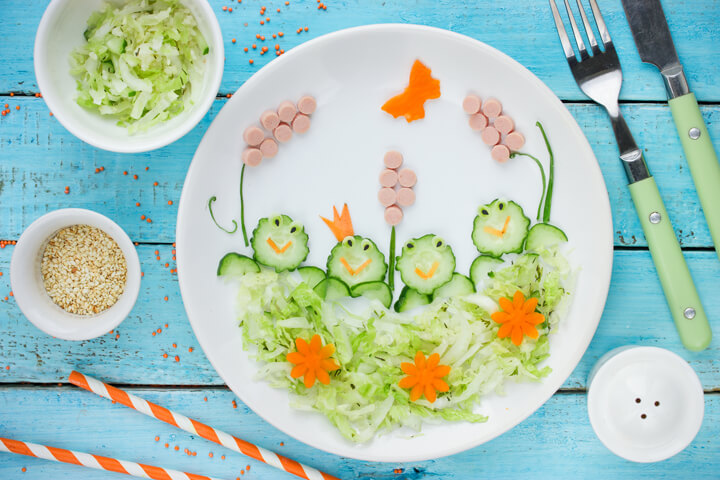
Have you seen the guidelines recommended for kids’ healthy eating? They don’t mess around. For example, according to Jessica Seinfeld, author of the attention-garnering Deceptively Delicious, these are the servings of foods that your kids should be ingesting on a daily basis:
Vegetables: 3 (1 ½ to 2 cups total)
Fresh fruit: 2
Whole grains: 3 (one serving = ½ cup OR one slice of whole-grain bread)
Calcium-rich foods: 3 (one serving = 1 cup milk OR ½ to 1 cup beans)
Protein: lean sources such as turkey, chicken, pork, fish, seafood, tofu, beans and eggs
Fats: choose monounsaturated ones like olive or canola oil
Omega-3 fats: sardines, walnuts and flaxseed
(Collective groan and parental guilt trip beginning now.)
Yeah, I hear you. And that’s the LAST thing we need, right?
Perhaps those of you who are whipping up Seinfeld’s super-nutritious and amazing vegetable purees don’t have these worries. However, I would safely bet that a much larger portion of you have gaps in there, just like me. And while not every day needs to be (or can be expected to be) stellar in meeting these guidelines, I do think they’re a good target. After all, don’t our daily life goals tend to follow our intentions? Even beyond diet goals and meal prep, making a plan and having the confidence we’ll get there is half the battle of actually making it happen.
So let’s all set the intent that our kids will choose and eat healthful foods, with plenty of fruits and veggies.
Of course, it certainly helps to let your kids in on the idea—the more they understand the function that these healthier choices perform in their bodies (think more energy and less chance of obesity), the more willing participants they’ll be. And the side benefit is that they might even come up with some surprising suggestions that can make a world of difference, versus just having a willing or un-willing mealtime participant.
So what’s a parent to do? Theories aside, let’s talk some nitty-gritty details.
First I’d like to thank nutritionist Debbie Roth, who provided her ideas for use in her healthy kids’ eating classes. Her guidelines are filled with helpful tips that I bet we can all use in helping our kids make the transition into eating less sugar and refined food—and more whole grains, fruits and vegetables. I’ve adapted and expanded on a few of my favorite points:
Snazzy sippers, cups to decorate, cups with neat straws, and pint-size pitchers: These are all ideas to get your kids guzzling more water. When we explored the concept of “whether we were each drinking enough water” in our own family last year, we tried placing a jar on the countertop with each person’s name on it. It was very telling to note how quickly (or not!) the level went down each day—and if it was empty at day’s end. Conclusion: Sometimes we think we’re drinking more water than we actually are.
Special platters, tiny bowls, and miniature plates: Using intriguing and eye-catching “little” containers to serve up sliced fruits and veggies may seem like a lot of work—but it’s really not! With a stack of little plates or bowls stowed in the cupboard right next to the regular ones, it really is easy to mix and match a variety of fun ways to serve dips, sauces and dressings. And since those minis match up to mean less of a battle, they’re a big way to boost that 5-a-day for the whole family.
Get them cooking: It’s the one thing that I believe has the biggest impact on developing their explorative and experimental (and curious) taste buds. By giving kids many and multiple opportunities to get into the experience of discovering how say, olive oil and vinegar work (and taste) together, they’ll gain vital first-hand knowledge of where fats and flavors come from in dishes. And that’s the best way to unravel the meaning of “fat-free” and “new and improved” that they’ll read on labels everywhere these days.
Make time to shop together: Although it may be tempting (and sometimes necessary) to do a shop-alone marathon trip to the market, grabbing a helper and taking the time to do the weekly shopping together can be more beneficial that their weekly health class at school. Plus, you’ll be inspired to make smarter, wiser choices—and it’s time spent together. I’ve found that taking turns with each of the kids is one smart habit to encourage—and would you believe just last week they were actually disagreeing about whose turn it was to go with me?
Ask them to help you make choices: Yes, if they talk your ear off and always seem to be spouting suggestions for things you don’t feel like you can do, this one’s for you. Step back and take a deep breath. After you’ve told them how much you enjoy their ideas and inspiration, mention that you really could use some meal inspiration and assistance. See what they’d like to eat—sometimes I’ve discovered that I’m in a rut of choosing the same old, same old ... Talking and listening can be a boon on both sides.
And this all ties in with shopping together too, since if you chat together (and yes, really listen to what they’re saying) about the things you’re putting in your basket, you’ll have some ideas of things they can help make in the upcoming week. And remember to keep the possibilities open—just yesterday I almost said no to my daughter’s desire to buy a turnip. A turnip?! But now I’m looking forward to seeing (and tasting) how her idea turns out for dinner tonight …
So … I’d love to know what you think—what works at your house? And what are some great ways you’ve found to help engage your kids in making healthier choices?
1 comments
©2026 CDKitchen, Inc. No reproduction or distribution of any portion of this article is allowed without express permission from CDKitchen, Inc.
To share this article with others, you may link to this page:
https://www.cdkitchen.com/cooking-experts/christine-gable/655-kids-healthy-eating/
Making Healthy Food Fun
Have you seen the guidelines recommended for kids’ healthy eating? They don’t mess around. For example, according to Jessica Seinfeld, author of the attention-garnering Deceptively Delicious, these are the servings of foods that your kids should be ingesting on a daily basis:
Vegetables: 3 (1 ½ to 2 cups total)
Fresh fruit: 2
Whole grains: 3 (one serving = ½ cup OR one slice of whole-grain bread)
Calcium-rich foods: 3 (one serving = 1 cup milk OR ½ to 1 cup beans)
Protein: lean sources such as turkey, chicken, pork, fish, seafood, tofu, beans and eggs
Fats: choose monounsaturated ones like olive or canola oil
Omega-3 fats: sardines, walnuts and flaxseed
(Collective groan and parental guilt trip beginning now.)
Yeah, I hear you. And that’s the LAST thing we need, right?
Perhaps those of you who are whipping up Seinfeld’s super-nutritious and amazing vegetable purees don’t have these worries. However, I would safely bet that a much larger portion of you have gaps in there, just like me. And while not every day needs to be (or can be expected to be) stellar in meeting these guidelines, I do think they’re a good target. After all, don’t our daily life goals tend to follow our intentions? Even beyond diet goals and meal prep, making a plan and having the confidence we’ll get there is half the battle of actually making it happen.
So let’s all set the intent that our kids will choose and eat healthful foods, with plenty of fruits and veggies.
Of course, it certainly helps to let your kids in on the idea—the more they understand the function that these healthier choices perform in their bodies (think more energy and less chance of obesity), the more willing participants they’ll be. And the side benefit is that they might even come up with some surprising suggestions that can make a world of difference, versus just having a willing or un-willing mealtime participant.
So what’s a parent to do? Theories aside, let’s talk some nitty-gritty details.
First I’d like to thank nutritionist Debbie Roth, who provided her ideas for use in her healthy kids’ eating classes. Her guidelines are filled with helpful tips that I bet we can all use in helping our kids make the transition into eating less sugar and refined food—and more whole grains, fruits and vegetables. I’ve adapted and expanded on a few of my favorite points:
Snazzy sippers, cups to decorate, cups with neat straws, and pint-size pitchers: These are all ideas to get your kids guzzling more water. When we explored the concept of “whether we were each drinking enough water” in our own family last year, we tried placing a jar on the countertop with each person’s name on it. It was very telling to note how quickly (or not!) the level went down each day—and if it was empty at day’s end. Conclusion: Sometimes we think we’re drinking more water than we actually are.
Special platters, tiny bowls, and miniature plates: Using intriguing and eye-catching “little” containers to serve up sliced fruits and veggies may seem like a lot of work—but it’s really not! With a stack of little plates or bowls stowed in the cupboard right next to the regular ones, it really is easy to mix and match a variety of fun ways to serve dips, sauces and dressings. And since those minis match up to mean less of a battle, they’re a big way to boost that 5-a-day for the whole family.
Get them cooking: It’s the one thing that I believe has the biggest impact on developing their explorative and experimental (and curious) taste buds. By giving kids many and multiple opportunities to get into the experience of discovering how say, olive oil and vinegar work (and taste) together, they’ll gain vital first-hand knowledge of where fats and flavors come from in dishes. And that’s the best way to unravel the meaning of “fat-free” and “new and improved” that they’ll read on labels everywhere these days.
Make time to shop together: Although it may be tempting (and sometimes necessary) to do a shop-alone marathon trip to the market, grabbing a helper and taking the time to do the weekly shopping together can be more beneficial that their weekly health class at school. Plus, you’ll be inspired to make smarter, wiser choices—and it’s time spent together. I’ve found that taking turns with each of the kids is one smart habit to encourage—and would you believe just last week they were actually disagreeing about whose turn it was to go with me?
Ask them to help you make choices: Yes, if they talk your ear off and always seem to be spouting suggestions for things you don’t feel like you can do, this one’s for you. Step back and take a deep breath. After you’ve told them how much you enjoy their ideas and inspiration, mention that you really could use some meal inspiration and assistance. See what they’d like to eat—sometimes I’ve discovered that I’m in a rut of choosing the same old, same old ... Talking and listening can be a boon on both sides.
And this all ties in with shopping together too, since if you chat together (and yes, really listen to what they’re saying) about the things you’re putting in your basket, you’ll have some ideas of things they can help make in the upcoming week. And remember to keep the possibilities open—just yesterday I almost said no to my daughter’s desire to buy a turnip. A turnip?! But now I’m looking forward to seeing (and tasting) how her idea turns out for dinner tonight …
So … I’d love to know what you think—what works at your house? And what are some great ways you’ve found to help engage your kids in making healthier choices?
share this article:


related articles



1 comments
For fun I will tell each child to pick out a recipie that sounds good from one of my cookbooks and we will go to the store to find all the ingredients together.
Comment posted by Summer
Write a comment:
©2026 CDKitchen, Inc. No reproduction or distribution of any portion of this article is allowed without express permission from CDKitchen, Inc.
To share this article with others, you may link to this page:
https://www.cdkitchen.com/cooking-experts/christine-gable/655-kids-healthy-eating/