

cdkitchen > cooking experts > christine gable

Geography. It certainly wasn’t a favorite school subject. But then again, I came to appreciate the countries of the world as a late bloomer and through the back door. The back door to the kitchen, that is. Too bad my teachers didn’t think of combining growing our brainpower with our growing appetites. Perhaps it's not only the case that the way to one’s heart is through the stomach, as folklore teases; perhaps the way to the brain is also through the stomach.
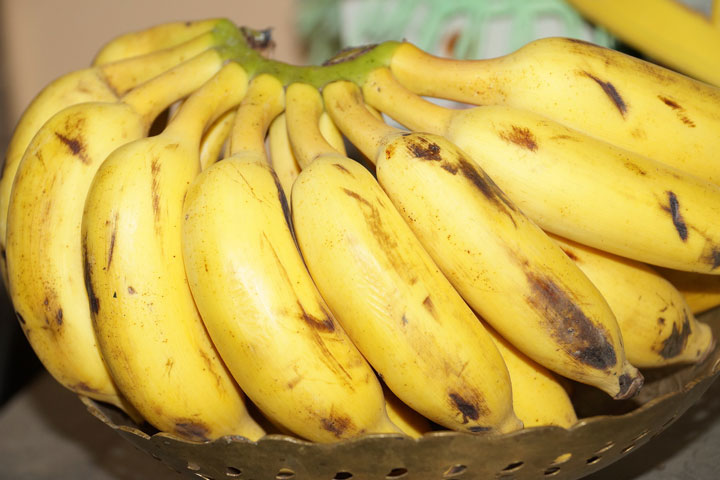
It certainly has been easier and more memorable for the kids and I to take a look at a map and correlate it with a food or recipe than to just try to learn the country names outright. For example, while recently perusing the tropical fruit section, my daughter spotted several varieties of bananas: There were mini bananas which are just right for a quick bite to eat—delicious eaten raw since they ripen quickly and are very sweet. There were larger, greener bananas on another shelf—plantains. Voila—there was our new food of the month, plus a bit of geography, all in one.
After we checked the globe to see where our plantains were grown (Colombia), we referred to a fabulous book by Joan D’Amico and Karen Eich Drummond, The Science Chef Travels Around the World. Their recipe for plantains is in the section on food from Ghana, including peanut soup and a spicy vegetable stew that we decided to try another day. Since our Colombian plantain was yellowish-brown and nicely ripe, we decided to adapt this original recipe into a baked snack that we topped with a dollop of vanilla ice cream. This tangy yet spicy accompaniment would also make a fabulous tropical plantain (banana) split, the perfect summer time partnership.
Native to Latin America and Asia, the plantain resembles an oversized banana, yet is utilized as a starchy vegetable. Not only an excellent source of potassium, they are rich in vitamin A and a good source of vitamin C. Plantains are the banana that needs to be cooked, versus the plentiful potassium sticks that are so ubiquitous for breakfast and snacks.
Plantains can be grilled, baked, steamed or sautéed, depending upon your preference. Since they are starchy like potatoes, they are amenable with similar preparation: fried, baked, simmered or mashed. A yellow or green-ripe plantain is best prepared with a sweet accompaniment, perhaps apples or pineapple; however the black-ripe plantain is great prepared like other bananas since they are sweeter yet will hold their shape after cooked. The riper the plantain, the darker it will be. Avoid ones that have cracks or that are overly soft. Store at room temperature and only place in refrigerator when fully ripe (black) since this stops the actual ripening.
The next time your kids are having a hard time memorizing those geographic locations, check out D’Amico and Drummond’s books, with recipes sure to give them a memorable taste of the territory. It’s a fun way to bring geography alive with more than a book and globe: Serve up a plateful of food to give a true-to-life taste of the world.
Here’s hoping that you’ll find a new food to discover with your kids this month—and just in case you reach out to try plantains, here’s a simple yet divine dessert kids can help prepare.
©2026 CDKitchen, Inc. No reproduction or distribution of any portion of this article is allowed without express permission from CDKitchen, Inc.
To share this article with others, you may link to this page:
https://www.cdkitchen.com/cooking-experts/christine-gable/334-plantains/
New Food of the Month: Plantains
Geography. It certainly wasn’t a favorite school subject. But then again, I came to appreciate the countries of the world as a late bloomer and through the back door. The back door to the kitchen, that is. Too bad my teachers didn’t think of combining growing our brainpower with our growing appetites. Perhaps it's not only the case that the way to one’s heart is through the stomach, as folklore teases; perhaps the way to the brain is also through the stomach.
It certainly has been easier and more memorable for the kids and I to take a look at a map and correlate it with a food or recipe than to just try to learn the country names outright. For example, while recently perusing the tropical fruit section, my daughter spotted several varieties of bananas: There were mini bananas which are just right for a quick bite to eat—delicious eaten raw since they ripen quickly and are very sweet. There were larger, greener bananas on another shelf—plantains. Voila—there was our new food of the month, plus a bit of geography, all in one.
After we checked the globe to see where our plantains were grown (Colombia), we referred to a fabulous book by Joan D’Amico and Karen Eich Drummond, The Science Chef Travels Around the World. Their recipe for plantains is in the section on food from Ghana, including peanut soup and a spicy vegetable stew that we decided to try another day. Since our Colombian plantain was yellowish-brown and nicely ripe, we decided to adapt this original recipe into a baked snack that we topped with a dollop of vanilla ice cream. This tangy yet spicy accompaniment would also make a fabulous tropical plantain (banana) split, the perfect summer time partnership.
Native to Latin America and Asia, the plantain resembles an oversized banana, yet is utilized as a starchy vegetable. Not only an excellent source of potassium, they are rich in vitamin A and a good source of vitamin C. Plantains are the banana that needs to be cooked, versus the plentiful potassium sticks that are so ubiquitous for breakfast and snacks.
Plantains can be grilled, baked, steamed or sautéed, depending upon your preference. Since they are starchy like potatoes, they are amenable with similar preparation: fried, baked, simmered or mashed. A yellow or green-ripe plantain is best prepared with a sweet accompaniment, perhaps apples or pineapple; however the black-ripe plantain is great prepared like other bananas since they are sweeter yet will hold their shape after cooked. The riper the plantain, the darker it will be. Avoid ones that have cracks or that are overly soft. Store at room temperature and only place in refrigerator when fully ripe (black) since this stops the actual ripening.
The next time your kids are having a hard time memorizing those geographic locations, check out D’Amico and Drummond’s books, with recipes sure to give them a memorable taste of the territory. It’s a fun way to bring geography alive with more than a book and globe: Serve up a plateful of food to give a true-to-life taste of the world.
Here’s hoping that you’ll find a new food to discover with your kids this month—and just in case you reach out to try plantains, here’s a simple yet divine dessert kids can help prepare.
Baked Plantain & Pineapple Dessert


Made with nutmeg, cinnamon, brown sugar, yellow or brown plantains, pineapple tidbits, margarine
Made with nutmeg, cinnamon, brown sugar, yellow or brown plantains, pineapple tidbits, margarine
Serves/Makes: 4
- 2 yellow or brown plantains
- 1 can (8 ounce size) pineapple tidbits or chunks, drained
- 2 tablespoons margarine
- 1/8 cup brown sugar
- 1/4 teaspoon cinnamon
- 1/4 teaspoon nutmeg
Preheat oven to 350 degrees F. Spray large baking dish with vegetable oil spray. Wash plantains and slice lengthwise, placing them cut-side up in dish. Top with drained pineapple chunks.
In a small saucepan place margarine, sugar and spices. Stir and heat over low until melted and bubbly, about one minute.
Pour mixture over plantains and pineapples. Cover with foil and bake for 35-40 minutes until plantains are tender when pierced with fork.
Remove plantains from skin, cut into 1-inch pieces and serve atop a scoop of ice cream, with some of the pineapple chunks too.
share this article:


related articles



Write a comment:
©2026 CDKitchen, Inc. No reproduction or distribution of any portion of this article is allowed without express permission from CDKitchen, Inc.
To share this article with others, you may link to this page:
https://www.cdkitchen.com/cooking-experts/christine-gable/334-plantains/